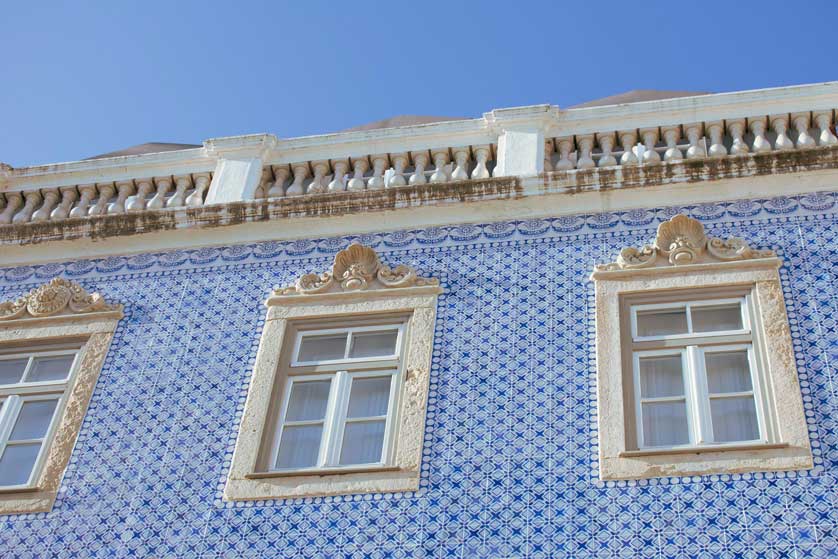
Portuguese Culture: The History of Azulejos Tiles in Portugal
The history of azulejos in Portugal can be traced back to the Moorish influence during the Islamic rule of the Iberian Peninsula.
The origins of azulejos tiles can be said to go further back in history to Roman mosaics but the major influence on the form is Islamic. The word azulejos, indeed, comes from the Arabic al-zillīj meaning "polished stone".
Islamic Roots
Azulejos were introduced to the Iberian Peninsula by the Moors, who occupied the region for several centuries. They brought with them the art of glazed ceramic tiles, which featured geometric patterns and intricate designs. These early tiles were often used to decorate walls, floors, and ceilings of palaces, mosques, and other important buildings.
The center of Moorish tile production on the Iberian Peninsula was Sevilla in Spain and they were introduced to Portugal during the reign of King Manuel I (1495-1521). The Portuguese would also have encountered Arabic tile work during their military expeditions to North Africa in the late 15th century.
Early use of Arabic-style cuenca tiles can be found at the National Palace in Sintra, outside Lisbon, specifically in the palace's superb Arab Room (Sala dos Árabes).
Islamic tiles were geometric and did not depict the human form for religious reasons.
By the turn of the 20th century, Portugal had become the world's leading producer of decorative tiles. Many would be used to create tapetes (carpets) to cover the fronts of factories, markets and schools.

15-17th Centuries
With the Reconquista and the expulsion of the Moors, Portugal experienced a transition in artistic influences. The use of azulejos continued, but the designs began to incorporate Christian themes. Monasteries and churches became prominent places for the installation of azulejos, depicting scenes from religious stories and daily life.
Majolica & The Golden Age
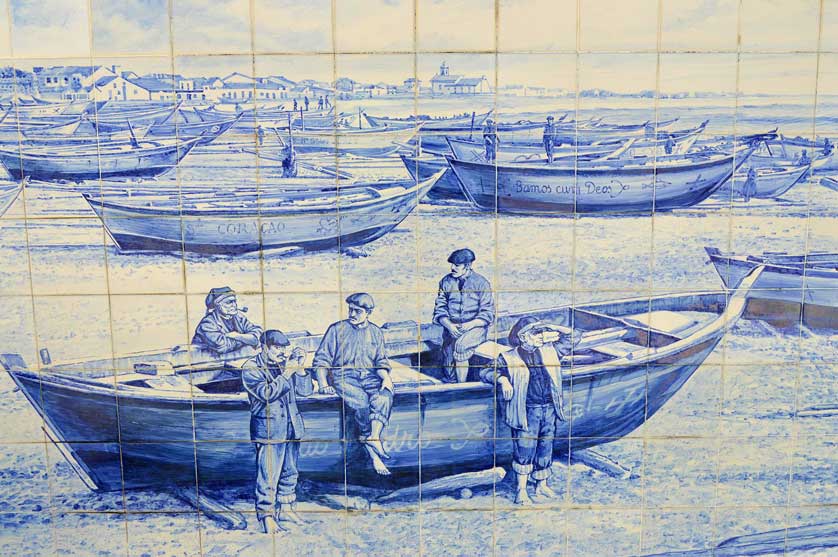
The early Islamic azulejos had thin ridges of clay to prevent the lead-based paint from running. This process was refined with the introduction of the Italian maiolica (majolica) technique - where ceramics were coated with a thin glaze of enamel which stopped the paint from running when applied directly to the wet clay.
Before domestic production got underway early azulejos were imported from both Spain and Flanders.
Early Portugal-produced azulejos from the 16th century can be seen in the Church of São Roque (Igreja de São Roque) in Lisbon.
By the late 17th century azulejos began to be used in large panels to depict both religious and secular scenes. Mass production became necessary and blue and white Delft tiles were imported. This spurred domestic competition and a "Golden Age" of Portuguese tile manufacture began mostly in the Baroque style. Azulejos became more elaborate and started to cover entire facades of buildings. Brazil was also a large market for Portuguese azulejos.
Tastes changed again in the mid-18th century, this time for more intimate Rococo style compositions best-illustrated by the exquisite tile panels at the Queluz National Palace.
Spain
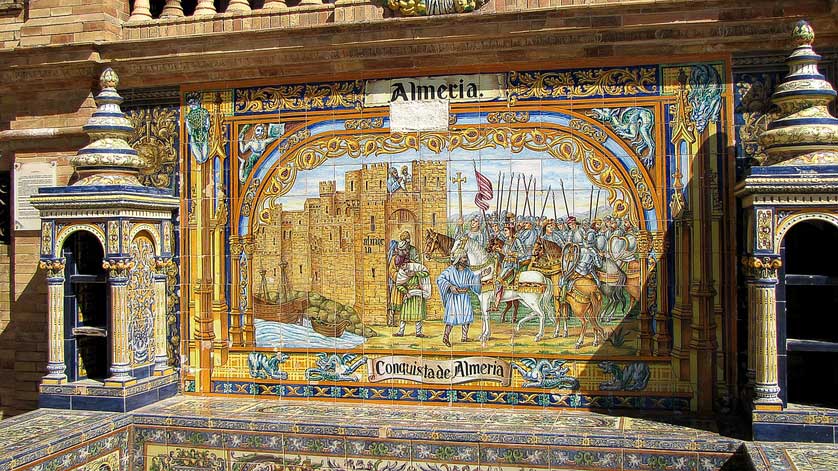
Azulejos are not unique to Portugal; they also have a rich history and presence in Spain.
The Alcázar of Seville, a royal palace originally developed by Moorish Muslim kings, features stunning azulejos throughout its interior. The Patio de las Doncellas (Courtyard of the Maidens) and various rooms display intricate tilework with geometric patterns and vibrant colors.
Seville Cathedral, built on the site of a former mosque, contains exquisite azulejos, particularly in the Capilla Mayor (Main Chapel) and the Sacristía Mayor (Main Sacristy). The tiles depict scenes from the lives of saints and biblical stories.
The Real Alcázar of Valencia, not to be confused with the Real Alcázar of Seville, features beautiful azulejo panels in its Sala de las Chimeneas. The tiles showcase intricate floral patterns and Moorish designs.
Other places to admire azulejos in Spain include the Royal Monastery of Santa Maria de Guadalupe, Valencia's Lonja de la Seda, the Alhambra in Granada, the magnificent Plaza de España in Seville and the Synagogue of Santa María la Blanca in Toledo.
Pombaline Era (18th century)
The 1755 Lisbon Earthquake stimulated demand for tiles yet again. These were plainer, more functional and less decorative. Known as the Pombaline style, after the Marquis of Pombal, these azulejos covered the exterior and interiors of many new buildings constructed after the terrible disaster.
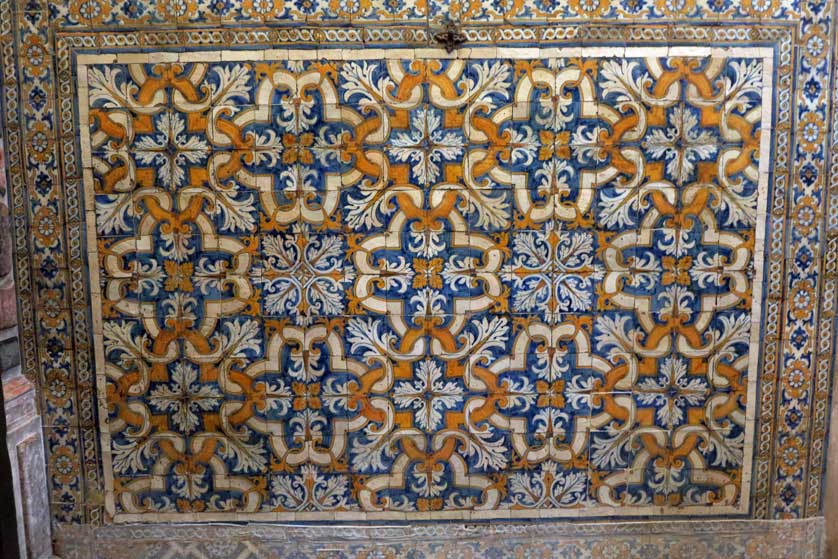


By the 19th century, new industrialized techniques developed in the Potteries in Staffordshire, England began to be copied in the tile factories of Lisbon.
The 19th century saw a decline in the use of azulejos as architectural elements, but they continued to be produced for decorative purposes. In the 20th century, there was a revival of interest in traditional Portuguese art and culture, leading to a resurgence of azulejo production and usage.
Nowadays, contemporary artists and designers experiment with new patterns and themes.

Azulejos Links
Igreja do Carmo and Igreja dos Carmelitas

Articles on Portuguese Culture