Metropolitan co-cathedral of Saint Mary Major of Mérida
Mérida Cathedral (Extremadura, Spain)
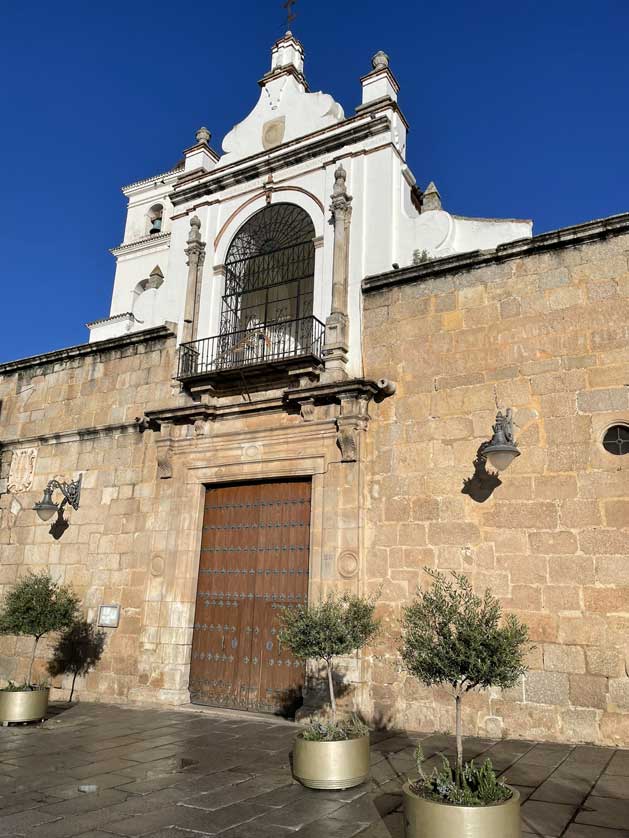
The Metropolitan co-cathedral of Saint Mary Major of Mérida (Concatedral metropolitana de San Maria la Mayor) in Mérida Extremadura, is, along with the Metropolitan Cathedral of Saint John the Baptist (Catedral Metropolitana de San Juan Bautista) in nearby Badajoz, the seat of the Archdiocese of Mérida-Badajoz.

History
The site of the church likely hosted a Visigothic church during the early Christian period (6th-7th century), built over even earlier Roman ruins, as was common in the region.
During the Moorish occupation of Iberia (8th-13th centuries), the original church may have been destroyed or converted into a mosque. Following the Christian Reconquest of Mérida in 1230, the church was rebuilt under the order of King Alfonso IX of León, establishing a firm Christian presence in the city. It was designated a co-cathedral in 1994, sharing episcopal functions with the Cathedral of Badajoz in the Archdiocese of Mérida-Badajoz.

Architecture
The building features a basilica layout with three naves separated by robust pillars. The main façade is simple and sober, characteristic of late Gothic architecture, and includes a modest rose window. The bell tower, added later, has a Renaissance appearance and offers a commanding presence in the city's main square.
The main altar is richly adorned with Baroque elements, including intricate carvings and gilded details. Several chapels line the sides, many of which house tombs of local nobility and clergy. The choir stalls, pulpit, and altarpieces reflect both late Gothic and early Renaissance craftsmanship. A notable feature is the image of Santa María la Mayor, the patroness of the church, revered by the faithful.

Accommodation
The city has a wide selection of hotels, guest houses and pensions.
The Hotel Ilunion Mérida Palace in Plaza de España offers an outdoor pool and rooftop terrace in a restored 15th century palace.
The four-star Hotel Ilunion Las Lomas slightly outside the center has an outdoor pool, a bar and restaurant.
The Hotel Velada Mérida is also four-star. Facilities include a pool and cafe-bar.
Other places to stay in this lovely city include the luxury Parador de Mérida once an 18th century convent. Enjoy the traditional-style inner courtyard and beautiful gardens and dine at the hotel restaurant.
Hotel Cervantes is a budget two-star property for travelers on a tighter budget.
See a listing of hotels in Mérida

Access & Hours
Mérida Station is at the junction of two lines: east-west between Badajoz and Madrid and south to Sevilla Santa Justa via Zafra. It has rail connections to Alcázar de San Juan, Almendralejo, Badajoz Station in Badajoz, Cabeza del Buey, Madrid-Chamartin, Cáceres, Don Benito-Villanueva de la Serena, Zafra, Sevilla and Plasencia.
From Badajoz Station to the west there are trains to Entroncamento in Portugal, with connections from there to Lisbon and Porto.
The bus station in Merida is across the Puente Lusitania on the opposite bank of the River Guardiana.
Other attractions in Mérida include the Roman Theater, Ampitheater, Temple of Diana and Circo Romano (Roman Circus).
Maps
