Portugal Guides: Faial

Faial
Faial is dominated by the central Caldeira, a volcanic crater over 300 meters (1,000 ft) in depth.
The island is well-known for the beautiful hydrangeas that scatter the island in hedgerows.
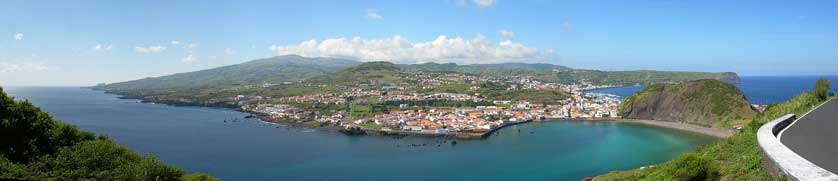
The main town and capital is Horta with numerous historic buildings and churches - its natural harbor and marina mean it has become a center for yachting.
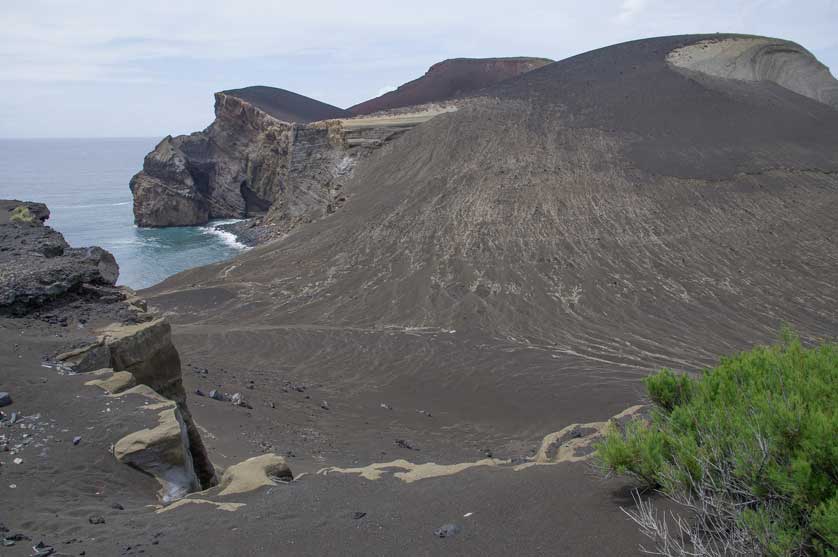
At Ponta dos Capelinhos are dunes of dark volcanic cinders left by an undersea eruption in the late 1950s.
The island of Faial with an area of 173 square kilometres affords spectacular views of the other central islands forming what is known as the "Triangle" (Triangulo) along with Pico and São Jorge.
The island of Faial was first settled during the Age of Discovery and Henry the Navigator by the Flemish noble Josse van Huerter.
The main settlement Horta is derived from his name. The name of the island stems from the Faya trees (Myrica faya) growing there when the first settlers arrived.
Later immigrants came mostly from the Alentejo and Algarve regions in the south of Portugal as the Flemish influence gradually diminished.
The early economy was based on wheat and woad and later whaling.
The 1957 eruption of the of Capelinhos volcano led to people leaving the island in numbers for a new life in the USA.
Horta
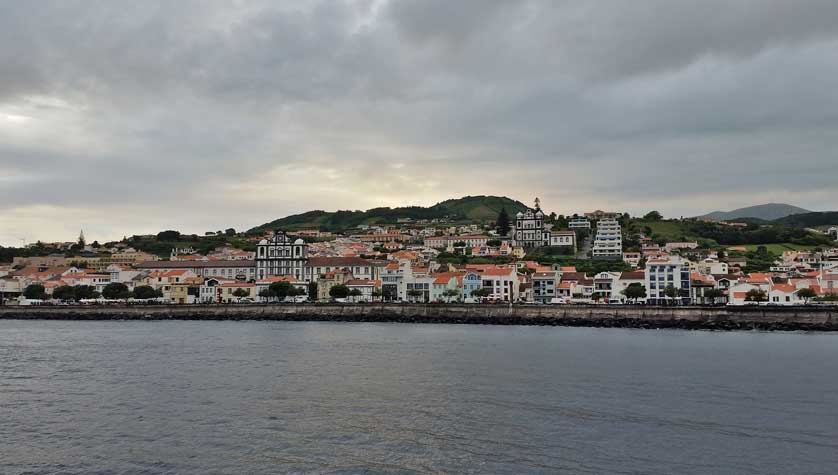
The main town is Horta on the south coast. It is close to the airport in Castelo Branco and is the ferry port for boats to other islands in the Azores. It has a population of around 6,400 inhabitants out of a total population on Faial of 14,500 people.
Horta hosts the Regional Parliament (Parlamento Regional) of the Azores and has a number of historic buildings, churches and museums.
The marina in Horta also attracts trans-Atlantic yachts and is a colorful and busy sight.
Museums
Museums on Faial include the Museu da Baleia (Whaling Museum) in Horta dedicated to the island's long history of whaling.
Casa dos Botes is also dedicated to whaling (mainly sperm whales were hunted off Faial) and houses a historic whaling boat.
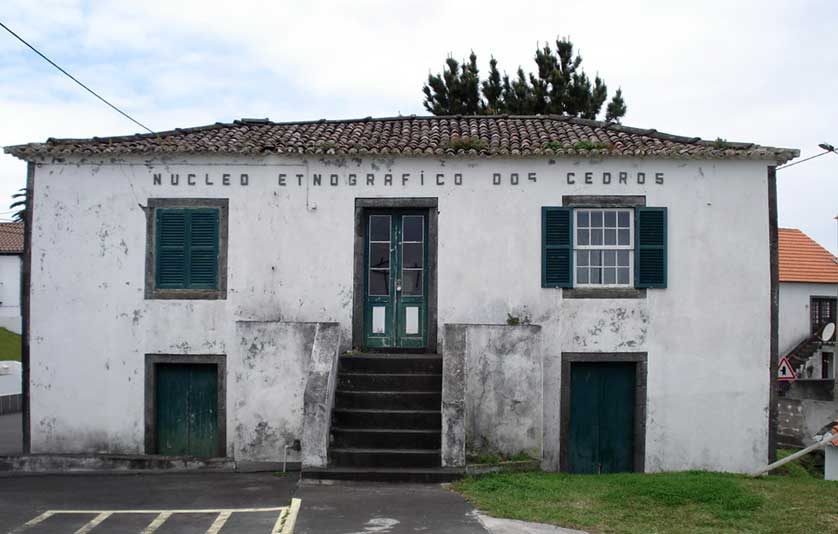
The Nucleo Etnográfico dos Cedros (Ethnographic Museum of Cedros) is housed in an old dairy factory in Cedros.
The Casa Memória Manuel de Arriaga is a 19th century building and the former residence of the first president of the Portuguese republic whose ancestors originated in Faial. He became president in 1911 following the deposition of King Manuel II of Portugal.
The Scrimshaw Museum above the 100-year-old Peter's Café Sport in Horta exhibits examples of the art of scrimshaw - engraving on whales teeth and bones and the tusks of walruses. The art form began as a form of amusement on whaling ships in the late 18th century, probably in North American waters.
The Museu Regional da Horta (Museu da Horta) began in 1977 and is housed in the former Jesuit College adjacent to the Town Hall. It has an eclectic display of old photographs, documents, religious art, agricultural crafts including linen and wool as well as ceramics. There are also exhibits on the island's pivotal role in the laying of submarine transatlantic telegraphic cables between Europe and America.
Churches
Like all of the islands in the Azores, Faial has a good number of churches distributed in the towns and villages of the island.
The Igreja de Santa Catarina dos Cedros (Church of Santa Bárbara) in Horta dates from the late 16th century or possibly earlier. Damaged by fire in the 1970s and in the 1998 earthquake the present church is a mix of Baroque, Manueline and modernist elements after the various restorations following those disasters.
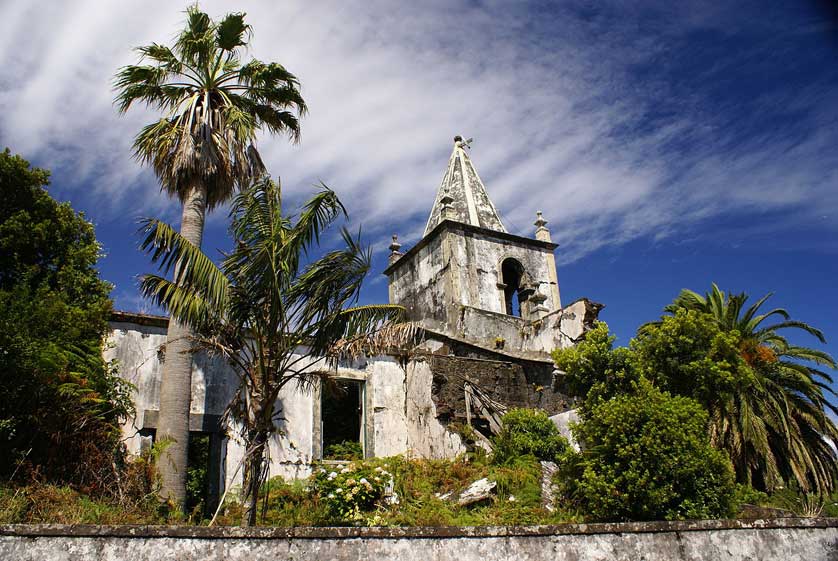
The ruined Igreja de Nossa Senhora da Ajuda in Pedro Miguel stood as a testament to the destructive force of the 1998 earthquake. The original date of construction is unknown but is thought to be in the late 15th or early 16th centuries. A fire following the earthquake caused great damage to the structure which was demolished in September, 2020. A new church was erected thanks to generous donations.

Forts
As with all the islands in the Azores archipelago, Faial suffered repeated attacks by pirates. In Faial's case mainly raids by the English and French. The Earl of Cumberland (George Clifford) sank the 2,000-ton Portuguese carrack Las Cinque Chagas in 1594 off the coast of the island. The wreck is believed to contain millions of dollars in treasure but has never been located.
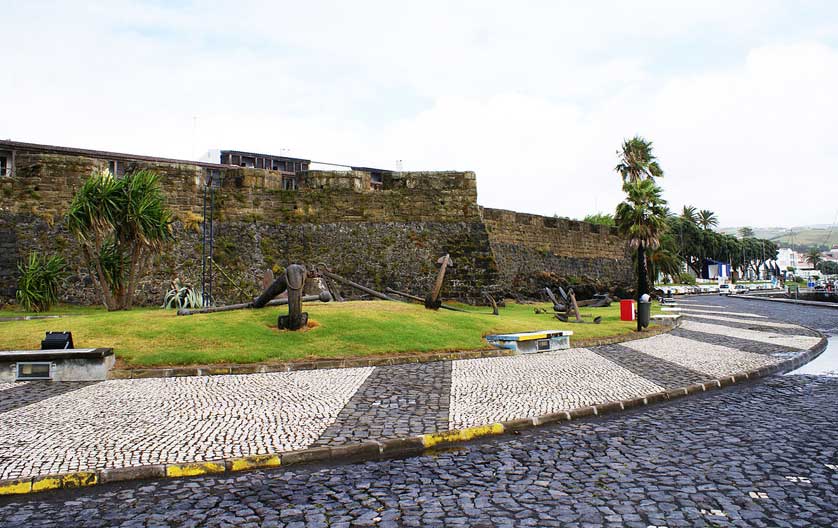
As a result around 20 forts were constructed on the coast to offer protection. Most are now partially or totally in ruins.
Near the marina, the 16th century Forte de Santa Cruz da Horta, is one of the best preserved. Its grounds now house a pousada, the Pousada Forte da Horta and the tiny Chapel of Santo António.

Beaches
Faial's beaches are mainly of black, volcanic sand that can get very hot underfoot in the sun. The best ones for swimming are Praia do Porto Pim, Praia da Fajã near the village of Praia do Norte and Praia do Almoxarife.
There are also several natural rock pools formed by ancient lava flows (piscinas naturais) around the coast.
Water temperatures are pretty constant year-round.

Natural Features
The island is volcanic in nature like the rest of the Azores. The Capelinhos volcano erupted as recently as 1957 and the coastal area is covered with black, volcanic ash.
The central part of Faial is dominated by the Caldeira around 2 km in width with a depth of 400 meters. It is about 15 km northwest of Horta.
The highest point on the island is Cabeço Gordo at 1,043 meters.
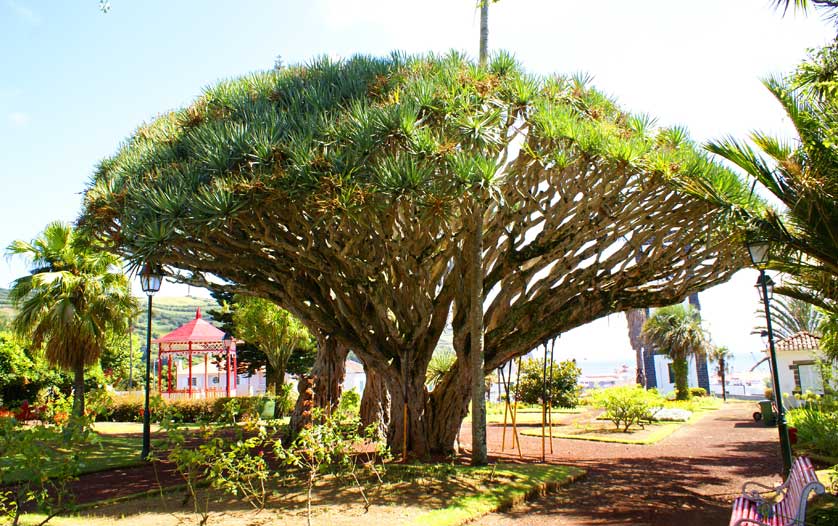
Other natural attractions on Faial include the charming Faial Botanical Garden, the Florêncio Terra Garden and the Jardim da Praça da República in Horta.
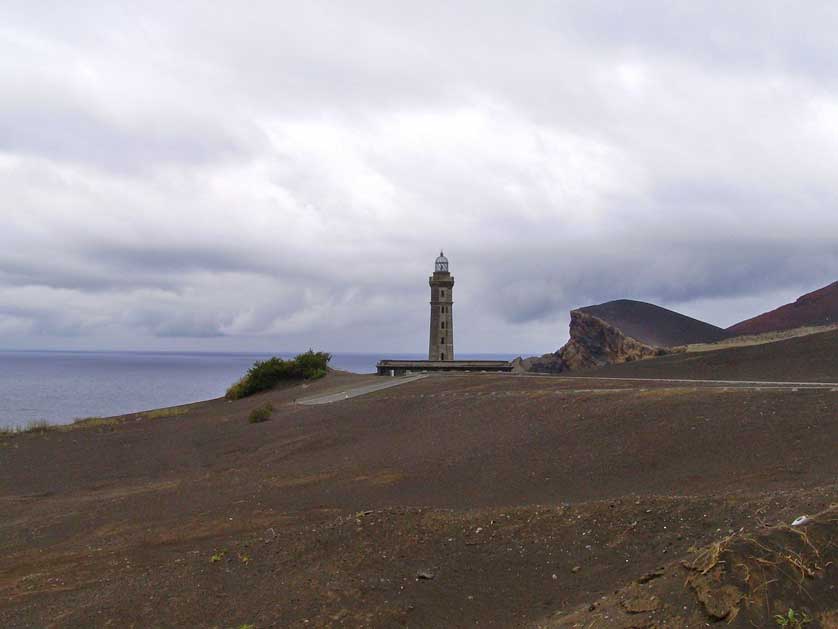
The 1957 eruption partially buried the Capelinhos Lighthouse (Farol da Ponta dos Capelinhos) at the tip of Ponta dos Capelinhos and Costa Nau. Completed in 1894, the lighthouse is 20 meters tall but now buried with volcanic ash up to the second floor of the main structure. Visitors can ascend the lighthouse tower to view the unique landscape.
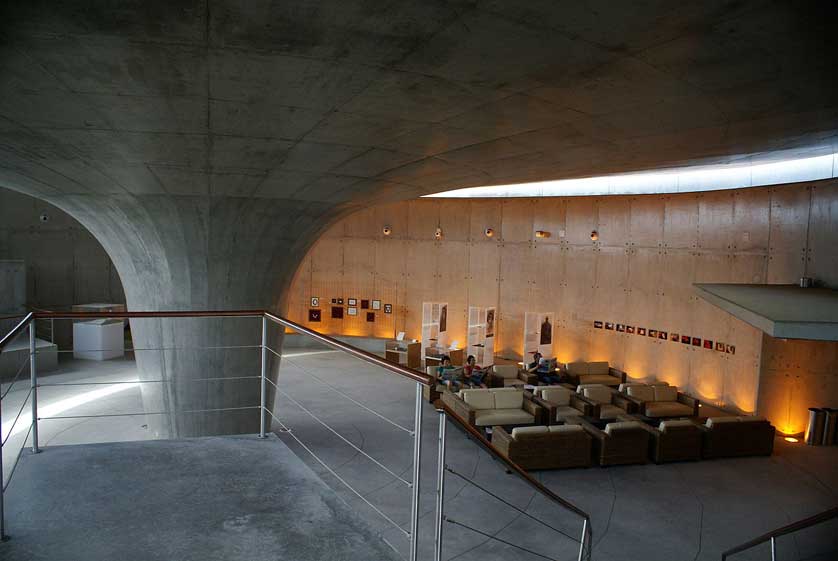
The building now houses the Centro de Interpretação do Vulcão dos Capelinhos, an underground museum dedicated to the event with rock and mineral samples on display.
Festivals
June sees the festival of São João with music from brass bands, folk dances, processions and other events in Horta.
The Nossa Senhora das Angústias Festival takes place on the sixth Sunday after Easter Sunday.
On 1 August is the Senhora da Guia Festival with a parade of boats carrying a statue of the Virgin Mary from Porto Pim to the port in Horta.
Faial Tourist Office
Horta: Posto de Turismo do Faial
Rua Vasco da Gama
9900-117 Horta
Tel: 292 292 237
Getting to + around Faial
Air
Horta Airport (HOR) has connecting flights to Porta Delgada Airport and Lisbon Airport.
Horta Airport connects with the other islands in the Azores with flights to Corvo, Flores, Ponta Delgada and Terceira operated by SATA Air Açores.
The airport is a good place to rent a car on the island.
Flights to Porta Delgada
There are direct flights to Porta Delgada from Lisbon and other European cities including London (Heathrow) with TAP.
Air Azores (part of the SATA Group) flies to many European cities including direct flights to London (Gatwick), Zurich, Munich, Frankfurt, Madrid and many other destinations in Europe. These include Manchester in the UK via Lisbon, Porto, Faro and Funchal.
There are also direct flights to Boston (about 5 hours flying time), Oakland and Providence, Rhode Island in the USA. In addition there are also flights to the Azores from Toronto in Canada.
All the islands of the Azores have air connections from Porta Delgada with SATA Air Azores.
Ferries
There are no ferries from continental Portugal to the Azores. You will have to fly. Ferries do connect the various groups of islands in the Azores, however.
Sailings are subject to the weather and the season, being less frequent in winter when the seas can be rough.
The boats are operated by Atlânticoline (atlanticoline.pt).
Car ferries between the eastern group of islands São Miguel and Santa Maria take 3 hours.
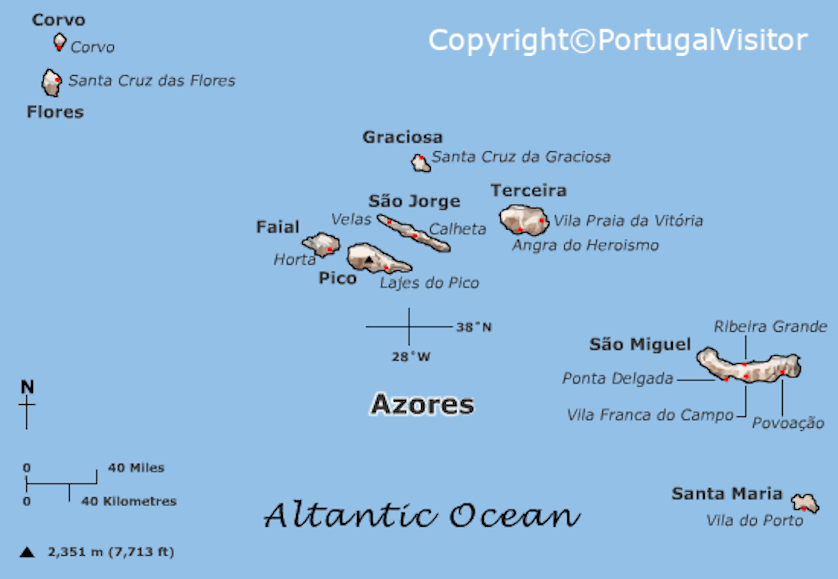
Ferries also connect the central group of islands: São Jorge, Graciosa, Pico, Terceira and Faial.
Faial (Horta) to São Jorge (Velas) takes 2 hours; Faial (Horta) to Pico (São Roque) takes 1 hour, 10 minutes; Faial (Horta) to Pico (Madalena) takes 30 minutes; Pico (Madalena) to São Jorge (Velas) takes 1 hour, 20 minutes; Pico (São Roque) to São Jorge (Velas) is 50 minutes.
The western group of islands Flores and Corvo are connected by a small passenger only ferry (40 minutes).
The ferry terminal on Terceira is in Horta.
*All journey times are dependent on sea conditions.
Bus travel in Portugal
Buses from Horta connect with other towns and villages on the island namely Castelo Branco, Capelo, Praia do Norte and Ribeira Funda running east and north around the coast from Horta. West and north from Horta buses connect to Pedro Miguel, Ribeirinha, Salão, Cedros and Ribeira Funda. Buses from Horta also run to and from Praia do Almoxarife. Another service runs Horta, Flamengos, Castelo Branco and back.
There are also buses from the airport to several places on Faial. Bus services on the island are operated by Farias (farias.pt).
Car Travel in Portugal
Car or taxi rental are good options for exploring the island. Indeed, car rental is really a must if you want to get the most out of your vacation on Faial and visit some of the more remote spots. If you hire a taxi agree a time and place with your driver to pick up you if you go walking or sightseeing.
Search and Book Car Rental in Faial
From the Airport
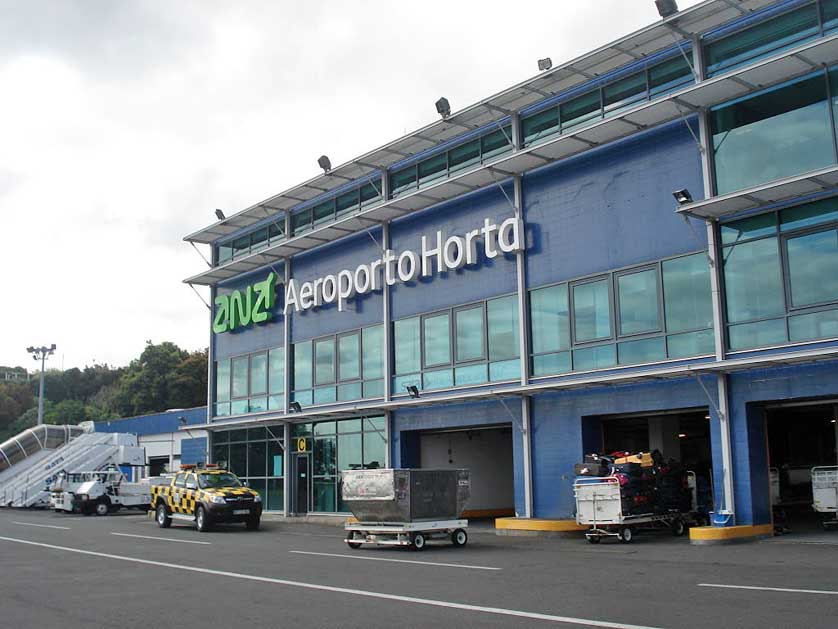
Horta Airport (HOR) is 9.5 km (5.9 miles) southwest of Horta. A few local buses connect to Horta and other settlements on the island. The airport was upgraded in 2021 with the development including a new three story terminal building.
Portugal Hotel & Hostel Accommodation
Featured Hotel
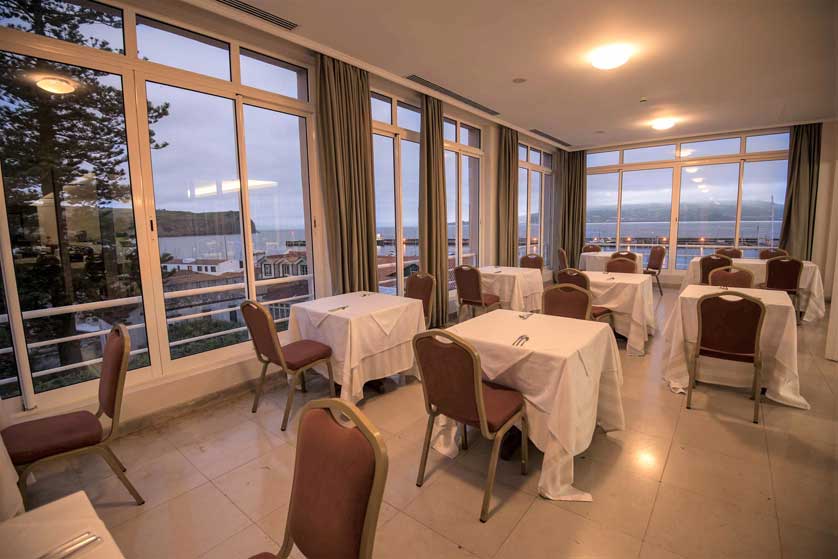
Azoris Faial Garden – Resort Hotel, Faial - Rua Cônsul Dabney, 9900-856 Horta
Faial - Açores, Portugal.
Book this hotel
Horta has the largest concentration of hotels on Faial with both high-end luxury hotels along with more budget guesthouses. Some recommended places to choose from include the boutique Hotel do Canal a 4-star hotel close to the sea, and the Hotel São Francisco with continental breakfast and free WiFi.
Elsewhere on the island try the Residencias Varadouro in the village of Capelo on the west coast or the Pátio Lodge, accommodation with vegetarian food as an option in Cedros on the northern coast.
See a listing of available accommodation in Faial.

Book Hotel Accommodation in Faial & The Azores
Royal Garden Hotel Ponta Delgada
Hotels in Portugal - Booking.com
Hostels in Portugal - Booking.com
Eating
A Faial specialty is stewed octopus in wine which can also be found on the other islands of the Azores. For meat-eaters try the local sausages and boiled beef. Delicious local pastries include Fofas do Faial.
Ah! Boca Santa on Rua Serpa Pinto in Horta comes well recommended to sample the local cuisine as is Pasquinha in Salão on the east coast. Also try out the Restaurante A Árvore in Horta.
Drinking
The Azores produces its own good quality wine, from mostly American grape varieties. The best wines come from Graciosa, Pico and Biscoitos in the north of Terceira.
List your restaurant/bar/hotel/rental villa for FREE contact Advertising
Bars Cafes & Internet Cafes
List your Bar, Cafe or Internet Cafe for FREE - contact Advertising
Faial has a subtropical Mediterranean climate with hot summers and very mild, moist winters.
Get more weather information for Portugal
Maps
Gallery