Portugal Guides: Santa Maria
Santa Maria
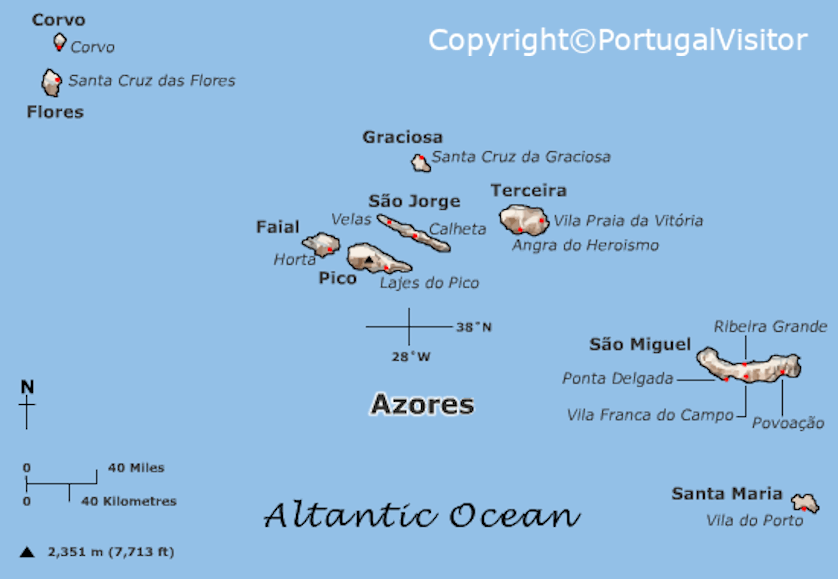
Santa Maria, located due south of São Miguel, is only 17 km by 9 km (10 miles by 5 miles). The island is blessed with golden, sandy beaches and is the driest and sunniest of the Azores islands. It is the southern and easternmost island in the archipelago.
The main town is Vila do Porto. Christopher Columbus stopped over on his way to the Americas. Santa Maria was the first island to be discovered (in 1427 by Diogo Silves) and the first to be settled during Portugal's early Age of Discovery. Settlers, mainly from the Algarve, and cattle to support them, were dispatched by Henry the Navigator.

Vila do Porto
The main town of Vila do Porto ("Town of the Port") in the south west of the island has a population of around 3,000 inhabitants out of the total of 5,000 who live on Santa Maria. The town received it charter (foral) in 1470, the first to do so in the Azores.
The island's airport is west of the town and most of Santa Maria's accommodation options are also here. The main post office (CTT), supermarkets and hospital are all in Vila do Porto.
Churches
The island contains a surprising number of churches considering the size of the population. There are usually one or two per settlement or parish, sometimes more, most are small chapels or hermitages.
These include the Igreja de Nossa Senhora do Bom Despacho in Almagreira. Dating from the 18th century, the church has a plain, white, plaster exterior, a single nave and a bell tower. The main altar is in varnished wood.
The whitewashed Church of Santa Bárbara serves the parish of Santa Bárbara in the municipality of Vila do Porto. The church dates originally from the 16th century and also has a single nave and bell tower. One of the church's earliest priests was captured by Barbary pirates which tells something of the perilous lives of the earliest settlers on the island.

Altogether there are well over a dozen or so churches scattered around Santa Maria. Others include the Ermida de Mãe de Deus (Hermitage of the Mother of God), the Ermida de Nossa Senhora da Conceição and the Ermida de Santo António in the village of Santo Espírito, in the west of the island.
The Chapel of Nossa Senhora dos Anjos is where Columbus' crew prayed and gave thanks for their survival after they were washed up on the island during an Atlantic storm.

Recreational Forest Reserve of Fontinhas
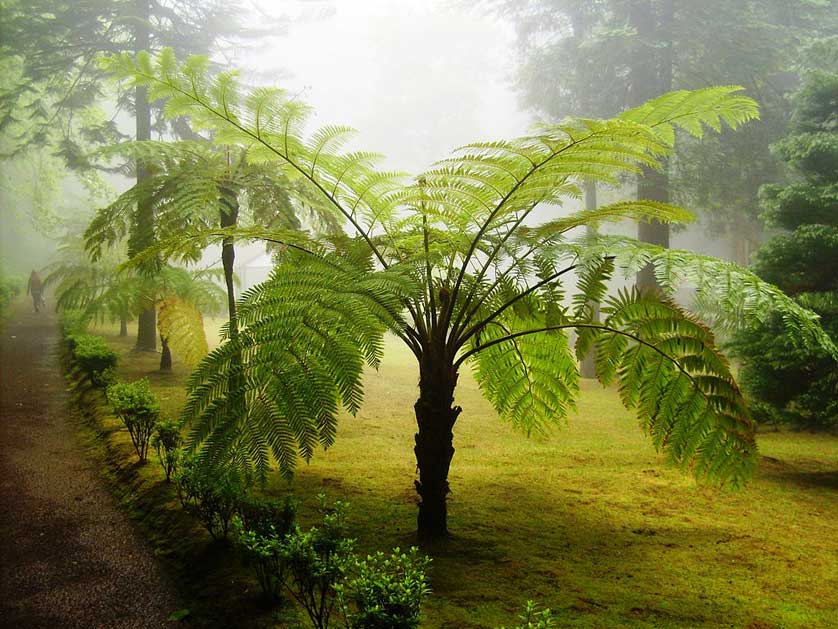
The Recreational Forest Reserve of Fontinhas (Reserva Florestal de Recreio de Fontinhas). An area of natural beauty the site has nature walks and areas set aside for picnics and BBQs.
The forest area has Azorean heather, cryptomeria, rhododendron, sequoia, and tree ferns as well as cedars, oaks and maple trees.
The Reserva Florestal de Recreio Mata do Alto is another such forest reserve. Both have nurseries growing a wide range of plant species for reforestation projects around the island.
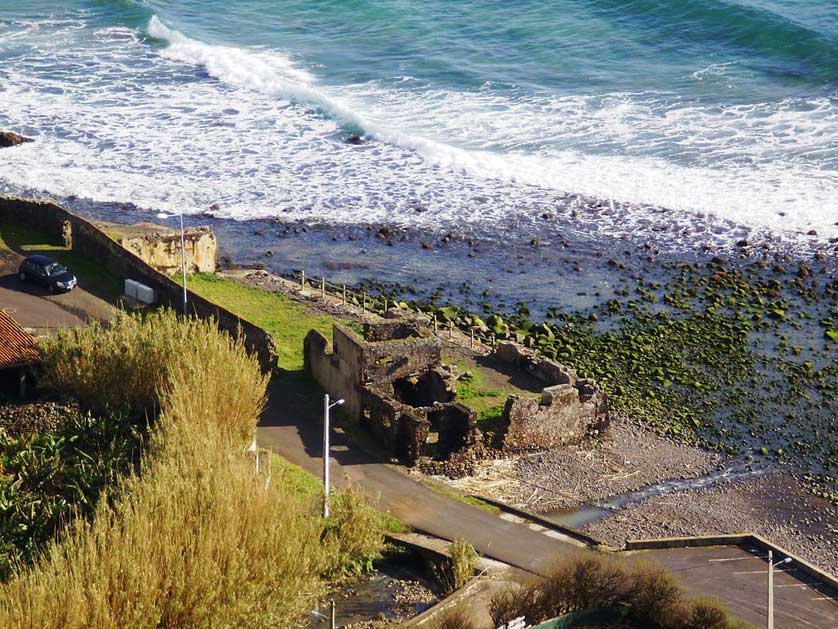
São João Baptista Fort & Prainha Fort
The twin forts of São João Baptista and Forte da Prainha once protected the Praia Bay from attack by various pirates from England, France and North Africa.
The Fort of São João Baptista is a ruined 16th century fort in Almagreira on the southern coast of the island.
The fort was built to defend the island from pirate raids all too common at the time of its construction. Both English raiders (1599) and Barbary pirates from Algeria (1616) landed on the beach that lies below the fortress.
At the time the fortress seems not to have been equipped with sufficient artillery and manpower to effectively oppose the landings.
To the west is Forte da Prainha, its twin fort, also now in slowly crumbling ruins.
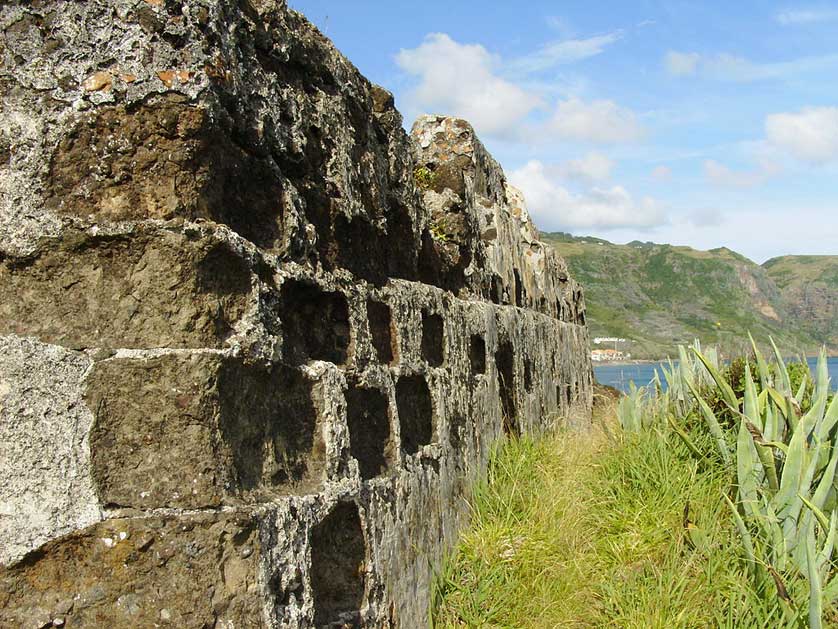
Beaches
The two best beaches on Santa Maria are the sandy stretches of Praia de São Lourenço on the east coast and Praia Formosa on the south coast near Vila do Porto. Both beaches have several restaurants and bars nearby. Close to Praia Formosa are a number of holiday homes to stay. Try the Vila Natura.
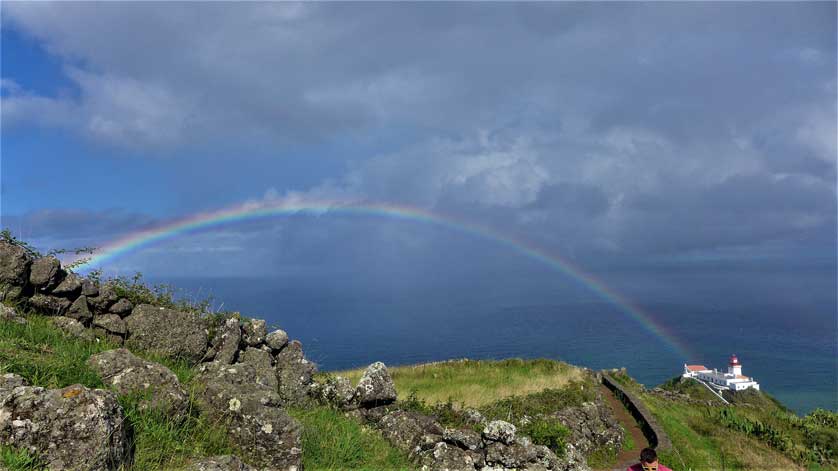
Natural Features
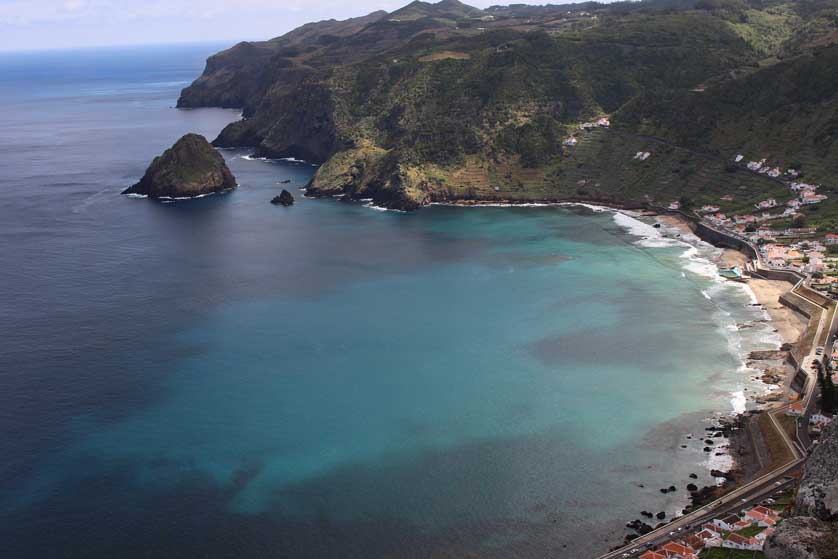
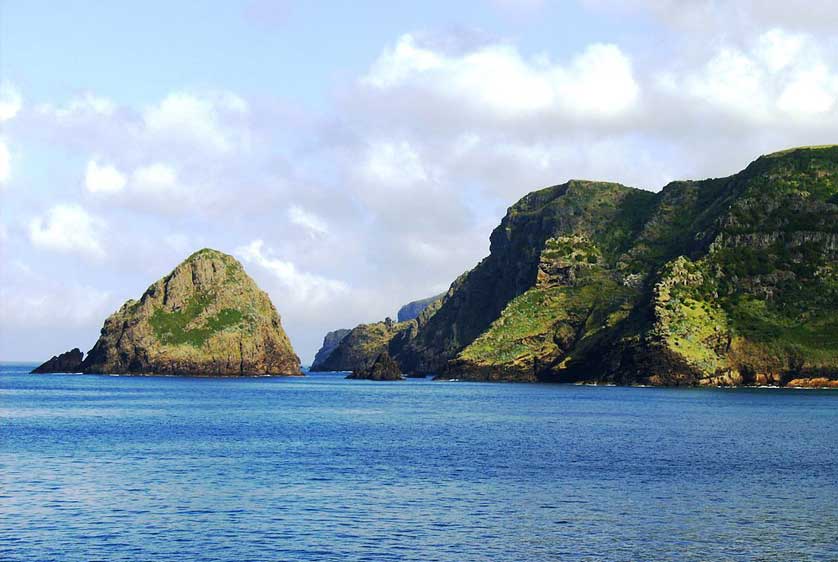
The rugged coastline and steep cliffs of Santa Maria offer some superb sea views. Near the northern coast is the desert-like Barreiro da Faneca, a protected landscape which also includes the bays of Cré, Raposo, and Tagarete, and a popular habitat for multitudes of marine birds.
The highest point on the island is Pico Alto at nearly 600 meters with wonderful views. There is a memorial on the mountain to the victims of the deadliest plane crash in Portugal's history, the loss of Independent Air Flight 1851 which struck Pico Alto in bad weather in 1989. All 144 passengers and crew tragically perished.
The Cascata do Aveiro is a 100 meter high waterfall on the east coast. It can be reached on one of the many walking trails that crisscross the island or by hire car.

Festivals
The main festival on the island is the Nossa Senhora da Assunção Festival held in August. The patron saint of Santa Maria is celebrated with religious processions as well as concerts, dancing and much eating and drinking. The events take place not just in Vila do Porto but also in the smaller villages around the island.
The Maré de Agosto Music Festival is a world music festival also in August.
Santa Maria Tourist Office
Airport: Aeroporto, Apartado 560
9580 Vila do Porto
Tel: +351 296 886 355
Getting to + around Santa Maria
Air
Santa Maria Airport (SMA) was built during World War II and served as an American airbase. It now has connecting flights to Porta Delgada Airport and Lisbon Airport.
There are direct flights to Porta Delgada from Lisbon and other European cities including London (Heathrow) with TAP.
Air Azores (part of the SATA Group) flies to many European cities including direct flights to London (Gatwick), Zurich, Munich, Frankfurt, Madrid and many other destinations in Europe. These include Manchester in the UK via Lisbon, Porto, Faro and Funchal.
There are also direct flights to Boston (about 5 hours flying time), Oakland and Providence, Rhode Island in the USA. In addition there are also flights to the Azores from Toronto in Canada.
All the islands of the Azores have air connections from Porta Delgada Airport with SATA Air Azores.
Ferries
There are no ferries from continental Portugal to the Azores. You will have to fly. Ferries do connect the various groups of islands in the Azores, however.
Sailings are subject to the weather and the season, being less frequent in winter when the seas can be rough.
The boats are operated by Atlânticoline (atlanticoline.pt).
Car ferries between the eastern group of islands São Miguel and Santa Maria take 3 hours.
Ferries also connect the central group of islands: São Jorge, Graciosa, Pico, Terceira and Faial.
Faial (Horta) to São Jorge (Velas) takes 2 hours; Faial (Horta) to Pico (São Roque) takes 1 hour, 10 minutes; Faial (Horta) to Pico (Madalena) takes 30 minutes; Pico (Madalena) to São Jorge (Velas) takes 1 hour, 20 minutes; Pico (São Roque) to São Jorge (Velas) is 50 minutes.
The western group of islands Flores and Corvo are connected by a small passenger only ferry (40 minutes).
The ferry terminal on Santa Maria is on the south coast in Vila do Porto.
*All journey times are dependent on sea conditions.
Bus travel in Portugal
Buses from Vila do Porto connect with most villages on the island.
Car Travel in Portugal
Car or taxi rental are good options for exploring the island. Indeed, car rental is a must if you really want to make the most of your time on Santa Maria.
Search and Book Car Rental in Santa Maria
From the Airport
The Santa Maria Airport (Aeroporto de Santa Maria) is 3 km west of Vila do Porto. The circular C4 bus runs out to the airport from the town center (25 minutes).
Portugal Hotel & Hostel Accommodation
Featured Hotel
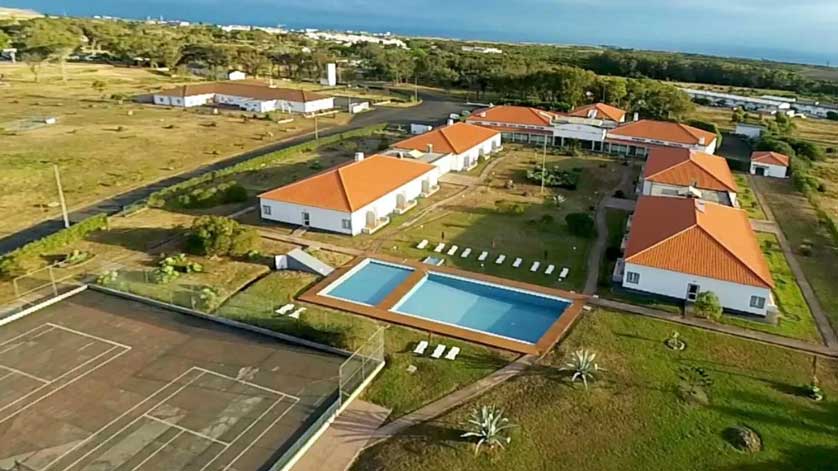
Hotel Santa Maria - Rua da Horta, 9580-421 Vila do Porto, 4 star, close to the airport
Book this hotel
Vila do Porto has the largest concentration of hotels on Santa Maria. Some places to choose from include the Hotel Colombo with outdoor pool, gym and Turkish bath, and the Charming Blue set within an English-style botanical garden in a Palladian building.
Elsewhere on the island try the Casa da Avó - Turismo Rural in the pretty, rural village of Santo Espírito or the Casa de Lagoa a holiday home in Lagoinhas in the north.
See a listing of available accommodation in Santa Maria.
Book Hotel Accommodation in Santa Maria
Royal Garden Hotel Ponta Delgada
Hotels in Portugal - Booking.com
Hostels in Portugal - Booking.com
Eating
A Santa Maria specialty is Biscoitos de Orelha ('Ear Cookies').
Drinking
The Azores produces its own good quality wine, mostly American varieties. The best wines come from Graciosa, Pico and Biscoitos on Terceira.
List your restaurant/bar/hotel/rental villa contact Advertising
Bars Cafes & Internet Cafes
List your Bar, Cafe or Internet Cafe for FREE - contact Advertising
Santa Maria has a subtropical Mediterranean climate with hot summers and very mild, moist winters.
Get more weather information for Portugal
Maps