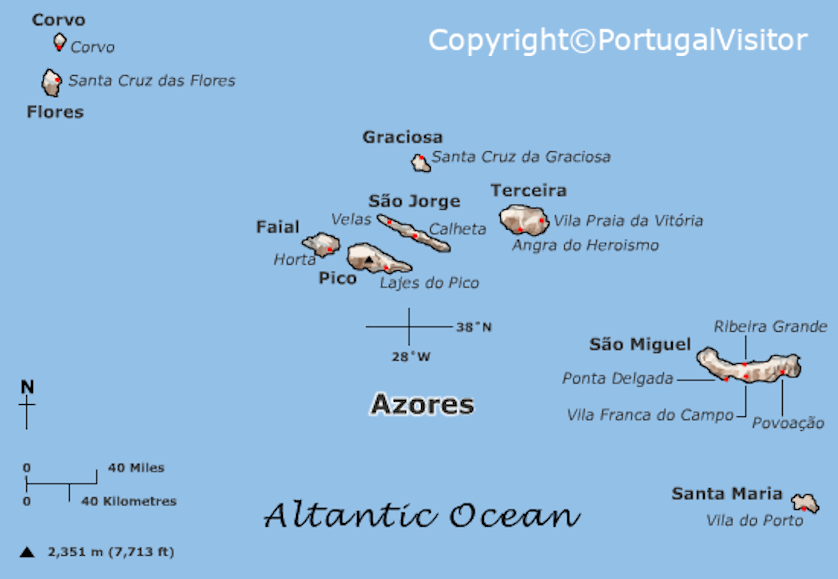
Portugal Guides: São Miguel
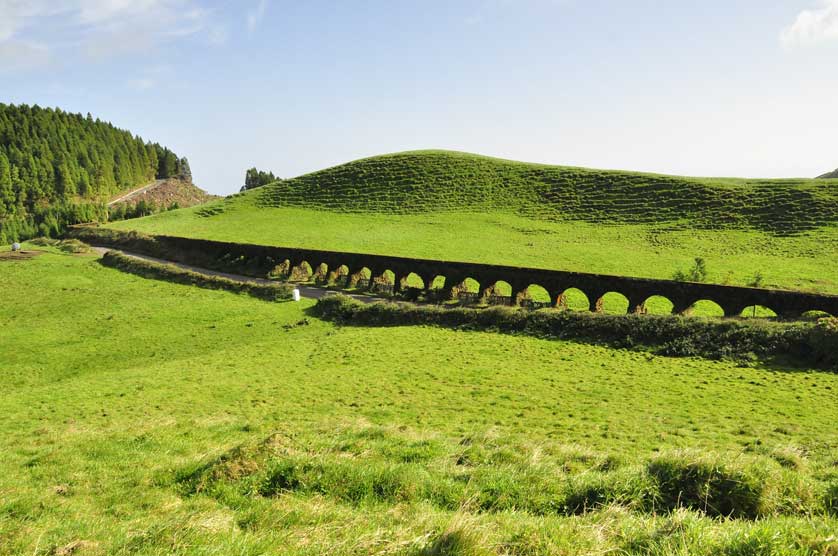
São Miguel The Azores
São Miguel is the largest of the islands of the Azores (65 km by 16 km, 40 miles by 10 miles) and the most populated (population 140,000). In fact over half the population of the Azores lives on São Miguel.
Known as the "green island", São Miguel is the center of government and the Azores' transport hub for international and inter-island flights. Important industries include agriculture, fishing and tourism. The island grows tea and tobacco and is known for its diary farming.
Lonely Planet labels the Azores "the Hawaii of the Atlantic" and the balmy weather, blissful beaches and active volcanoes are just some of the many similarities between the two groups of islands.

Ponta Delgada
The main town of Ponta Delgada on the south coast is beautifully located amidst a backdrop of small volcanic cones. The largest town in the Azores archipelago, it has a population of around 69,000 inhabitants. The University of the Azores is here along with the main government offices. Ponta Delgada has the best choice of accommodation to choose from on the island from 5-star resort hotels to more budget guesthouses.
Churches
The town contains several fine baroque churches including the 16th century Igreja Matriz de São Sebastião, the 17th century São Pedro and the 18th century São João.
The Igreja Matriz de São Sebastião was built between 1531 and 1547. The church is dedicated to São Sebastião, the patron saint of the city. It is best known for its superb Manueline doorway. Inside around the altar is extensive gilded wood as well as fine azulejos tile work.

The Ermida de Mãe de Deus (Hermitage of the Mother of God) is a small, beautiful church in Ponta Delgada. It is built over what was once the former Fort of Mãe de Deus in the 16th century.
This church was demolished in 1915 during World War I due to fears it might act as a sighter for German U-boats. A new church rose in its place in 1947. Constructed in local basalt and Neo-Baroque in style, the Ermida de Mãe de Deus has a bell tower and a single nave. Its decorative facade is of particular charm.
The Church of the Jesuit College (Igreja do Colégio dos Jesuítas de Ponta Delgada) in Ponta Delgada, dates from the late 16th century. After the expulsion of the Jesuits from Portugal by the Marquis of Pombal, the building served as a private residence, warehouse and shop before it was abandoned in 1960.
Thereafter from the 1990s on the structure has been progressively restored. Part of the site is now occupied by the Ponta Delgada Public Library and Archive. The interior of the church is richly decorated with ornate woodwork and azulejos tiles in the various chapels and the chancel.
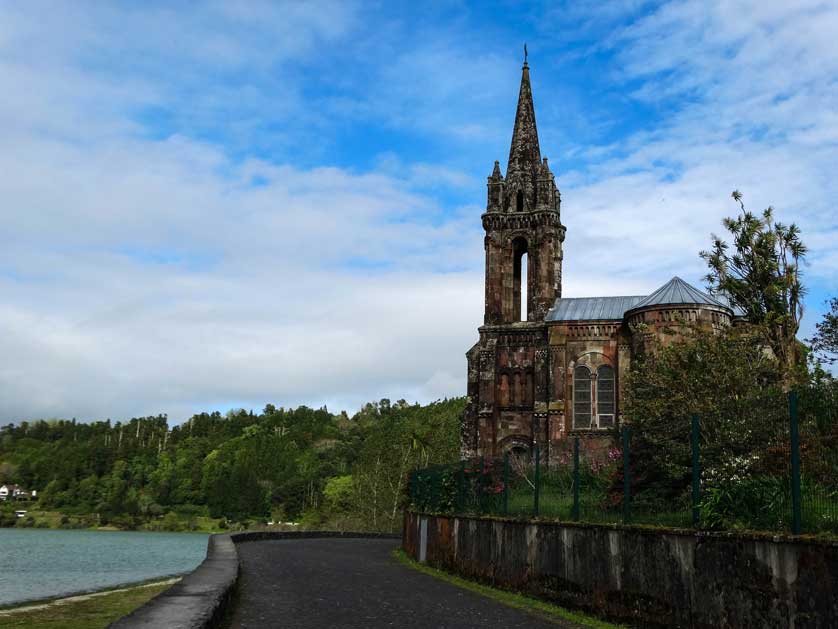
The Igreja da Nossa Senhora das Vitórias (Chapel of Our Lady of Victories) is a funerary chapel in Furnas about 40 km east of Ponta Delgada. It was built by José do Canto a wealthy, local landowner, agriculturist and botanist to honour his wife after her death. Constructed in local stone, this Neo-Gothic marvel with artistic stained glass was consecrated in 1886. Set near a lake, this beautiful building is a must-see on the island. No services are held in the chapel, where José do Canto is entombed next to his wife.
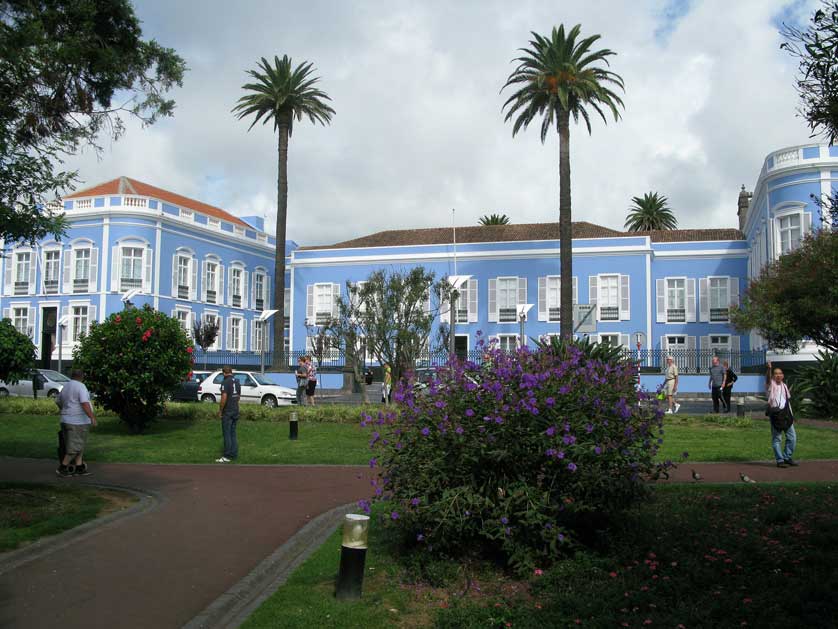
Palácio da Conceição
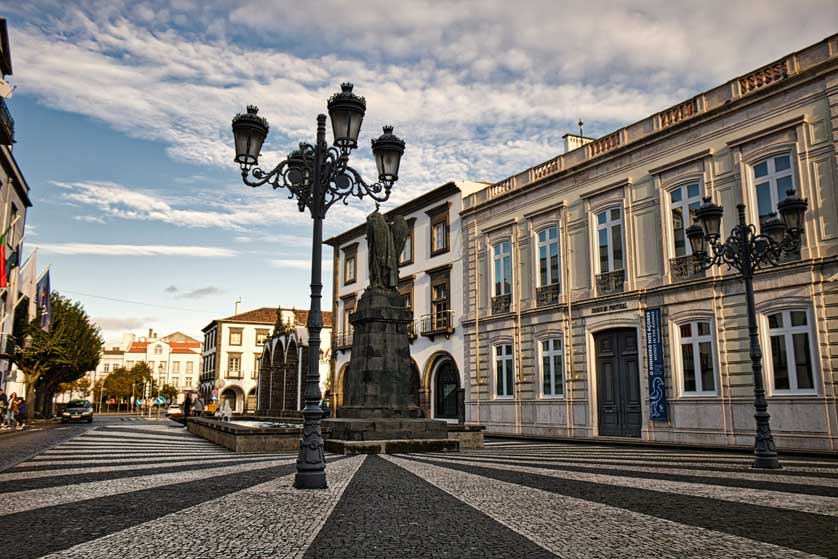
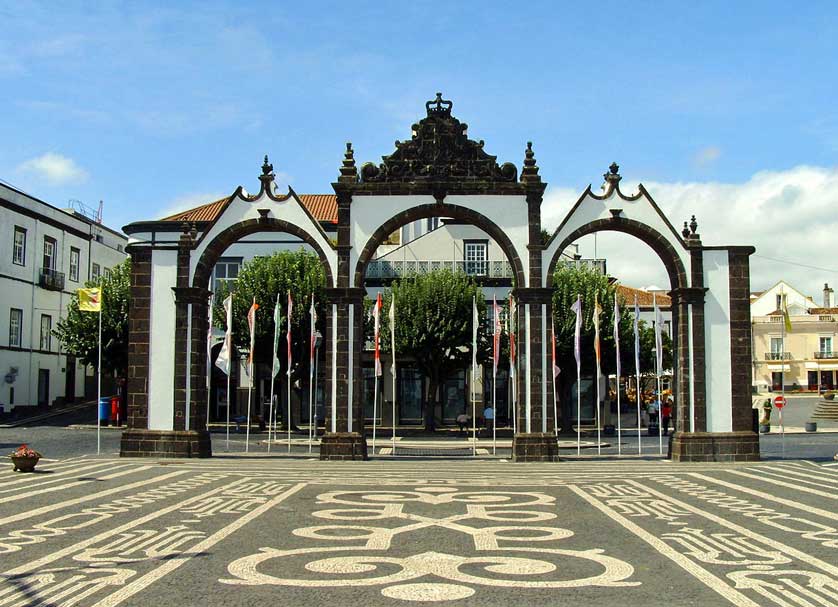
The fine, 19th-century Palácio da Conceição houses the present-day government buildings and is of architectural interest, as is the baroque Casa de Carlos Bicudo with its mermaid façade and the three arches of the city gates - Portas da Cidade.
The Museu Carlos Machado housed in a 16th century convent is of interest for its exhibits of the natural history, art and ethnography of the Azores and for a great view of the city head up to Reduto de Mãe de Deus.
Caldeira das Sete Cidades
Outside Ponta Delgada the interior of the island offers some wonderful sites. To the west, the twin lakes set within the Caldeira das Sete Cidades appear one green and the other blue.
The area is part of the Sete Cidades Massif an ancient volcanic landscape. Buses run out here from Ponta Delgada.
Ribeira Grande
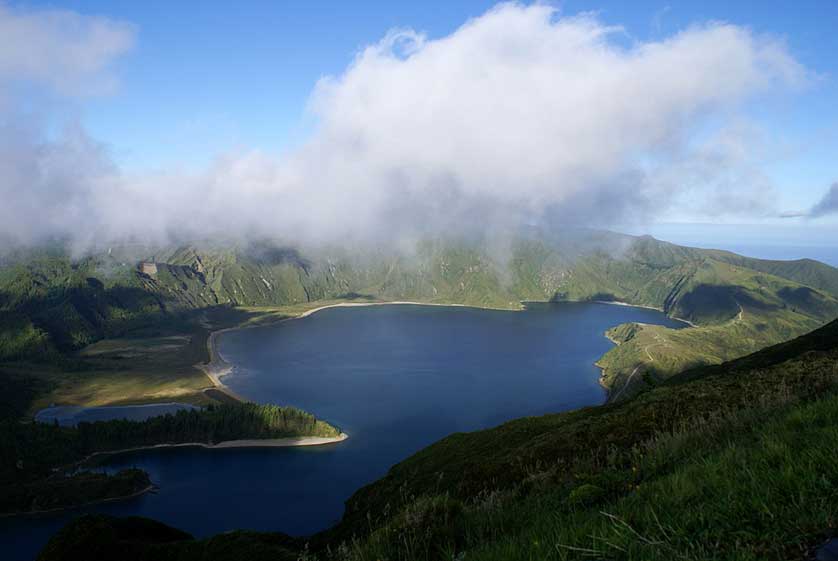
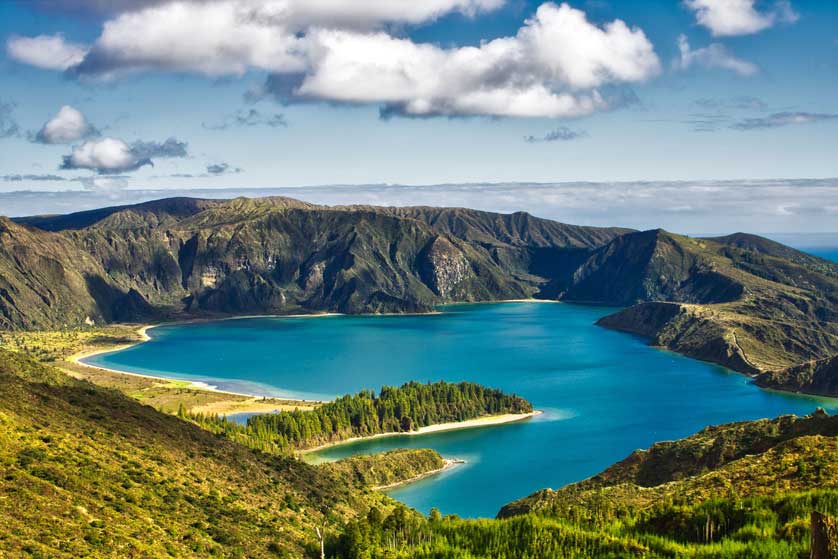
In the north, the historical town of Ribeira Grande is full of exquisite churches and a little out of town are the hot springs of Caldeiras da Ribeira Grande and to the south the spectacular Lagoa da Fogo (Fire Lake) which makes for a pleasant hike through the scenic surroundings.
The Lagoa da Fogo is part of the Água de Pau Massif stratovolcano and is a protected area of natural beauty. Many species of plants thrive in this pristine area including local juniper, laurel and heather.
Traveling east of Ponta Delgada are the small town of Lagoa noted for its ceramics, good beaches at Prainha and Agua d'Alto and the town of Vila Franca do Campo, the former capital of the island with some beautiful churches and an interesting civic museum.
The Igreja de Santa Cruz is another historic church located in Lagoa. Just offshore is the picturesque islet of Ilheu - ideal for swimming or a picnic.

Furnas
To the northeast, past the crater lake of Lagoa das Furnas is the village of Furnas, famous for its bubbling hot springs and mud. A local delicacy is cozido - meat and vegetables cooked in pots buried in the hot earth.
Several of the hotels here have their own thermal baths and spas including the Furnas Boutique Hotel Thermal & Spa and Parque Terra Nostra. The latter is set in its own botanical garden.
São Miguel is a center for whale-watching, has two good golf courses at Ponta Delgada and Furnas and also offers scuba diving, snorkeling, sailing and boat-hire opportunities. Non-aquatic activities include horse riding and hiking.
Festivals
The fifth Sunday after Easter is celebrated in Ponta Delgada with the large Festas do Senhor Santo Cristo dos Milagres (Lord Holy Christ of the Miracles). The streets are carpeted with flowers and there are processions with brass bands. An image of Senhor Santo Cristo (Lord Holy Christ) garlanded with flowers is carried through the streets.
Parque Atlantico
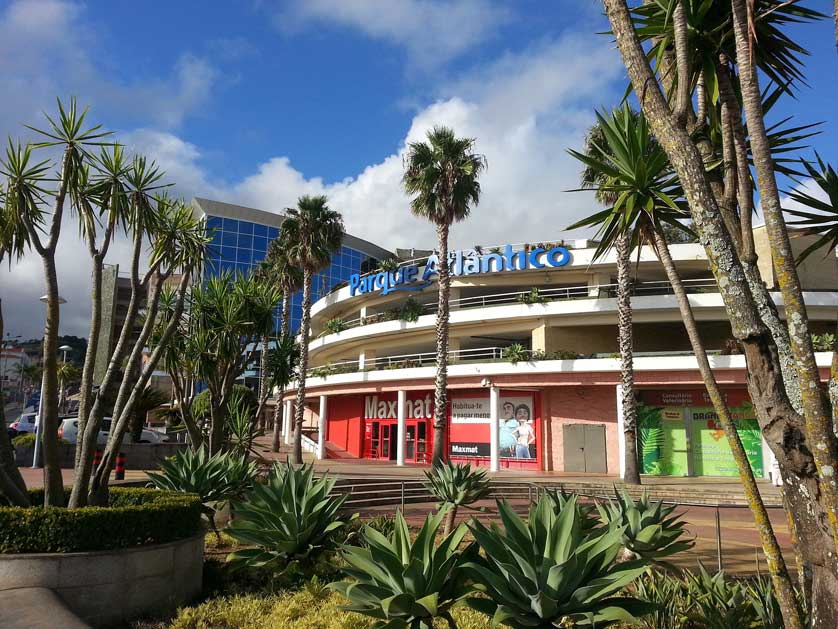
The Parque Atlantico is the largest shopping mall on the island. There's a range of designer shops, a cinema and excellent supermarket to stock up on a range of local goods. It's just across from the Jardim Antonio Borges - a botanical garden laid out in the mid-19th century full of rare and exotic plants.

São Miguel Tourist Offices
Ponta Delgada Av. Infante D. Henrique 9504-528 Tel: 296 285 743, 296 285 125
Airport: Posto de Turismo do Aeroporto de Ponta Delgada Tel: 296 284 569
Furnas Posto de Turismo das Furnas tel: 296 584 525
Ribeira Grande Posto de Turismo da Ribeira Grande Tel. 296 472 118
Getting to + around São Miguel
Air
There are direct flights to Porta Delgada from Lisbon and other European cities including London (Heathrow) with TAP.
Air Azores (part of the SATA Group) flies to many European cities including direct flights to London (Gatwick), Zurich, Munich, Frankfurt, Madrid and many other destinations in Europe. These include Manchester in the UK via Lisbon, Porto, Faro and Funchal on Madeira.
There are also direct flights to Boston (about 5 hours flying time), Oakland and Providence, Rhode Island in the USA. In addition there are also flights to the Azores from Toronto in Canada.
All the islands of the Azores have air connections from Porta Delgada with SATA Air Azores. Inter-island flights operated by SATA Air Azores fly to Santa Maria.
Ferries
There are no ferries from continental Portugal to the Azores. You will have to fly. Ferries do connect the various groups of islands in the Azores, however.
Sailings are subject to the weather and the season, being less frequent in winter when the seas can be rough.
The boats are operated by Atlânticoline (atlanticoline.pt).
Car ferries between the eastern group of islands São Miguel and Santa Maria take 3 hours.
Ferries also connect the central group of islands: São Jorge, Graciosa, Pico, Terceira and Faial.
Faial (Horta) to São Jorge (Velas) takes 2 hours; Faial (Horta) to Pico (São Roque) takes 1 hour, 10 minutes; Faial (Horta) to Pico (Madalena) takes 30 minutes; Pico (Madalena) to São Jorge (Velas) takes 1 hour, 20 minutes; Pico (São Roque) to São Jorge (Velas) is 50 minutes.
The western group of islands Flores and Corvo are connected by a small passenger only ferry (40 minutes).
The ferry terminal on São Miguel is in Ponta Delgada.
*All journey times are dependent on sea conditions.
Bus travel in Portugal
Buses from Ponta Delgada connect with most towns on the island. There is also a municipal bus service in Ponta Delgada.
Car Travel in Portugal
Car or taxi rental are good options for exploring the island. Indeed, car rental is a must if you really want to make the most of your time on the island.
Search and Book Car Rental in São Miguel
From the Airport
The João Paulo II Airport is 2-3 km west of Ponta Delgada, there are hourly buses to the town center.
Portugal Hotel & Hostel Accommodation
Featured Hotel

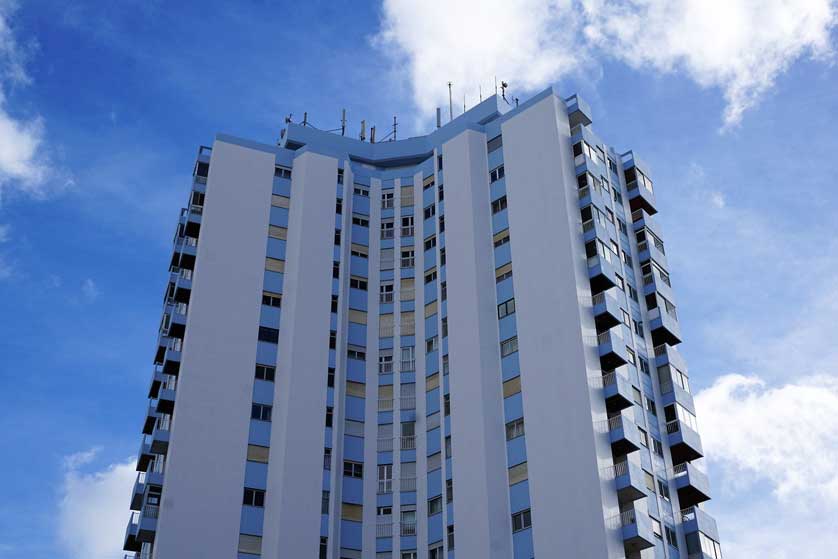
Hotel VIP Executive - Rotunda de São Gonçalo 131 - S. Pedro, Ponta Delgada - 229 rooms, 4 star
Book this hotel
Ponta Delgada has the largest concentration of hotels on São Miguel. Some places to choose from include The Lince Azores with outdoor pool, and the Hotel Casa do Jardim set within an English-style botanical garden in a Palladian building.
Elsewhere on the island try the Hotel do Mar in the quaint village of Povoaçao also complete with outdoor pool and hot tub or the Casa de Lagoa a country house with garden superbly located lakeside in Sete Cidades.
See a listing of available accommodation in São Miguel.

Book Hotel Accommodation in São Miguel
Royal Garden Hotel Ponta Delgada
Hotels in Portugal - Booking.com
Hostels in Portugal - Booking.com
Eating
São Miguel has some of the most varied cuisine in the Azores with a number of good local fish restaurants and international cuisine also well represented. Beef and cheese are two of the island's most famous agricultural products.
Drinking
The Azores produces its own good quality wine, mostly American varieties. The best wines come from Graciosa, Pico and Biscoitos on Terceira.
List your restaurant/bar/hotel/rental villa contact Advertising
Bars Cafes & Internet Cafes
List your Bar, Cafe or Internet Cafe for FREE - contact Advertising
São Miguel has a subtropical Mediterranean climate with hot summers and very mild, moist winters.
Get more weather information for Portugal
Maps