Portugal Guides: Pico

Pico
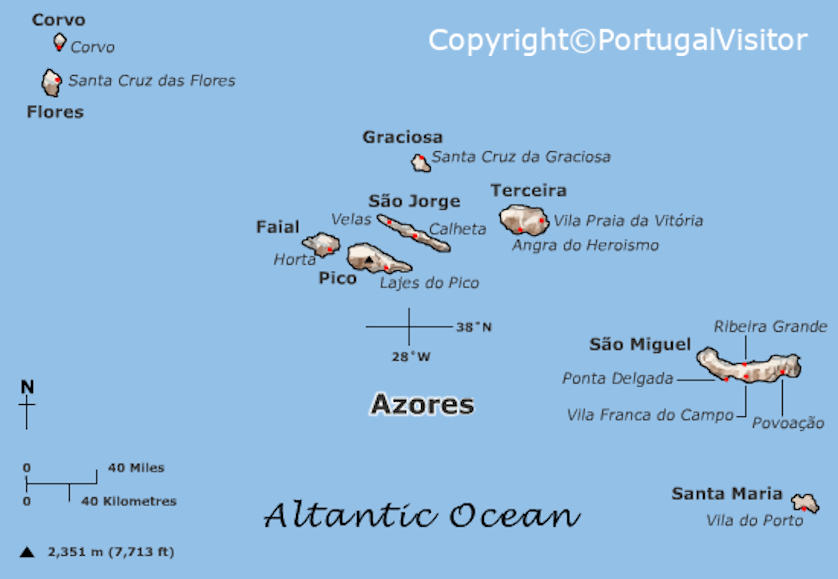
Pico is the second largest island in the Azores archipelago. It is one of the three islands that form the so-called "Triangle" (Triangulo) along with Faial and São Jorge.
46 km long and 16 km at its widest, Pico is 17.5 km south of São Jorge and only 7 km east of Faial.
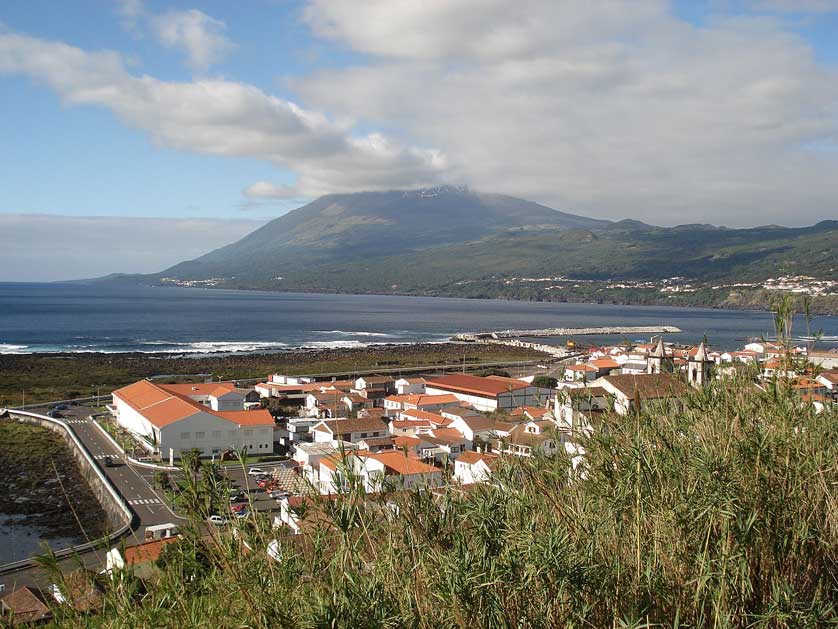
Pico is dominated by the Azores' and Portugal's highest mountain, the 2,351 meters (7,712 ft) Mount Pico.
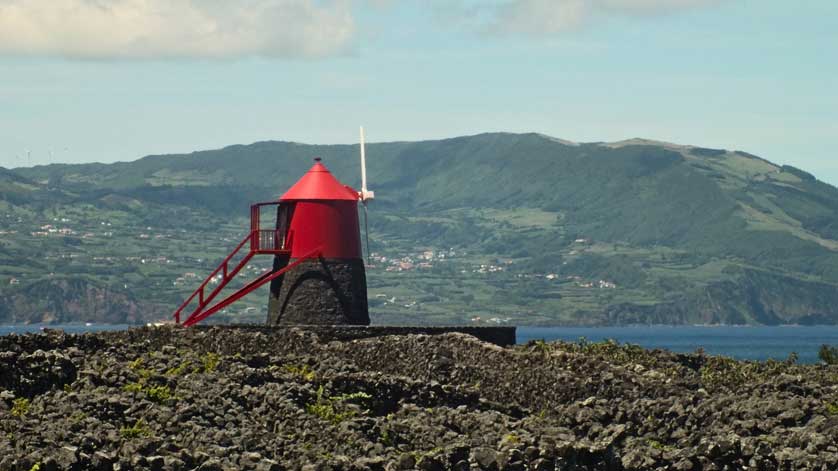
The fertile, forested interior has relatively recent lava flows (mistérios), fascinating caves and grottoes and some fine vineyards sheltered by stone walls.
The island has a long association with whaling (Moby Dick was set in its waters) and the town of Lajes do Pico has a small but interesting whaling museum - the Museu dos Baleeiros - which organizes whale-watching trips in the May-September season.
The main towns are São Roque and the island's other ferry port at Madalena.
The island of Pico was one of the last in the chain to be settled during the Age of Discovery under direction from Henry the Navigator.
Immigrants came mostly from other islands in the Azores as well as from the Alentejo and Algarve regions in the south of Portugal.
The early economy was based on wine production mainly for export to Britain, North America, the West Indies and Portugal's colony in Brazil. Fruits were also grown but mainly for domestic consumption.
The devastating 1720 earthquake led to an exodus from the island and many Picoans subsequently left for Brazil.
Later hunting for sperm whales off the coast became a major industry until whaling was finally abolished in 1986.
São Roque & Madalena
The main towns are São Roque on the north coast and Madalena on the east coast. Both have ports with ferry connections to other islands in the Azores.
Madalena is the larger of the two with a population of around 6,000 people whereas São Roque is home to approximately 3,000 inhabitants. The entire population of Pico numbers just over 13,600.
Both towns have an abundance of accommodation options including hotels, guesthouses and holiday homes as well as some good restaurants and cafes.
Smaller settlements are scattered around the coast.
Museums
Museums on Pico include the Museu da Indústria Baleeira (Whaling Industry Museum) in São Roque dedicated to the island's long history of whaling. This is housed in the former factory where the whale carcasses (mostly sperm whales) were rendered for their meat and oil. The building dates from 1946 and was in operation until 1984.
On display are old black and white and color photographs, the machines and tools used in butchering the whales, weapons to kill them and a Bedford truck to transport the finished products. There are also whaling boats, original documents, scrimshaw pieces and a statue of a traditional hunter with a harpoon located outside in front of the museum.
The exhibits have explanations in both English and Portuguese.
The smaller Museu dos Baleeiros is in Lajes do Pico on the south coast. It too has whaling boats, tools, photographs and scrimshaw on display. An interesting film introduces the history of whaling on the island.
Yet another museum with a whaling theme is the Centro de Artes e de Ciências do Mar housed in a former processing factory for the large cetaceans. As well as exhibits on whaling, the museum also holds temporary exhibitions of various kinds. The institution is supported by the University of the Azores.
The Museu do Vinho do Pico in Madalena is housed in a fine, historic building that once belonged to the Convento do Carmo. The museum and its grounds include a wine press, a vineyard, fountains and a number of the island's ancient and iconic "Dragon trees" (Dracaena draco).


Churches
Like all of the islands in the Azores, Pico has a good number of churches distributed in the towns and villages of the island.
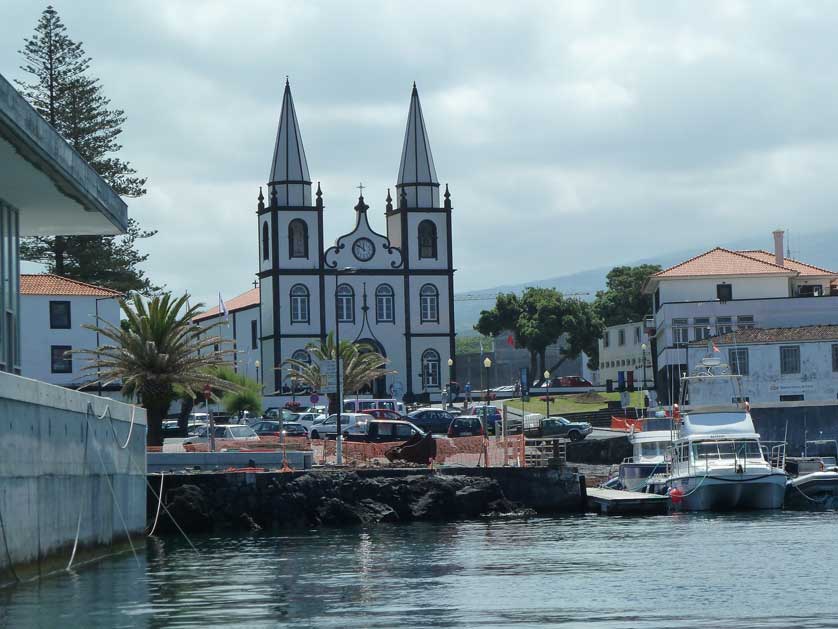
The Church of Santa Maria Madalena is located facing the sea in the port town of Madalena.
Inside, the 19th-century church is known for its exquisite tile work showing scenes from everyday life on the island and its stained glass. It is the largest church on this island of 13,600 people.


Forts
As with all the islands in the Azores archipelago, Pico suffered repeated attacks from pirates. Forts were built on the western coast around Areia Funda to protect the channel between Pico and Faial and to provide a crossfire with Forte de Greta on Faial.


Beaches
Pico's black, sandy beaches and natural rock pools formed by ancient lava flows (piscinas naturais) are scattered around the coast. Lajes do Pico on the south coast is a good place to swim along with Poça das Mujas near Calheta de Nesquim and Canto da Areia on the northern coast.
Natural Features
The island is volcanic in nature like the rest of the Azores. Pico is referred to as Ilha Preta ("Black Island"), due to its black, volcanic soils, ideal for the production of vines and citrus fruits.
The central part of Pico is dominated by Mount Pico at 2,351 meters. Its conical shape can be seen from everywhere on the island and on clear days from the other islands in "The Triangle" - Faial and São Jorge. The mountain can be hiked in about two to four hours from the trailhead. Come well-prepared with the appropriate gear.
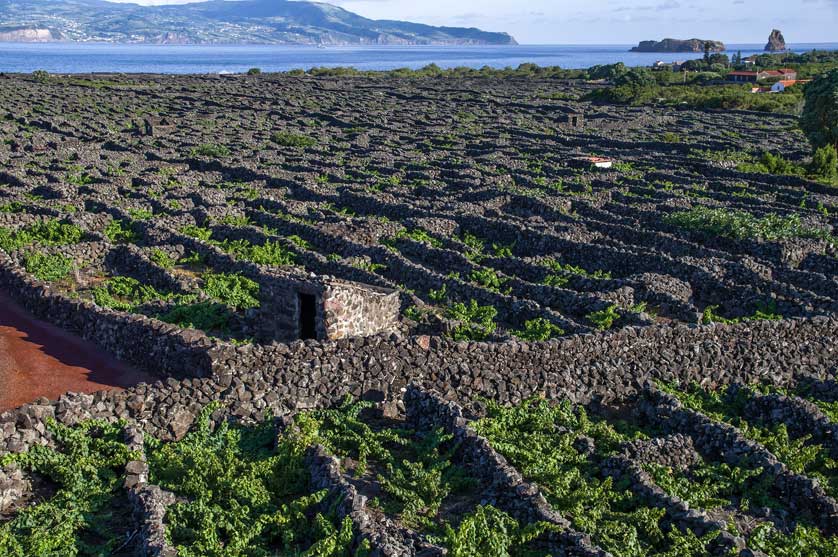
Pico is also host to a unique man-made environment on its volcanic coast - a 987 hectare site of protective dry-stone walls built to shield the thousands of tiny plots of land (currais) from the elements.
The sheltered plots have been used since the 15th century to grow vines to produce the island's distinctive Pico Wine (Vinho do Pico). They were recognized as a UNESCO World Heritage Site in 2004.
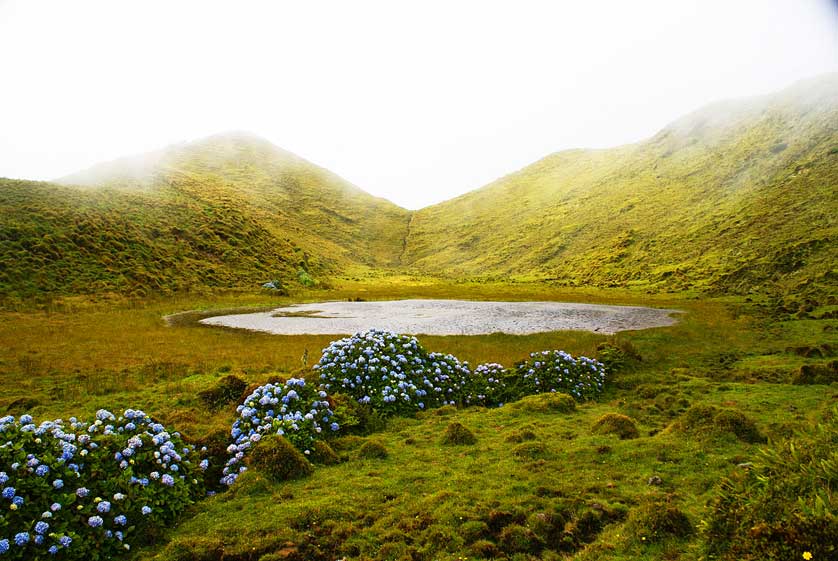
Other natural attractions on Pico include the caves at Gruta das Torres, as well as several lakes.
Festivals
Espirito Santo is an important festival on Pico and has been celebrated with much gusto since the first days of settlement.
Other local festivals include Bom Jesus in São Mateus on August 6 and the Semana dos Baleeiros with parades in the last week of August in Lajes do Pico.
The Grape Harvest is marked in mid-September as well as the Festival of Saint Mary Magdalene in Madalena on July 22.
Pico Tourist Office
Madalena: Posto de Turismo do Pico
Rua Conselheiro Terra Pinheiro
9950 Madalena
Tel: 292 623 524
Getting to + around Pico
Air
Pico Airport (PIX) has connecting flights to Porta Delgada Airport and Lisbon Airport.
Pico Airport (Aeroporto do Pico) connects with the other islands in the Azores including Ponta Delgada and Terceira operated by SATA Air Açores.
The airport is a good place to rent a car on the island.
Flights to Porta Delgada
There are direct flights to Porta Delgada Airport from Lisbon and other European cities including London (Heathrow) with TAP.
Air Azores (part of the SATA Group) flies to many European cities including direct flights to London (Gatwick), Zurich, Munich, Frankfurt, Madrid and many other destinations in Europe. These include Manchester in the UK via Lisbon, Porto, Faro and Funchal.
There are also direct flights to Boston (about 5 hours flying time), Oakland and Providence, Rhode Island in the USA. In addition there are also flights to the Azores from Toronto in Canada.
All the islands of the Azores have air connections from Porta Delgada with SATA Air Azores.
Ferries
There are no ferries from continental Portugal to the Azores. You will have to fly. Ferries do connect the various groups of islands in the Azores, however.
Sailings are subject to the weather and the season, being less frequent in winter when the seas can be rough.
The boats are operated by Atlânticoline (atlanticoline.pt).
Car ferries between the eastern group of islands São Miguel and Santa Maria take 3 hours.
Ferries also connect the central group of islands: São Jorge, Graciosa, Pico, Terceira and Faial.
Faial (Horta) to São Jorge (Velas) takes 2 hours; Faial (Horta) to Pico (São Roque) takes 1 hour, 10 minutes; Faial (Horta) to Pico (Madalena) takes 30 minutes; Pico (Madalena) to São Jorge (Velas) takes 1 hour, 20 minutes; Pico (São Roque) to São Jorge (Velas) is 50 minutes.
The western group of islands Flores and Corvo are connected by a small passenger only ferry (40 minutes).
The ferry terminals on Pico are in São Roque and Madalena.
*All journey times are dependent on sea conditions.
Bus travel in Portugal
Bus transport is intermittent on the island but a bus does run from Madalena along the northern coast.
Car Travel in Portugal
Car or taxi rental are good options for exploring the island. Indeed, car rental is really a must if you want to get the most out of your vacation on Pico and visit some of the more remote spots. If you hire a taxi agree a time and place with your driver to pick up you if you go walking or sightseeing.
Search and Book Car Rental in Pico
From the Airport
Pico Airport (PIX) is 8 km (5 miles) east of Madalena.
Portugal Hotel & Hostel Accommodation
Featured Hotel

Jeiroes Do Mar - Rua Alexandre Herculano, 9950-301 Madalena - Açores, Portugal.
Book this hotel
Pico is blessed with a large number of places to stay ranging from a few high-end luxury hotels to many apartments, villas and budget guesthouses.
Some well-liked properties to choose from include the Hotel Caravelas in Madalena with an outdoor pool and car rental. The Pousada do Pico is a youth hostel within the 17th-century São Pedro de Alcântara Convent.
Elsewhere on the island try the Vila Holanda Bed & Breakfast in the village of Santana on the north coast or the Casa dos Caldeiras, bed & breakfast accommodation with continental breakfast in Lajes do Pico.
See a full listing of available accommodation in Pico.

Book Hotel Accommodation in Pico & The Azores
Royal Garden Hotel Ponta Delgada
Hotels in Portugal - Booking.com
Hostels in Portugal - Booking.com
Eating
A Pico specialty is a hearty octopus stew which can also be found on neighboring Faial and the other islands of the Azores. Figs, cheese and the local honey all having a good reputation as do the island's red and white wines, of course.
Atmosfera on Rua dos Biscoitos inside the Alma do Pico Hotel in Madalena is well-liked and a good place to try the local cuisine.
Also recommended are Mercado Bio for great vegetarian food and wine and Casa Âncora at Rua do Cais 29B in Sao Roque do Pico.
Drinking
The Azores produces its own good quality wine, from mostly American grape varieties. The best wines come from Graciosa, Pico and Biscoitos in the north of Terceira.
Pico's fortified, sweet red wine resembles somewhat the wine from Madeira.
List your restaurant/bar/hotel/rental villa for FREE contact Advertising
Bars Cafes & Internet Cafes
List your Bar, Cafe or Internet Cafe for FREE - contact Advertising
Pico has a subtropical Mediterranean climate with hot but not overly hot summers and very mild, moist winters.
Get more weather information for Portugal
Maps