Portugal Castles: Castelo de Torres Vedras
Torres Vedras Castle
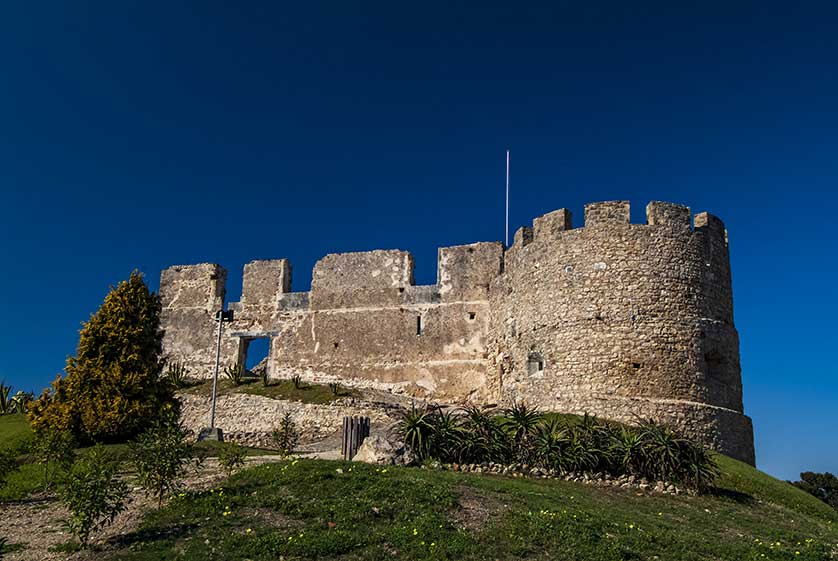
The original Moorish Castelo de Torres Vedras rises up from a small hill in the center of the small town of Torres Vedras in Estremadura.
Although it was damaged in the 1755 Earthquake the walls still survive and the slopes of the hill on which it stands are covered with poppies in spring.
The castle's architecture is a mix of Gothic and Manueline.

History
The history of occupation of the site goes back to the Romans and later the Visigoths. Evidence has been discovered of two Roman cisterns, coins, epigraphed tombstones and other finds.
The Moors built the first castle walls but these were largely destroyed when King Afonso I, the first Portuguese monarch, recaptured the town in 1148. In the 13th century King Denis strengthened the castle's defences.
On occasion the castle served as a royal residence, and it was here that Dom João I decided on an invasion of North Africa to take Ceuta in 1414, in a way signalling the beginning of the Age of Discovery.
In 1516 King Manuel oversaw a reconstruction of the castle and the king's coat of arms including armillary spheres stand proudly over the main gate. The Palace of the Alcaides within the walls also dates from the early 16th century.
However, the catastrophic earthquake of 1755 mostly destroyed the palace and much of the castle's walls.
Occupying a strategic position, the castle later became part of Wellington's Lines of Torres Vedras (see below).
Throughout its existence, the fortress has played an important role in national events. For example, it was briefly was taken by D. António Prior do Crato, a grandson of King Manuel I, in 1589 during his doomed struggle to overthrow Philip II of Spain's accession to the Portuguese throne. Later, it was the stage for of the Battle of Torres Vedras, in 1846, during the so-called Little Civil War or Guerra da Patuleia.
Despite its state of disrepair, the castle continued to function as a barracks for regular troops until the end of the 19th century, having undergone several repairs.
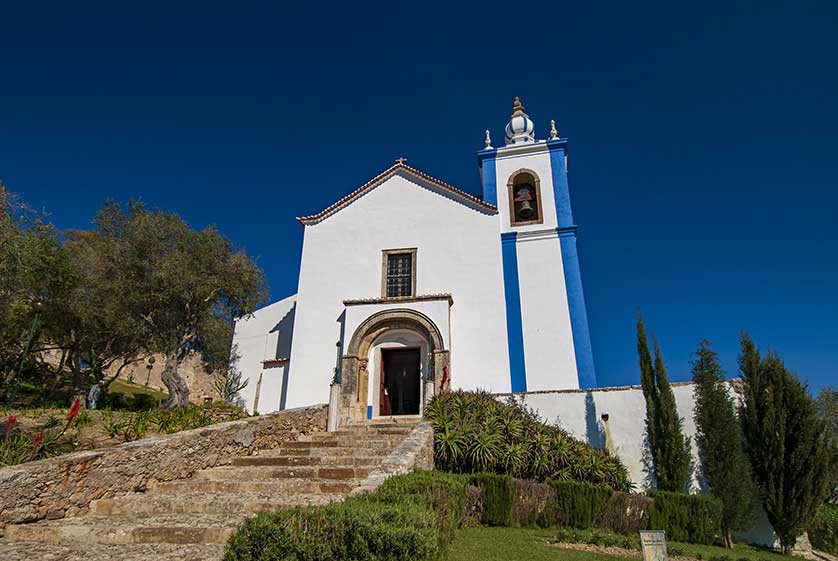
Nearby is the Igreja de Santa Maria do Castelo which was built to give thanks for the defeat of the Moors in the 12th century. Its architecture is a mix of earlier Romanesque and later Manueline.
Another church, the Igreja de São Pedro also features a Manueline portal along with a rich range of azulejos tiles.
The castle is situated at Largo Coronel Morais Sarmento, 2560-602, Torres Vedras.
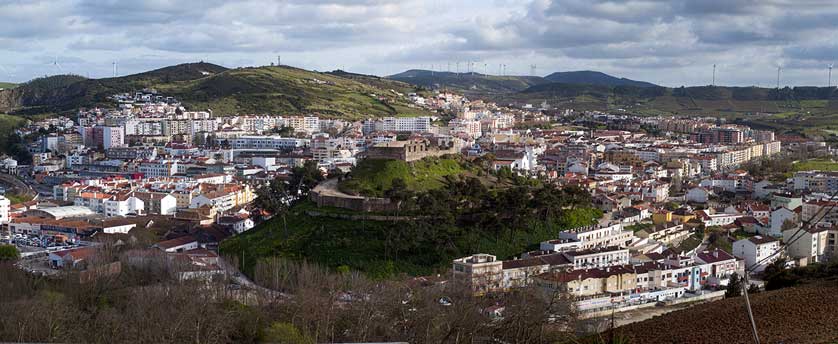
Lines of Torres Vedras
Torres Vedras is perhaps most famous as the place where the Arthur Wellesley, later the Duke of Wellington, built a line of interlinking fortifications (Lines of Torres Vedras) during the Peninsular War (1807-1814) to keep Napoleon's French forces at bay. The Lines are now a National Heritage site and can be walked to visit the remains still intact.
Wellington's Lines of Torres Vedras were built between 1809 and 1810 by local Portuguese aided by British troops and included 152 forts and over 600 smaller redoubts.
They stretched 40 km from the mouth of the Rio Sizandro on the coast to Alhandra on the Tagus. Many are still visible today and walking the Lines has become something of a tourist attraction in recent years. Just outside the town is Forte de São Vicente, the first of the fortifications to be constructed and one of the most important. There is a modern Interpretation Center inside the former Chapel of São Vicente.


Getting to Torres Vedras
Train Travel in Portugal
The town is 40 km north of Lisbon to which it is connected by bus and train.
Torres Vedras Station is on the Linha do Oeste and has trains to Santa Apolónia Station in Lisbon and Mira Sintra-Meleças (for connections to Sintra Station in Sintra), as well as services to the north including to Caldas, Leiria, Figueira, Caldas da Rainha and Coimbra. Trains from Lisbon also depart from Entrecampos and Sete Rios stations. Journey time from the capital to Torres Vedras via Mafra and Sapataria is about 90 minutes.
Car Travel in Portugal
From Lisbon take the A8 highway north to Torres Vedras. Journey time should be 40-50 minutes depending on traffic from Lisbon.
Bus Travel in Portugal
There are Rede Expressos buses to Torres Vedras from Sete Rios bus station. The bus takes only 45 minutes which is much faster than the train which can take as long as 2 hours.
There are also buses (numbers 700 & 701) from Campo Grande Station on the Lisbon metro to Torres Vedras operated by Barraqueiro Oeste.
The bus stops at Loures, Lousa, Venda do Pinheiro, Malveira, Livramento, Turcifal and Torres Vedras.
Portugal Hotel & Hostel Accommodation
Torres Vedras offers a small range of accommodation with just a few hotels, as well as several private villas and guest houses.
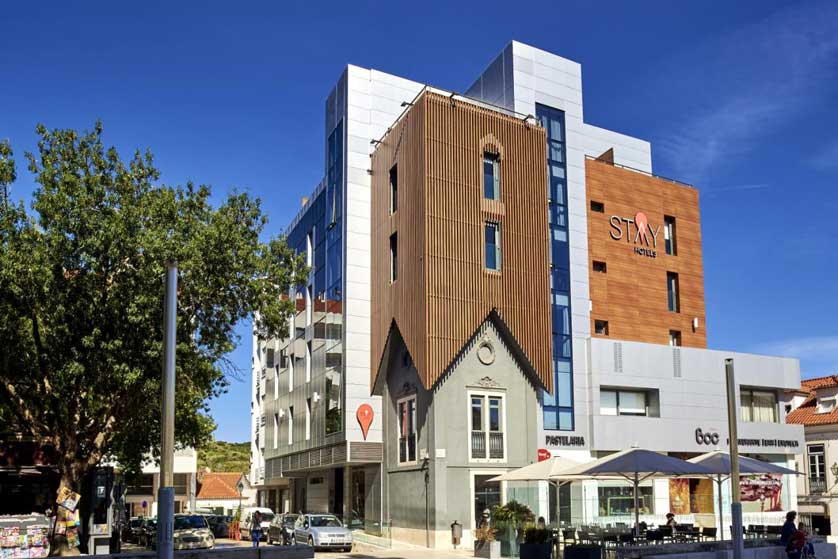
Some recommendations are the Stay Hotel Torres Vedras Centro, the Quebra Costas Rooms and the guest house Lines of Wellignton [sic].
See a complete listing of places to stay in Torres Vedras.
Featured Hotel in Torres Vedras
Stay Hotel Torres Vedras Centro
Praça 25 De Abril, 17, 2560-285 Torres Vedras
Buffet breakfast & free WiFi.
Book Accommodation in Torres Vedras
Hotels in Portugal - Booking.com
Albufeira Hotels - Booking.com
Book Hotels in Algarve - Booking.com
Find Hotels in Lisbon - Booking.com
Search Hotels in Porto - Booking.com
Apartments & Hotels in Madeira - Booking.com
Hostels in Portugal - Booking.com
Lisbon Hop-On Hop-Off Bus, Tramcars, and Yellow Boat River Tour
Eating
There is a wide choice of places to eat in Torres Vedras.
Established eateries that have been around for some time include O Gordo on Rua Almirante Gago Coutinho, next door to Taberna 22.
Other places that come recommended are Barracão, west of the center, known for its charcoal grills and Restaurante Midi.
Rather surprisingly there are also several restaurants serving Japanese food. Tawa Sushi, close to the Municipal Market and railway station, was the first.
Drinking
Havaneza on Praça da República is a great place for a coffee or something stronger.
List your restaurant/bar/hotel contact Advertising
The average high June temperatures for Portugal is between 22 degrees Centigrade and 26 degrees Centigrade.
Get more weather information for Portugal
Map

Nearby
Other places to visit in the Estremadura region of Portugal include Alcobaça, Batalha, Caldas da Rainha, Fátima, Foz do Arelho, Golegã, Leiria, Mafra, Nazaré, Óbidos, Ourém, Peniche, Santarém, Tomar, Ericeira and Vila Franca de Xira.