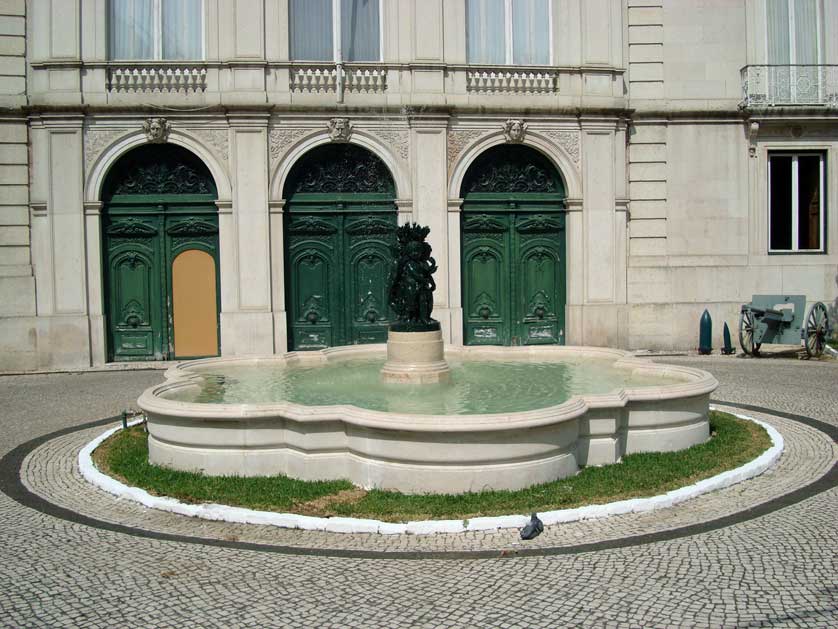
Lisbon Fountains - Chafarizes em Lisboa
Bringing Water to the Capital: Lisbon's Fountains
Lisbon has many beautiful and historic fountains in its public squares or tucked away in more obscure locations. Other fountains in Lisbon are more modern creations in the city's shopping malls and office developments.
Supplying water to the city's inhabitants has been a concern since antiquity and the periods of Roman and Moorish control.
Later a system of impressive aqueducts was built to carry water to the capital and this was dispensed to humans and animals alike from often ornate fountains in Lisbon's squares.
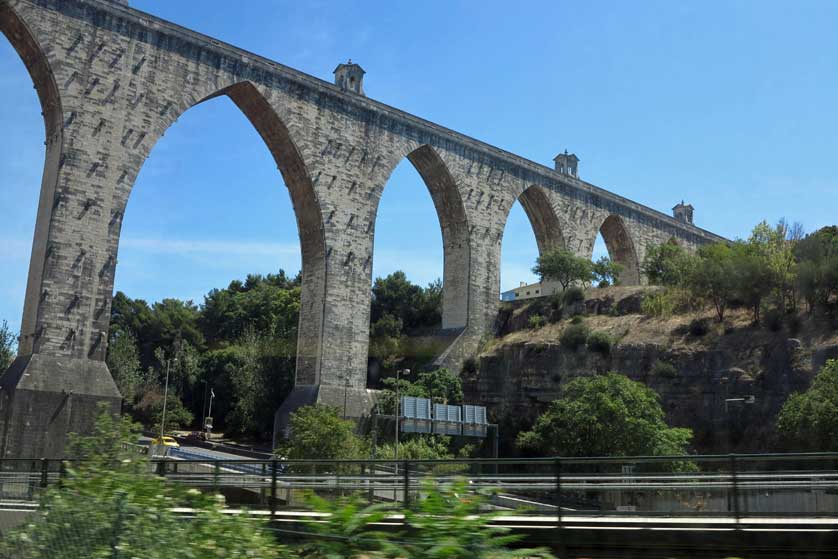
The 18th-century Águas Livres aqueduct that brought water to the capital was 18 km long. Construction began in 1731 during the reign of King João V under Italian architect Antonio Canevari. It finally brought water to Lisbon in 1748. After that work was continued by a number of Portuguese architects until 1799.
Taxes on certain foodstuffs such as olive oil, wine and beef raised the necessary money to finance construction of the aqueduct. Amazingly, the structure survived the 1755 Lisbon Earthquake, a testament to its architectural quality.
In places, the huge arches reach a height of 65 meters above the ground. The aqueduct was still in use until the 1960s and is best seen near Campolide Station.
The water fed various drinking fountains throughout Lisbon such as the Chafariz do Carmo and the Mãe d'Água reservoir listed below.
Chafariz do Carmo
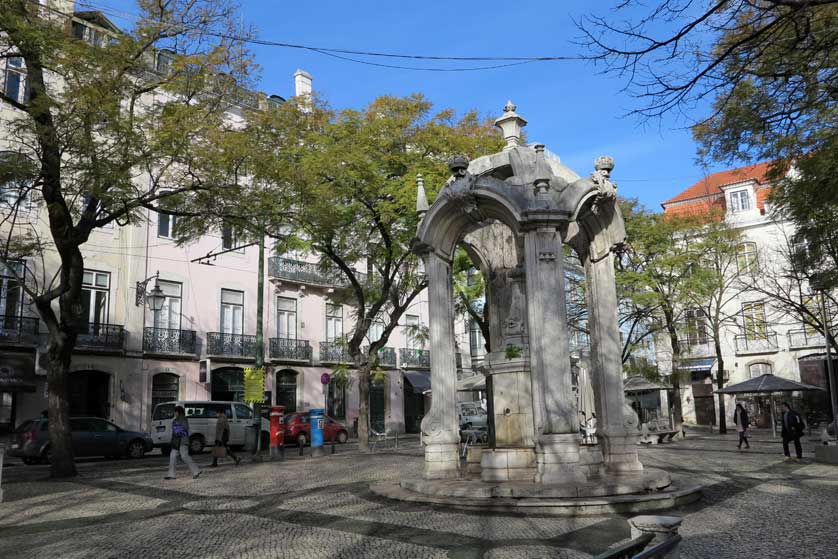
The Chafariz do Carmo (Carmo Fountain) stands in Largo do Carmo, outside the ruined Convento do Carmo in Santa Maria Maior, central Lisbon. The fountain was built in 1771 to distribute water from the Águas Livres aqueduct via an underground tunnel - the Galeria do Loreto. The square is one of the most pleasant in the city lined with jacaranda trees and pavement cafes ideal for a relaxing cup of coffee or glass of wine. Visitors can reach the square on the Santa Justa Elevator, which connects Largo do Carmo to Baixa Pombalina, close to both Rossio Station and Restauradores Station.
Chafariz das Moiras
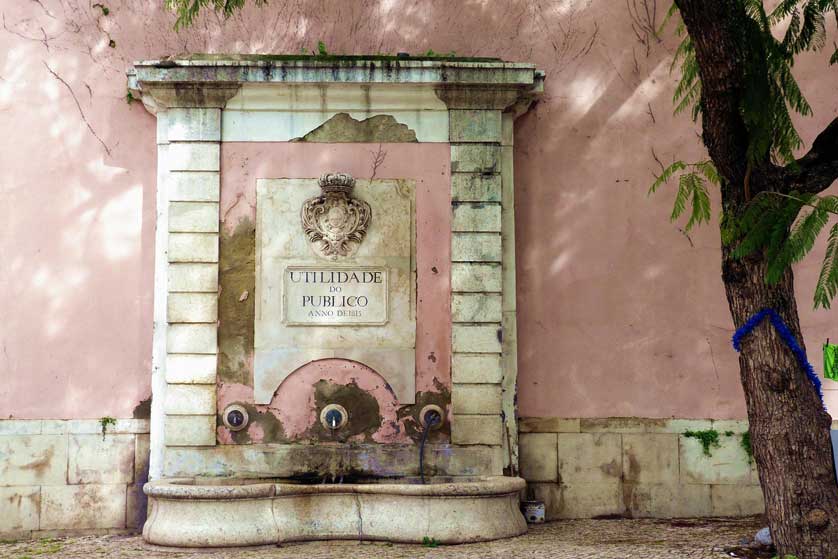
Chafariz das Moiras (Moiras Fountain) is now in the Alfama district of downtown Santa Maria Maior in Lisbon. The fountain and tank were originally in Lumiar northeast of the center of Lisbon and were in operation until 1940. The facade was moved to its present site as decoration after the stone water tank was demolished. The fountain was designed by the architect José Theresio Michelotti.
The fountain was built between 1813 to 1815 during the Peninsular War (1807-1814) when French forces were expelled by Portuguese and British troops under the command of Arthur Wellesley, later the Duke of Wellington. The Baroque style fountain has three water spouts and a royal coat of arms with the following inscription: "Utilidade do Público Anno de 1815."
Rossio Square
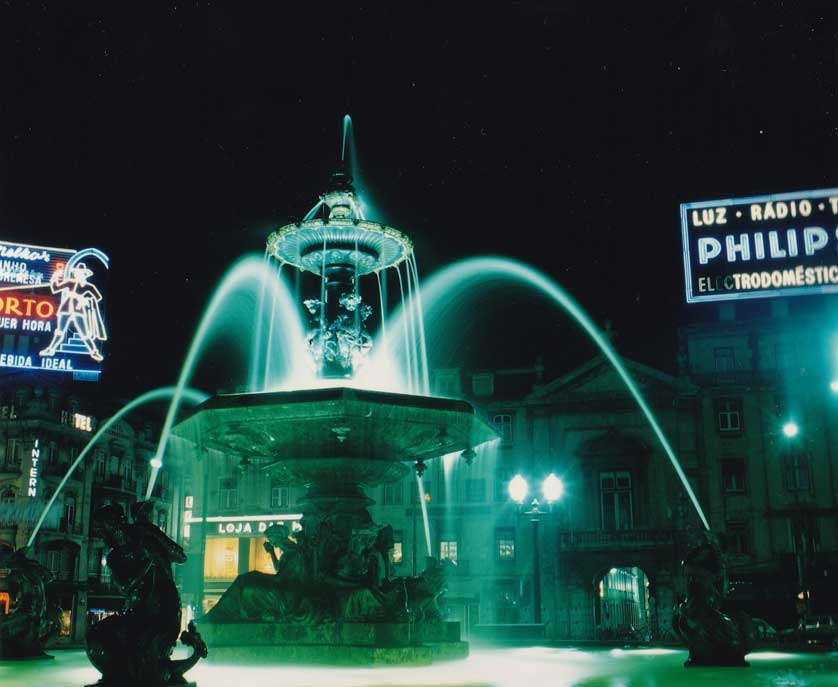

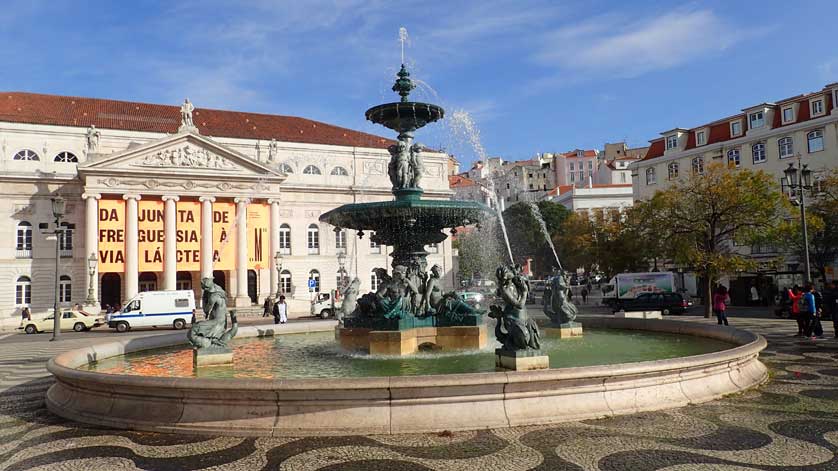
The ornate fountains in Rossio Square (Praça de D. Pedro IV) opposite Rossio Station date from the 19th century. Created in bronze by French sculptors Mathurin Moreau and Michel Lienard, the pair of fountains were imported from France and unveiled in 1889. They each feature a set of four mermaids spouting water and are illuminated at night. The National Theatre D. Maria II (Teatro Nacional D. Maria II) lies at the northern end of the square. It was built in the Palladian, Neo-classical style between 1842 and 1846 by Italian architect Fortunato Lodi.
Mãe d'Água
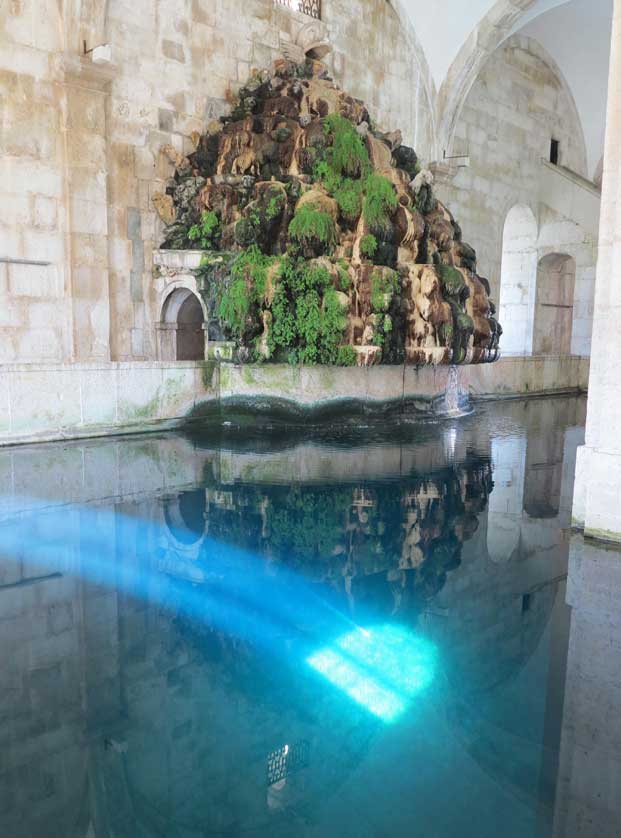
The Mãe d'Água ("Mother of Water") is at the end of the impressive Aqueduto das Águas Livres and is a huge 18th century reservoir initially designed by the Hungarian architect Carlos Mardel in 1746 and completed (after several changes) by Reinaldo Manuel dos Santos. The structure was finally completed in 1834. The central water tank is approximately 7.5 metres deep with a capacity of 5500m³.
It is possible to climb on to the flat roof of the reservoir for fantastic views over the area and as far as the River Tagus. The Casa do Registo (Register House) at Rua da Amoreiras, controlled the flow of water for the supply of the city's fountains, factories, convents and palaces. The Mãe d'Água das Amoreiras Reservoir was sometimes used for leisure purposes including the wedding celebrations of Dom Luís I of Portugal and his bride Dona Maria Pia of Savoy.
Fonte Luminosa
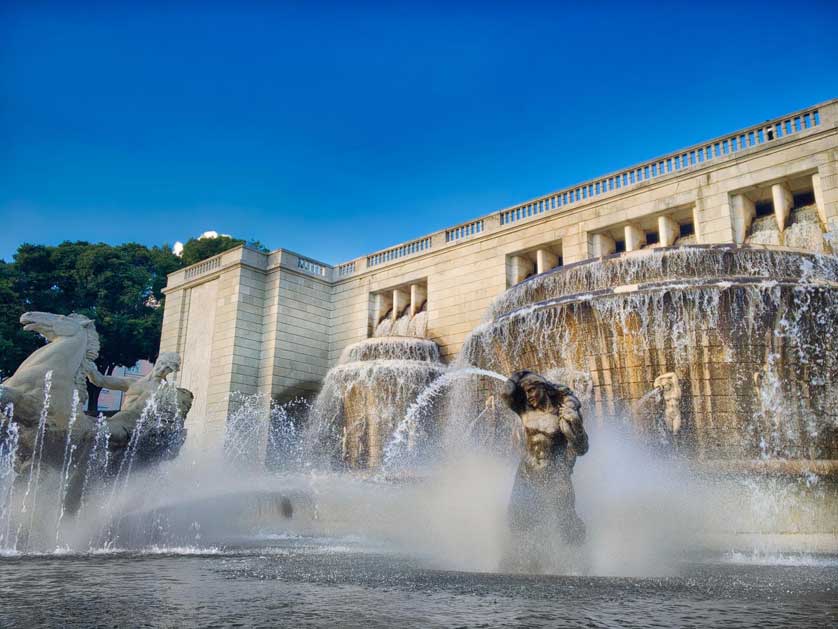
The Fonte Luminosa fountain was built to celebrate the regular supply of water to the eastern part of Lisbon. It opened in 1948 and is a fine example of the architecture of the Estado Novo and the Salazar regime. The architects were the brothers Carlos Rebello de Andrade and Guilherme Rebello de Andrade with various artists responsible for the sculptures. Olaias and Arroios are the nearest Lisbon metro stations.
Colombo Mall
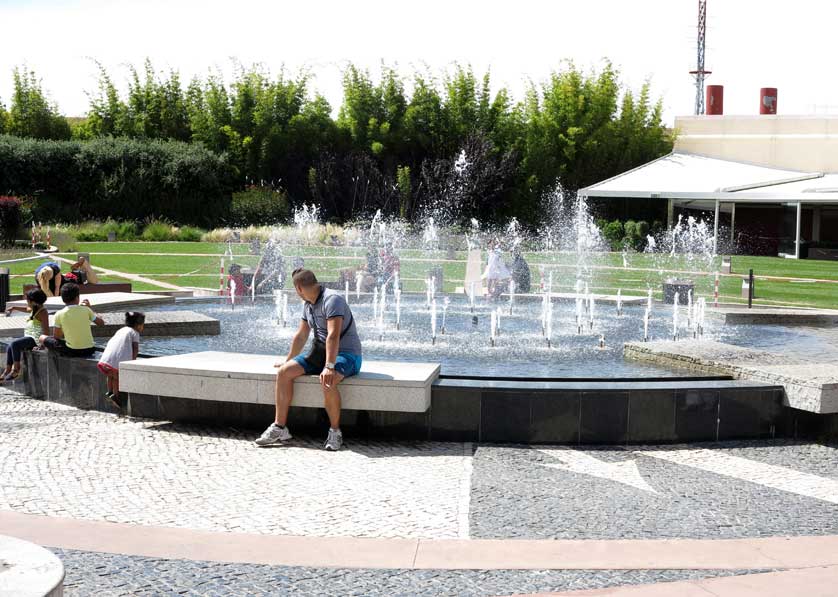
There is a small fountain in the pleasant garden area of the Colombo Mall near the Estadio da Luz and the Benfica Museum. Colombo opened in 1997 and its layout and design has an "Age of Discovery" theme. Colégio Militar-Luz is the nearest metro station on the blue line.
Praça do Império Belém
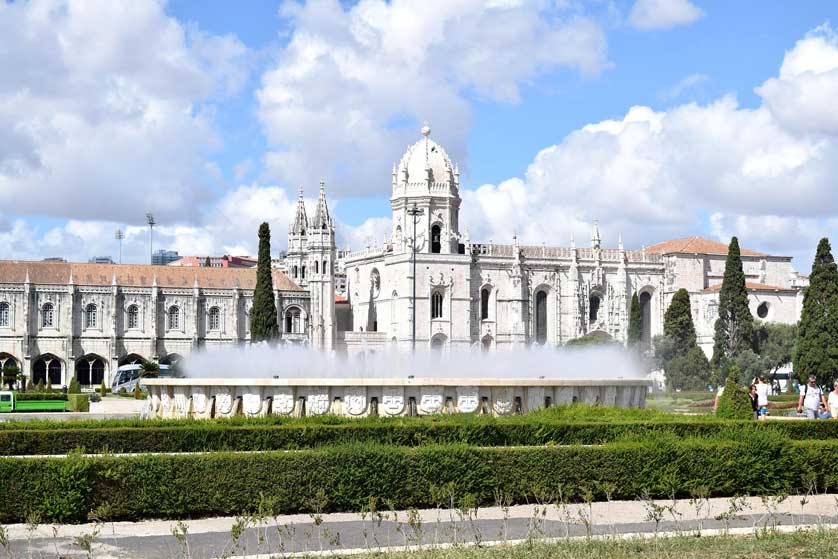
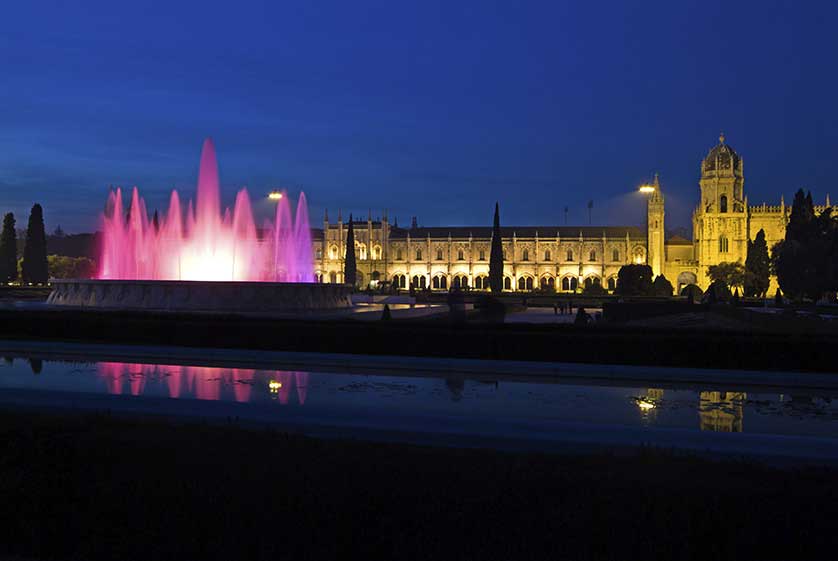
There is a large ornamental fountain in Praça do Império in front of the Mosteiro dos Jeronimos in Belém. The fountain was constructed for the Portuguese World Exhibition (Exposição do Mundo Português) of 1940 and is illuminated at night.
A short walk from the fountain is the equally pleasant Jardim Afonso Albuquerque. The nearest station is Belém Station on the Cascais Line (Linha de Cascais) from Cais do Sodre to Cascais. Belem Station is handy for seeing the various attractions in Belém and is located close to the Estação Fluvial de Belém, the Museu Nacional dos Coches, MAAT and the Jardim do Ultramar.
Jardim Amália Rodrigues
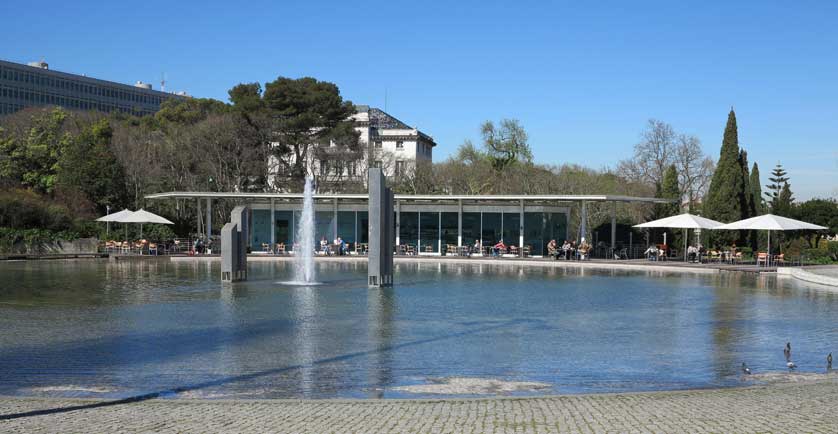
The Jardim Amália Rodrigues is a pleasant park located just north of Parque Eduardo VII and the Estufa Fria. It opened in 1996. The garden, which consists of a grassy hillock and a lake, was named in 2000 after the famous fado singer, Amália Rodrigues (1920-1999). The area is one of the highest points in the city and has excellent views. The nearby El Corte Ingles is also nearby. The small lake contains the pleasing fountain seen above.
Parque Eduardo VII
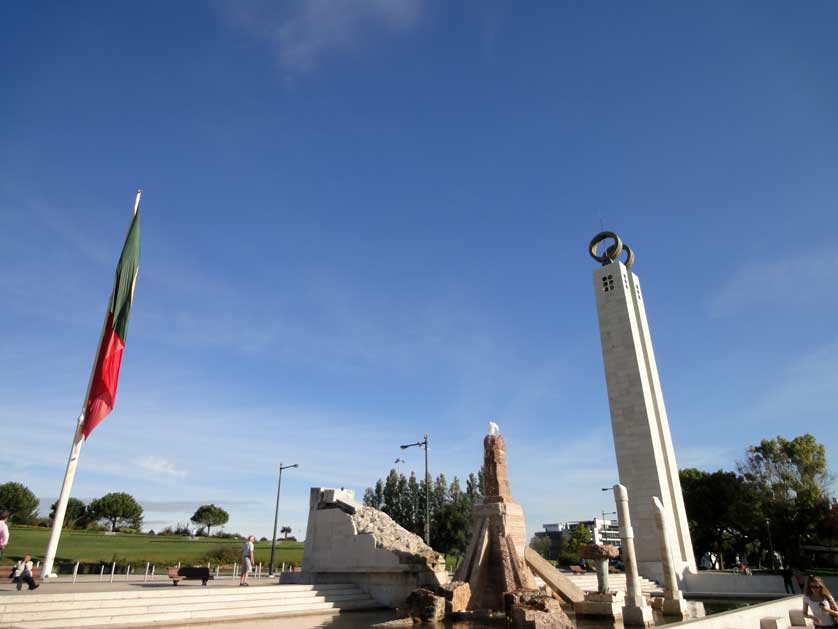
The Parque Eduardo VII (Eduardo VII Park), located north of the Avenida da Liberdade and the Marquis of Pombal Square, is a large public park named after King Edward VII of the United Kingdom who visited Portugal in 1902. The park was built at the end of the 19th century and was originally named the Parque da Liberdade.
The 25th of April Monument and fountain is by Portuguese sculptor João Cutileiro (1937-2021) and commemorates the largely bloodless revolution of that day that brought an end to the dictatorship.
The nearest stops on the Lisbon metro to Parque Eduardo VII are Marques de Pombal and Parque. By Lisbon bus: #12, #22, #36, #44, #702, #720 or #745 to the Marques de Pombal stop.
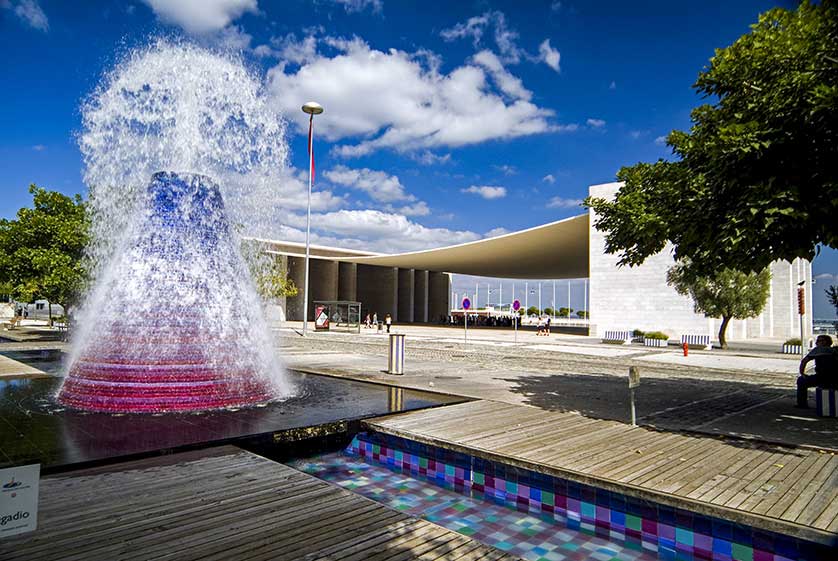
Pavilhão de Portugal
The Pavilhão de Portugal in the Parque das Nações district was designed by architect Álvaro Siza Vieira for the 1998 World Exhibition. It is meant to represent the idea of a sheet of paper placed on two bricks. The structure contains several water features and an impressive fountain. The building is now administered by the University of Lisbon.
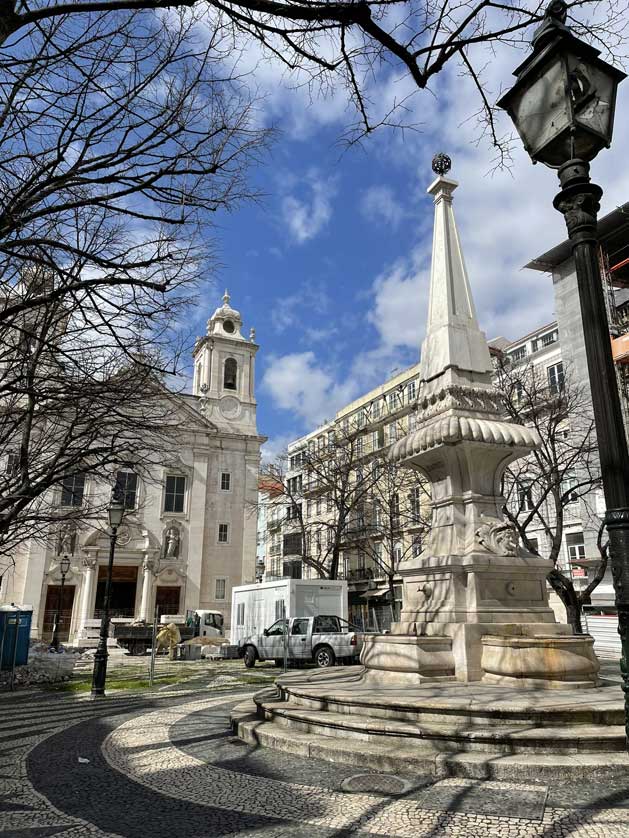
Chafariz de São Paulo
The Chafariz de São Paulo stands in the small square (Praça de São Paulo) in front of the Igreja de São Paulo in the Cais do Sodré district close to Pink Street. The limestone fountain is in the shape of an obelisk topped by a metal armillary sphere. It dates from 1849 and was designed by Malaquias Ferreira Leal. It was built to bring fresh water to the area and at the base are four semi-circular basins and four water spouts - not all of them still in working order.