Acueducto de los Milagros, Mérida
The Ancient Roman Aqueduct of the Miracles (Extremadura, Spain)

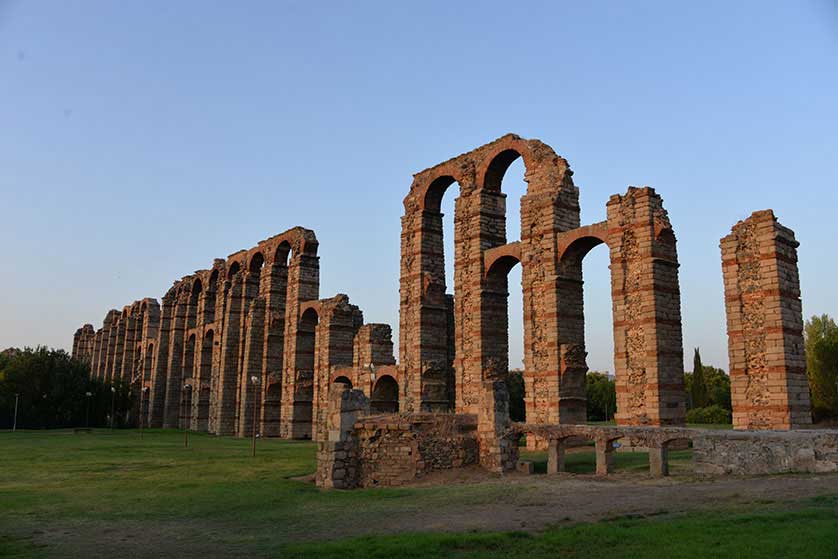
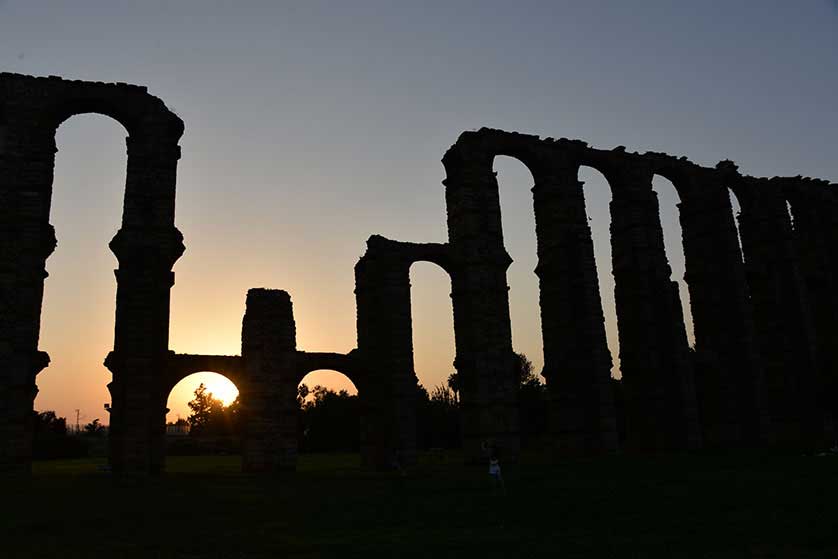
The Acueducto de los Milagros (Aqueduct of the Miracles) is a 1st century Roman aqueduct in Mérida. It brought fresh water to the city of Augusta Emerita from the dam at Largo Proserpina (Albuera Reservoir), five kilometers to the northwest. The 800-meter structure standing up to 25-27 meters high is in a remarkable state of survival for its age which supposedly inspired its name of the 'Aqueduct of the Miracles.' The aqueduct is especially impressive at sunset and photographs taken at this time look great on Instagram.


History
The aqueduct dates from the 1st century AD (with later 3rd-century additions) during the Roman occupation of Hispania and was built to supply water to the ancient city of Augusta Emerita, now known as Mérida. The aqueduct features a distinctive striped pattern made by alternating courses of red brick and ashlar blocks of granite.

Today 38 arched pillars are still standing after the aqueduct fell into disuse and decay after the fall of the Roman Empire.
Augusta Emerita had three Roman aqueducts altogether, including this one, the 15-kilometre (9.3-mile) long Aqua Augusta, which carried water from the Cornalvo Reservoir, and the San Lázaro Aqueduct, near the Roman Circus, which drew its supply from underground channels.
Nearby is the Puente de Albarregas a small Roman bridge.

Access
Av. Vía de la Plata, S/N, 06800 Mérida, Badajoz, Spain
The aqueduct is a 10 to 15-minute walk from Mérida Station in Parque del Río Albarregas and visible from trains arriving at the station from the west.
Mérida train station has rail connections to Alcázar de San Juan, Almendralejo, Badajoz Station in Badajoz, Cabeza del Buey, Madrid-Chamartin, Cáceres, Don Benito-Villanueva de la Serena, Zafra, Sevilla and Plasencia.
The bus station in Mérida is across the Puente Lusitania on the opposite bank of the River Guardiana. It is about 25 minutes on foot.

Accommodation in Mérida
The city has a wide selection of hotels, guest houses and pensions.
The Hotel Ilunion Mérida Palace in Plaza de España offers an outdoor pool and rooftop terrace in a restored 15th century palace.
The four-star Hotel Ilunion Las Lomas slightly outside the center has an outdoor pool, a bar and restaurant.
The Hotel Velada Mérida is also four-star. Facilities include a pool and cafe-bar.
Other places to stay in this lovely city include the luxury Parador de Mérida once an 18th century convent. Enjoy the traditional-style inner courtyard and beautiful gardens and dine at the hotel restaurant.
Hotel Cervantes is a budget two-star property for travelers on a tighter budget.
See a listing of hotels in Mérida

Maps

