José de Almada Negreiros

José de Almada Negreiros (1893-1970) was a multi-talented artist active in a number of different genres. He was designer, essayist, painter, poet and novelist. His distinctive designs encompassed book covers, posters and even stamps.
Almada Negreiros was also one of the first people of mixed race to become a high profile figure in Portuguese society.
Life
Almada Negreiros was born to an half-African mother (also a skilled drawer) and a white Portuguese father (also a poet and writer) in São Tomé and Príncipe.
At a young age after the death of his mother in childbirth along with a daughter his father moved the family to Lisbon.
Aged just 20 Almada Negreiros held his first exhibition of drawings. Soon after he became involved with the magazine Orpheu along with fellow poets Fernando Pessoa and Mário de Sá-Carneiro. The publication promoted modernism in Portuguese art and literature.
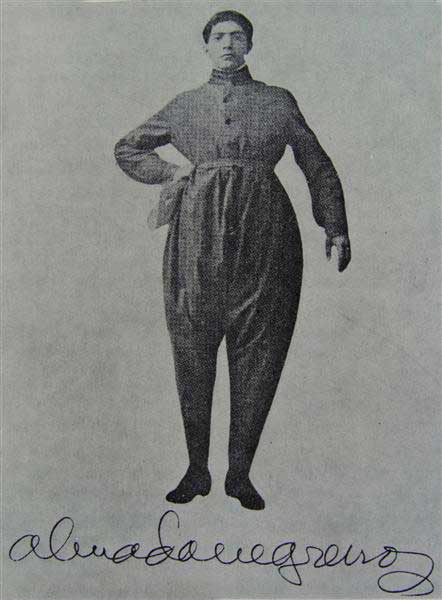
He also embraced Futurism in Portugal and famously appeared in a flight suit (see the image above) at a conference in Lisbon in 1917.
After two years in Paris from 1918-1920, José Almada Negreiros returned to Lisbon and was commissioned to produce two paintings inside the cafe, A Brasileira, a favorite hang out in the Chiado district for his friend Pessoa, whose statue sits at a table outside. The two panels are Banhistas (Bathers) and Auto-Retrato em Grupo (Self-Portrait in a Group).

Political Views
Almada Negreiros was both critic and client of the Salazar and Estado Novo regime.
He was commissioned to decorate several public buildings erected by the state during his lifetime but his writings and art were also critical of the status quo and prevailing social mores. His Manifesto Anti-Dantas e por extenso (1915) was an attack on a more traditional literary figure, Júlio Dantas, who served the regime in various minor roles.

José de Almada Negreiros' Work in Lisbon
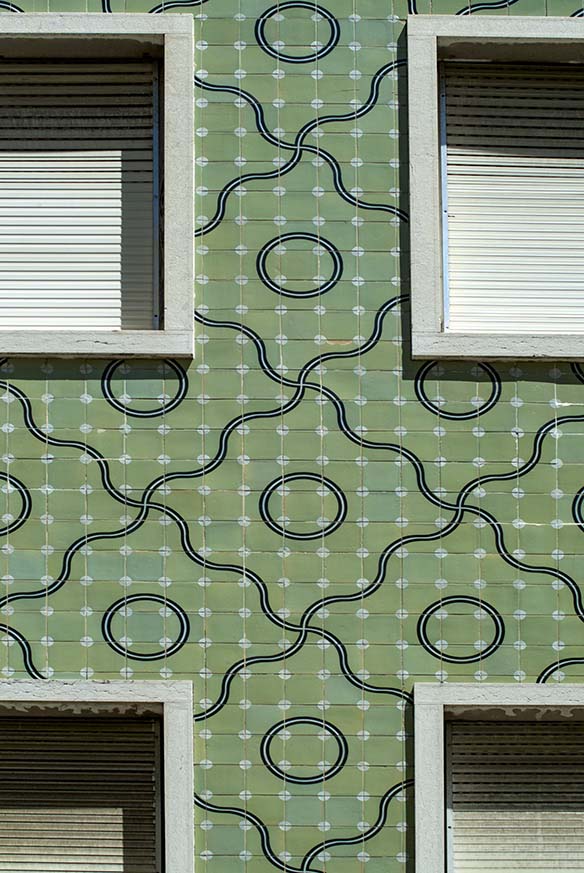
Almada Negreiros' work can been seen in many different places and styles of buildings in Lisbon as well as museums and galleries in the city.
A large collection of the artist's paintings is in the Gulbenkian Museum and there is a painting of Pessoa in his trademark hat and round glasses now in the Fernando Pessoa House. It once adorned the restaurant Os Irmãos, which was popular with the modernist, Bohemian set at the time.
The Gare Marítima de Alcântara designed by Pardal Monteiro in the Alcântara dock area has some huge fresco panels by the artist - two triptychs and two single paintings in the arrivals hall. They depict scenes taken from everyday life, Portuguese history and literature including the tale of the Nau Catrineta as well as working men and women on the River Tagus.
The port building was opened in 1943 and was built to handle large cruise ships. During World War II it often received vessels carrying refugees fleeing Nazi-occupied Europe or in transit from other countries.

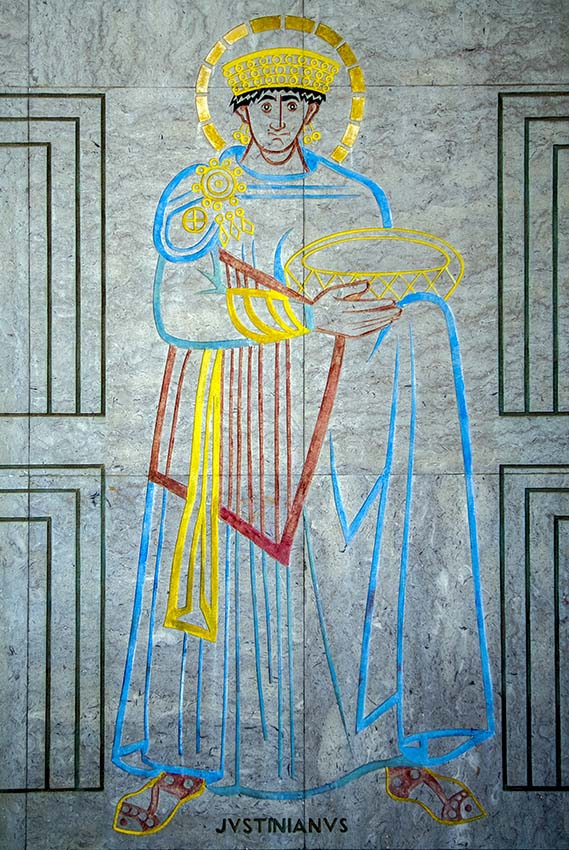
More of Almada's art can be seen at the Faculdade de Letras da Universidade de Lisboa (Faculty of Humanities of the University of Lisbon) and the Faculdade de Direito (Faculty of Law). Again the artist worked with Pardal Monteiro on the buildings.
Altogether there are twenty different scenes at the Faculty of Humanities, alluding to figures from Portuguese and world literature. They were added in 1961. They include references to the Book of Genesis, Homer, Virgil, Dante, Cervantes, Shakespeare and Goethe. Portuguese writers referenced include Gil Vicente, Camões, Fernão Mendes Pinto, Almeida Garrett and, of course, his friend, Fernando Pessoa.
The Faculty of Law has engravings of figures such as the Emperor Justinian, famous in legal history for the Justinian Code (528-9) which still influences western law to this day, Cicero, who believed that civil law should accord with the natural law of divine reason and Pythagoras, who thought laws were needed only when people were no longer worthy of freedom.
The foyer of the Diário de Notícias headquarters building on Avenida da Liberdade also has a large mural by the artist entitled Mapa-Múndi.

The superb stained glass at the Igreja de Nossa Senhora do Rosário de Fátima (Church of Our Lady of Fátima) show the artist's talents in a different media.
The Four Seasons Hotel Ritz Lisbon (at the time just the Ritz Hotel and Lisbon's first five-star hotel) was another collaboration with Pardal Monteiro. The lounge has an engraved marble wall and three beautiful tapestries by Almada. The tapestries depict geometric scenes involving classical centaurs. The black and gold marble mural and column is entitled Harvest and depicts a female harvester viewed by a mounted male figure.



Portugal's History
Hotels in Lisbon Portugal
Hotels in Portugal - Booking.com
Hotels in Lisbon - Booking.com
Lisbon Hop-On Hop-Off Bus, Tramcars, and Yellow Boat River Tour