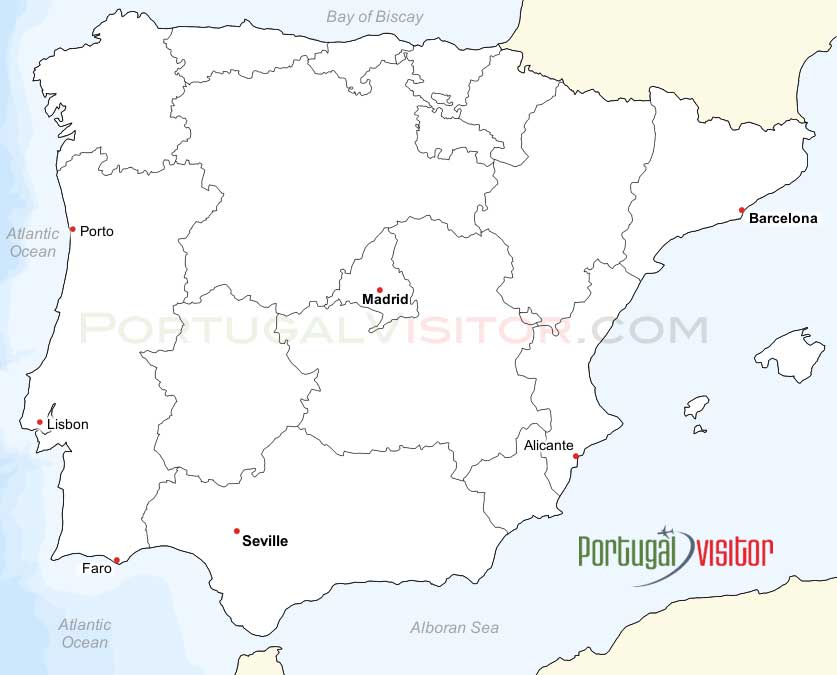
Alicante Tram Network
Light Rail in Alicante

The Alicante Tram (officially TRAM Metropolitano de Alicante / TRAM Metropolità d'Alacant) is a modern light-rail and tram-train public transport network serving the city of Alicante and its wider metropolitan area in the Valencian Community of Spain. Altogether there are now 6 lines (designated L1, L2, L3, L4, L5, and L9) and around 71 stops across the network.
The system has roughly 112 km of track combining urban tram, tram-train, and commuter rail operations.
The network is operated by Ferrocarrils de la Generalitat Valenciana (FGV) and in 2024 it carried about 20.3 million passengers, the highest annual total in its history.

Routes
The network links central Alicante with coastal towns and regional destinations
Tram / Light Rail Lines (L1-L5)
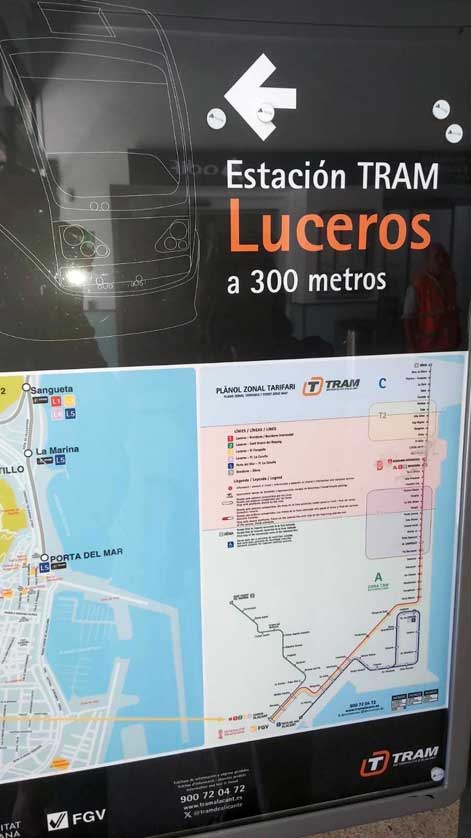
L1: Connects Alicante city centre (Luceros) near Alicante Station with the beach and tourist destination of Benidorm.
L2: Runs from Luceros to Sant Vicent del Raspeig (a nearby university town and suburb).
L3: From Luceros to El Campello, another coastal town to the north.
L4: Links Luceros with Plaza La Coruña near Playa de San Juan.
L5: A circular service between Porta del Mar (near the port) and Plaza La Coruña, mainly serving San Juan Beach.
Tram-Train / Regional Line (L9) L9: A longer tram-train connection running along the coast between Benidorm and Dénia. It uses diesel-electric dual-mode trains and serves more distant coastal communities beyond the urban tram network.
These lines combine street-level tram operations in urban areas with overground and regional rail segments to serve both city commuters and longer-distance travelers.

| Line | Route / Terminals | Main Destinations / Notes |
|---|---|---|
| L1 | Alicante (Luceros) - Benidorm Intermodal | Major interurban route along the coast; serves El Campello, Villajoyosa and ends in Benidorm (connects with L9). |
| L2 | Alicante (Luceros) - Sant Vicent del Raspeig | Serves city centre, Hospital General, University of Alicante and San Vicente del Raspeig. |
| L3 | Alicante (Luceros) - El Campello | Local service along the coast to the seaside town of El Campello. |
| L4 | Alicante (Luceros) - Plaza La Coruña (Playa San Juan) | Urban tram to San Juan Beach area and surrounding stops. |
| L5 | Puerta del Mar (near Postiguet Beach) - Plaza La Coruña | Local loop service mostly serving central beach and San Juan stretch. |
| L9 | Benidorm - Dénia | Coastal regional tram-train service (diesel powered), serving towns such as Altea, Calpe, Gata and Teulada en route to Dénia. |
Shared central stops: Many lines (L1, L2, L3, L4) share central underground stops like Luceros, Mercado and MARQ-Castillo, making transfers between services easy.
L5 doesn't always go into the tunnel but connects surface stops.
L1 and L9 together let you travel up the Costa Blanca coast from Alicante all the way to Dénia via a transfer at Benidorm.
Within Alicante city, stops like Luceros (the main central hub), Puerta del Mar (near the port and beach), Sangueta, La Marina and others are important local boarding points.

History
The modern Alicante TRAM has roots in the city's older rail and tram systems.
Trams were first electrified in Alicante in the 1920s and 1930s and were widely used until the rise of automobile transport. However in 1969 traditional tram services disappeared from city streets due to declining use and costs.
Tram services returned on a short experimental route between Plaza del Mar and La Albufereta in 1999, reviving the mode after three decades.
The current network officially began operations in August 2003, with an extended line between Puerto del Mar (Alicante) and El Campello. Between 2007 and 2010 the underground tunnel section in the city centre between Luceros and MARQ was built which allowed for an expanded service. Further line extensions and modernisation continued, including the opening of L5 in 2019 and the upgrade/reopening of parts of L9 in 2023.
Hours & Tickets
Generally, the network runs from around 5 am to 11 pm, though some lines may stop earlier. Urban lines usually run every 20-30 minutes during peak hours. The last major connections, such as the L1 from Alicante towards Benidorm, typically run around 9 pm to 9.40 pm. Line 9 (Benidorm-Dénia) operates roughly every hour, with the first service around 6 am and the last around 9 pm or 10 pm. There are ticket machines at every station with instructions in both Spanish and English. The machines accept both cash and cards. Return tickets are cheaper than two single tickets.
Accommodation
The resort city has a wide range of hotels, guest houses and pensions to suit all budgets.
La City Estacion is a 3-star property opposite Alicante train station in the center of town, just 10 minutes on foot from both the marina and Canalejas Park.
The three-star Ibis Alicante is on the seafront. The hotel offers a 24-hour café-bar, regional cuisine and sea views. It is just 2.5 km from Alicante Airport.
The Hotel Daniya Alicante is another 3-star establishment with swimming pool, bar and restaurant.
Other places include the 4-star NH Alicante Hotel offering an outdoor swimming pool, spa facilities, a sauna, fitness center and sun terrace.

Access & Hours
Ferrocarrils de la Generalitat Valenciana (FGV).
Avda. Villajoyosa 2
03016 Alicante
Spain
Location: La Marina TRAM station (Line 4).
The C6 bus running between the airport, the bus station and the city center stops at Alicante Station.

Maps