Convento da Graça, Lisbon
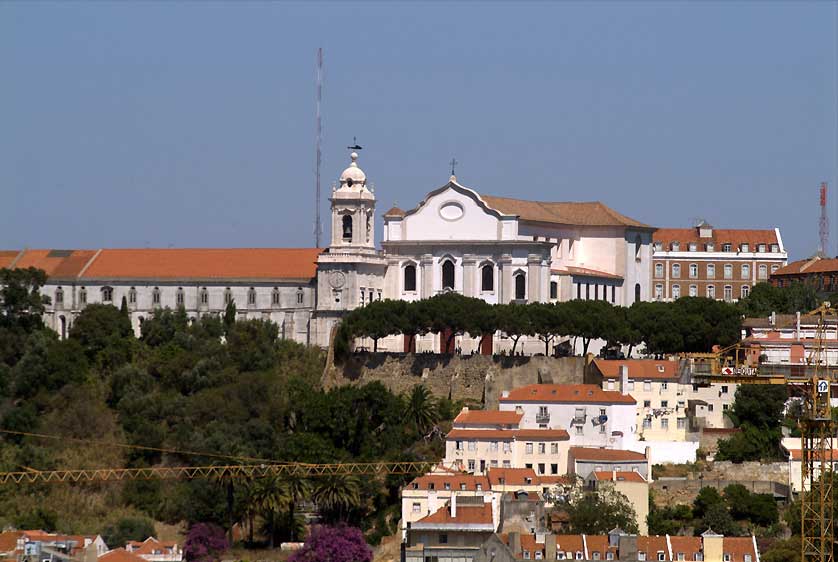
The Church and Monastery of Graça (Igreja e Convento da Graça) is one of the oldest monasteries in Lisbon.
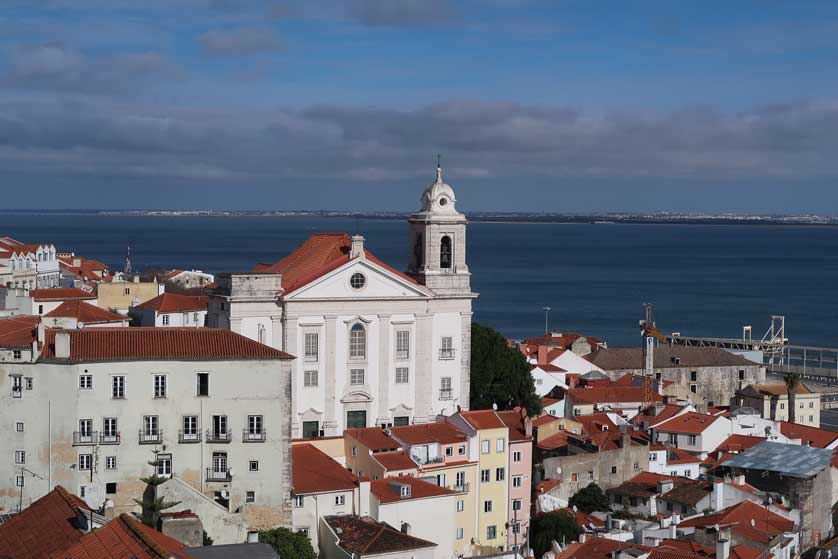
From the surrounding square of Largo da Graça there are great views looking over to Barrio Alto, Chiado and the River Tagus.
History
The monastery was established in the 13th century by the Order of the Augustinians on the place where King Dom Afonso Henriques positioned his troops during the successful siege of Lisbon Castle (Castelo de São Jorge) in 1147. This area was then known as Almofala during this period of Portuguese history.
At first provisions were made for 50 monks at the monastery. In 1305 the name of the monastery was changed from Santo Agostinho de Lisboa and was re-dedicated to Nossa Senhora da Graça.
Afonso de Albuquerque, a huge figure in Portugal's Age of Discovery established a chapel in the church, before he left on his first voyage for India. His father and great-grandfather were buried in the chapel. In 1566 Albuquerque was himself buried in the chancel.
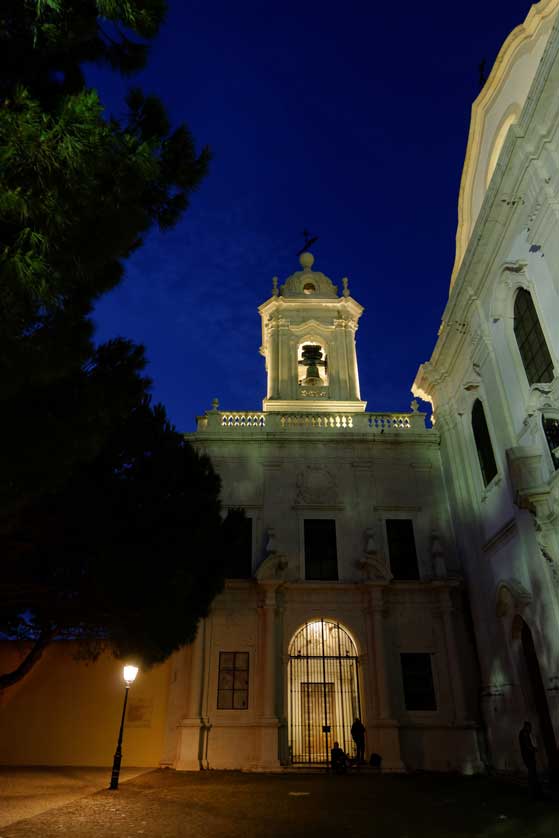
The church and monastery were both rebuilt in the 16th century and restored again in Baroque style with a single bell tower after the devastating 1755 Lisbon earthquake.
Surviving from before the earthquake, however, are both the Manueline baptistry and the Capela dos Almadas.
The front comprises a double façade, set at an angle, composed of the church and the old entrance to the monastery. The bell tower is the work of the architect Manuel da Costa Negreiros (1701-1750) and dates from 1738.

After the dissolution of monasteries and religious orders in Portugal in 1834, the convent was transformed into a barracks for several units of the Portuguese military.
The interior of the church has azulejos tile panels from the 16th-19th centuries, ornate gilded woodwork and several ornate side chapels.
The allegorical ceiling was painted by Pedro Alexandrino de Carvalho (1729-1810). Carvalho's work can be seen in Lisbon Cathedral, the Igreja de Nossa Senhora dos Mártires, the Queluz National Palace (Palácio Nacional e Jardins de Queluz), the Igreja de Nossa Senhora da Encarnação and the Igreja Matriz de Belver.
The Procession of Senhor dos Passos da Graça is one of the oldest and most important religious processions held annually in the city of Lisbon, on the second Sunday of Lent. The procession has been uninterrupted since 1587.
The procession takes place between the Church of São Roque and the Convento da Graça and remembers the journey taken by Jesus during the Passion along the Via Dolorosa.
Access
Convento da Graça
Largo da Graça
Lisboa 1100-001
Tel: 21 886 1769
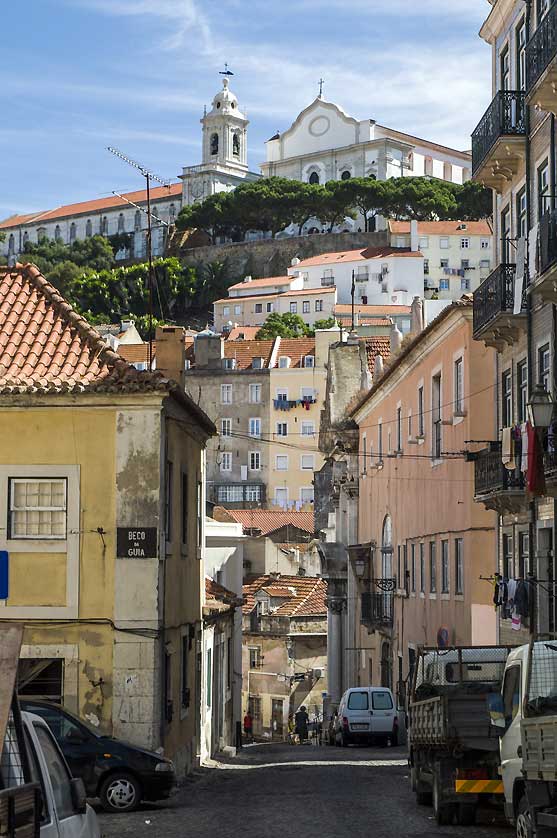
The Lisbon trams numbers #12 and #28 as well as Lisbon bus #734 all stop within reasonable walking distance of the church.
Nearby
Largo da Graça is close to a several other attractions in the Alfama district including the nearby Capela de Nossa Senhora do Monte, the Aljube Museum, Teatro Romano, Casa dos Bicos, Igreja de Santo Antonio, the Church of Nossa Senhora da Conceição Velha and a number of fado and music clubs. Arco da Rua Augusta and Praça do Comércio are a short walk further to the south.
Book Air Tickets to Spain & Portugal
Cheap flights from Europe with low cost carriers
Hotels in Portugal - Booking.com
Hotels in Lisbon - Booking.com
Lisbon Hop-On Hop-Off Bus, Tramcars, and Yellow Boat River Tour