Portuguese National Flag
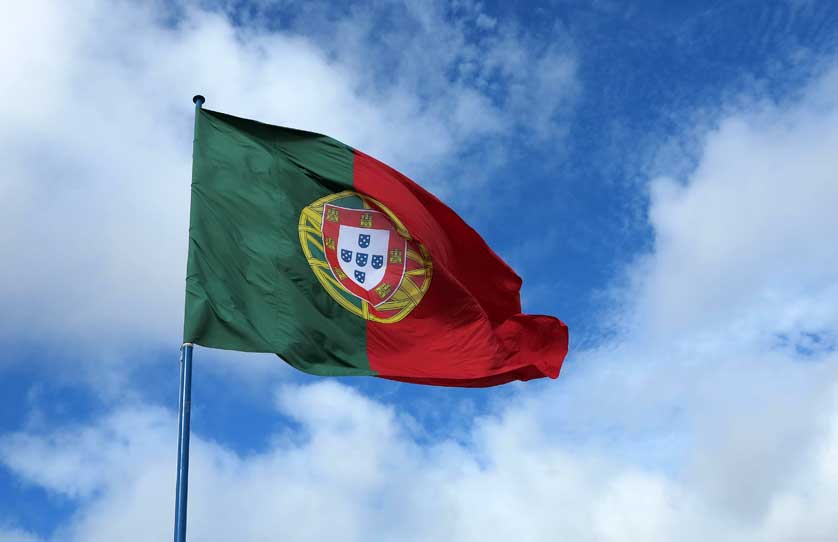
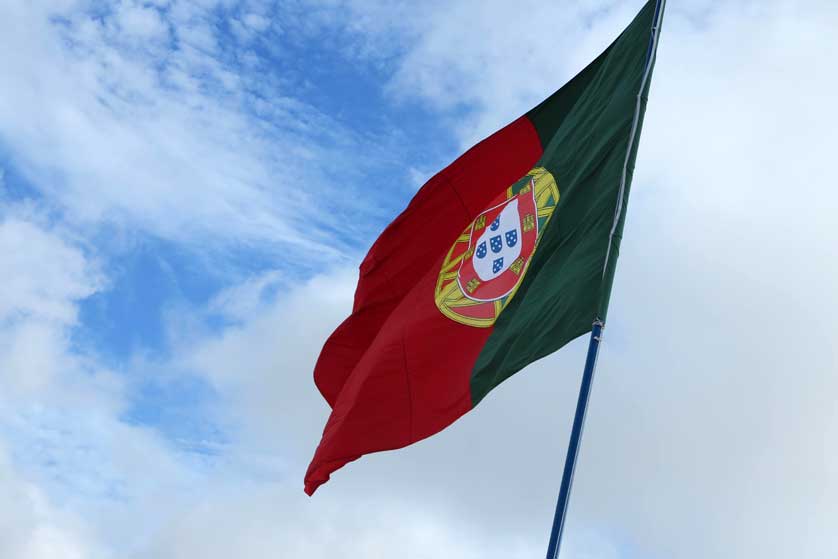
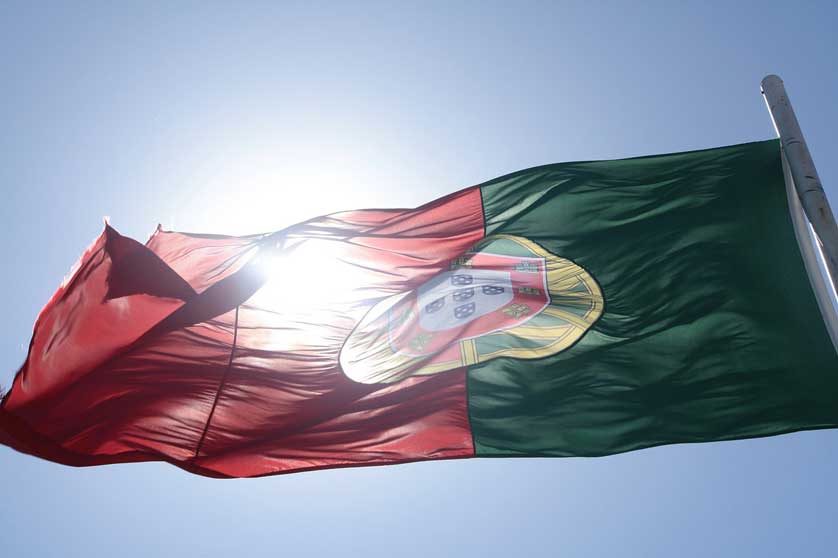
The present Portuguese flag (Bandeira Nacional) was adopted in 1911. The flag of Portugal consists of two unequal rectangles of green and red with the yellow Portuguese coat of arms and shield in the center.
The red and green colors are associated with the Portuguese Republican Party, which overthrew the monarchy in 1910.
The Portuguese Republican Party's associations of green (hope) and red (the blood of sacrifice) are entirely their own and have no real association with Portugal's previous symbols.
The colors of the former flags of the Portuguese kings and queens were blue and white - a blue cross on a white background, thus the new flag represents a radical change from the old regime.
The armillary sphere symbolizes the triumphs of navigation of the "Age of Discoveries" when Portuguese ships set out on voyages to South America, Africa and the Far East from the 15th century onwards.
The red, yellow, white and blue Portuguese shield within the armillary sphere is a resonant symbol of Portugal's early history as it battled to free itself from the dominion of its Moorish conquerers.

Displaying the Portuguese Flag
The Portuguese flag may be seen hoisted throughout the country on public buildings from 9am to sunset on Sundays and national holidays.
The Portuguese flag is often seen flying outside large hotels and from hilltop castles in the country as well.
Though not an overtly nationalistic nation, Portugal does have a national pride, which is expressed through its national symbols, which reveal to the world that this small nation is not just an adjunct to its larger, more powerful neighbor, Spain.
The Museu da Presidência da República in Belem has a detailed history of the Portuguese flag and other national symbols.
Related