Famous Portuguese People: Alexandre de Serpa Pinto
Alexandre de Serpa Pinto
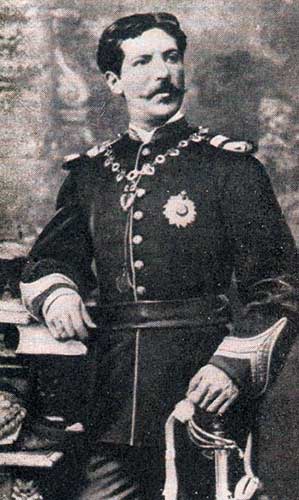
Alexandre de Serpa Pinto (1846-1900) was a Portuguese explorer and colonial bureaucrat in southern Africa in the 19th century.
Serpa Pinto was born in Cinfães, close to Viseu in the north of Portugal. At the tender age of just ten he was enrolled in the Colégio Militar, a military secondary school in Lisbon, that trained young men for service in Portugal's overseas colonies in Africa, Asia and Brazil, a consequence of the country's expansionism following the Age of the Discoveries in the 15th and 16th centuries.
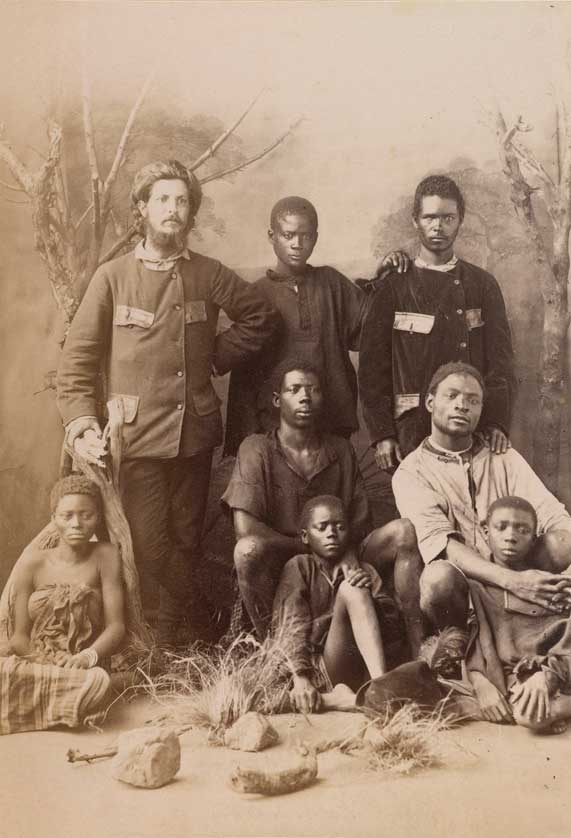
As a young man of just 18 he was sent to Mozambique where he saw some action as a soldier. In 1869 he was part of an exploration team that left Benguela in Angola to travel along the Zambezi to the Victoria Falls. He continued his journey south to Pretoria in South Africa becoming one of the first Europeans to traverse Africa from west to east, a journey he was to record and publish as a book.
All in all, Serpa Pinto led three major expeditions in southern Africa: from Mozambique to the eastern Zambezi and South Africa in 1869, then to the Congo River and the upper Zambezi region from Angola in 1876 and then traversing Africa from Angola in 1877-79. These expeditions were driven by the desire of Portugal as a colonizing nation to claim territory between what is now present-day Mozambique and Angola, the so-called "Rose Coloured Map" - a trans-Africa corridor from coast to coast.
In 1884, Serpa Pinto became the Portuguese consul in Zanzibar and was charged with carrying out further exploration as the major European powers sought to carve out more southern African territories for themselves.
The Shire Highlands, a plateau in what is now southern Malawi, became a bone of contention between rival Portuguese and British colonial land grabs - the so-called "Scramble for Africa" - with Serpa Pinto on one side for Portugal and Sir Henry Hamilton Johnston for Britain on the other.
This confrontation led to minor skirmishes between the two sides, with the loss of mainly African lives, before the 1890 British Ultimatum - a show of force by the British side, which forced the Portuguese to withdraw. This was an ultimatum by the superpower of the day, Britain, against its oldest ally, Portugal, and led to a capitulation on the part of Portugal.
Serpa Pinto then left Africa and returned to Portugal in 1890 where he was to die soon afterwards in Lisbon, possibly from a tropical disease contracted in Africa, though his cause of death is unrecorded.
At the time, Serpa Pinto was a well-known name throughout Europe, honored for his explorations, grit and knowledge of Africa. Now he is largely forgotten, except in Portugal, where his name lives on in street names throughout the country.
There are Rua Serpa Pinto in virtually every large Portuguese town or city including Braganca, Évora, Lisbon, Porto and Tomar as well as in the former Portuguese territory of Cape Verde.