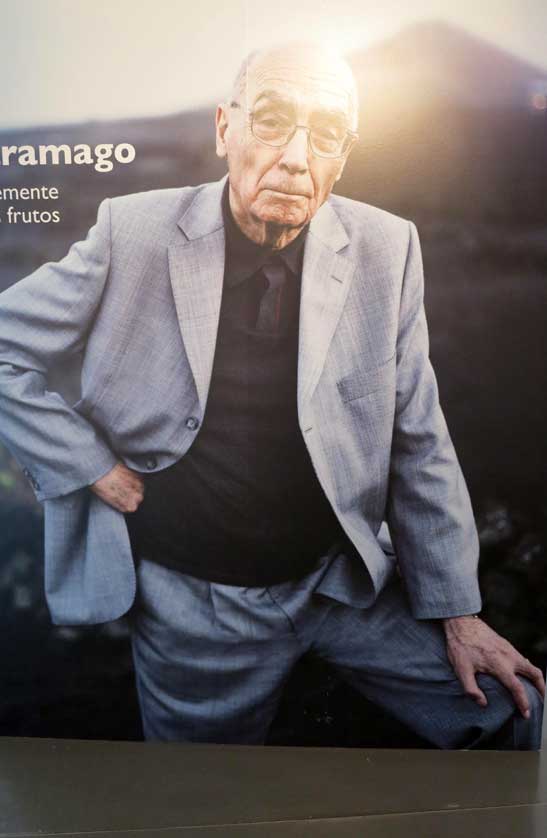
José de Sousa Saramago
José de Sousa Saramago (1922-2010) was a Nobel-prize winning writer (1988) with a deep interest and focus on the history and culture of Portugal.
Born in Azinhaga in 1922, Saramago hails from a poor peasant family in the Ribatejo region of Portugal. The name of Saramago ("wild radish") was incorporated into his name by accident on the registration of his birth. His parents moved to Lisbon soon after and Saramago began work as a car mechanic after he graduated from high school. His talent for writing later lead to a job as a journalist for the respected newspaper Diário de Notícias. Saramago quit the paper after the Carnation Revolution of 1975 and began to eke out a living as a full-time writer.
A member of the Portuguese Communist Party (PCP), Saramago married twice and has one child, a son, Violante, born in 1947. Saramago lived on the Spanish island of Lanzarote with his second wife, Spanish writer, Pilar del Río.
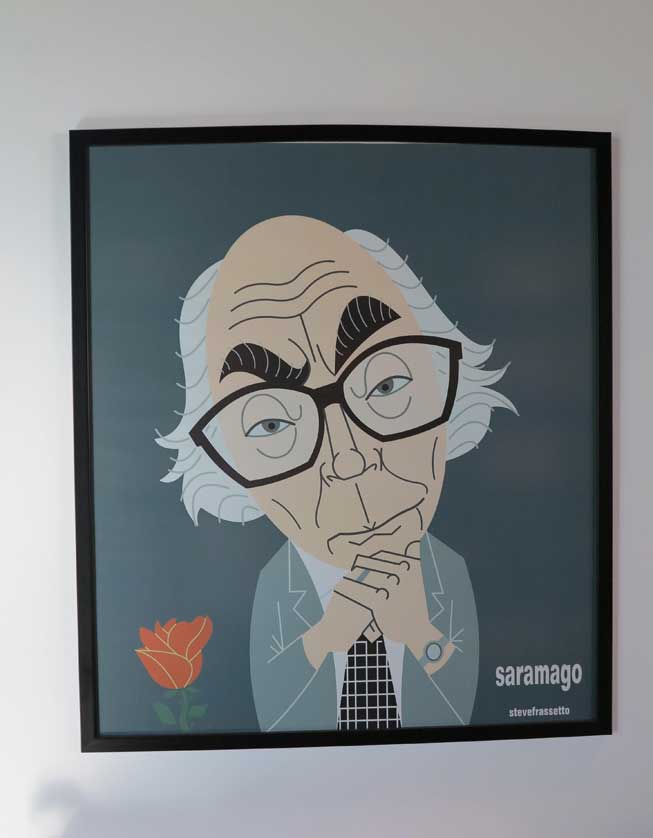

Saramago's writing began to come to the attention of an international audience only from the 1970s.
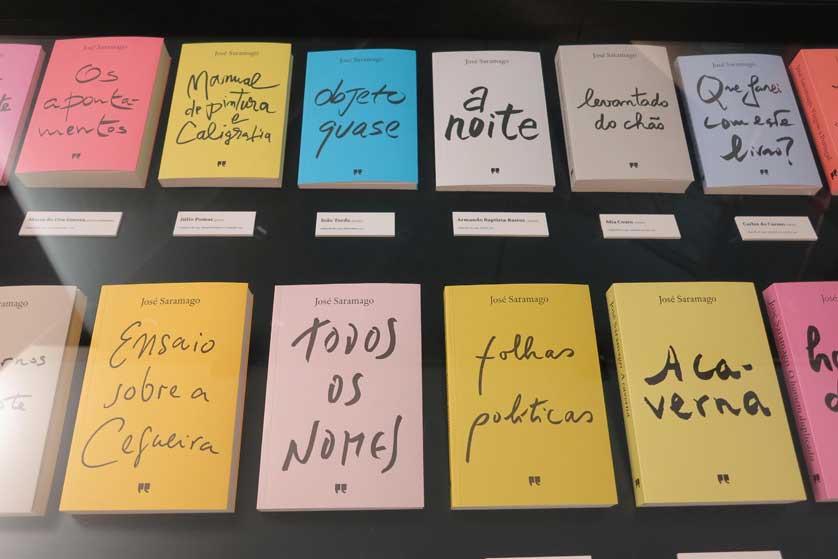
The themes and styles employed in his fiction, as well as his political views made Saramago a controversial figure both in Portugal and overseas. Many of his novels employ fantastic and surreal plots, such as the Iberian Peninsula breaking off from the rest of Europe in the The Stone Raft. In Blindness an entire nation is stricken with a plague ("white evil") as people lose their sight and spark an authoritarian reaction on the part of the government towards the sufferers. Death At Intervals tells the story of a society dealing with the temporary withdrawal, and later return of, death.
Saramago has also drawn fire for his criticism of the policies of the Catholic Church, Judaism and the actions of the Israeli government in Palestine and Lebanon. His depiction of Jesus as a normal, fallible human being in The Gospel According To Jesus Christ (O Evangelho Segundo Jesus Cristo, 1994) offended the conservative Portuguese church and government. Saramago subsequently left Portugal for the Canary Islands in protest at the authorities restricting his writing from being put forward for the European Literary Prize.
Throughout his 80s, Saramago continued to write and his almost daily updated blog in Portuguese can be read here. His final novel Cain was published in 2009.