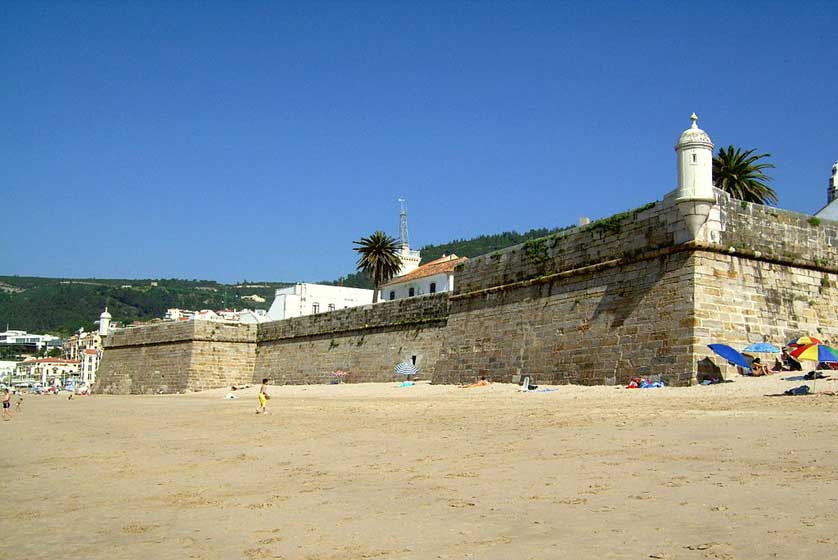
Sesimbra Castle
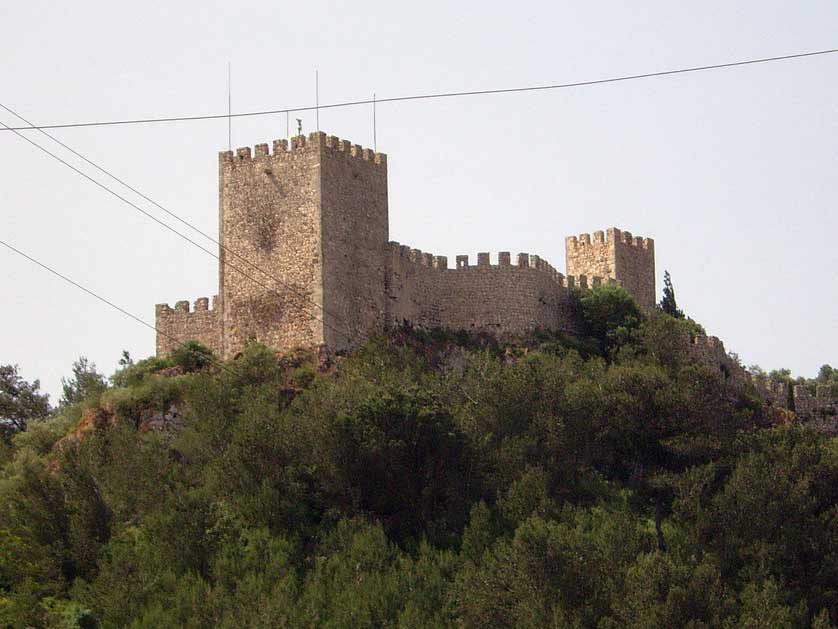
Sesimbra Castle (Castelo de Sesimbra) in the town of Sesimbra lies on a steep cliff overlooking the Bay of Setúbal. It was built over a previous Moorish fort dating back to the 9th century.
History
The site of the castle we see today is believed to have been settled in Prehistoric times. During the Muslim period of Portugal's history the town of Sesimbra was known as Alcáçova.
The castle was first taken by D. Afonso Henriques, the first King of Portugal in 1165. In 1191, however, it was retaken by the Almohads and largely destroyed.
In 1199 King Sancho I, with the assistance of Crusaders on their way to Palestine, finally occupied the castle.
Thereafter the castle was strengthened and enlarged including the construction of the impressive West Tower.
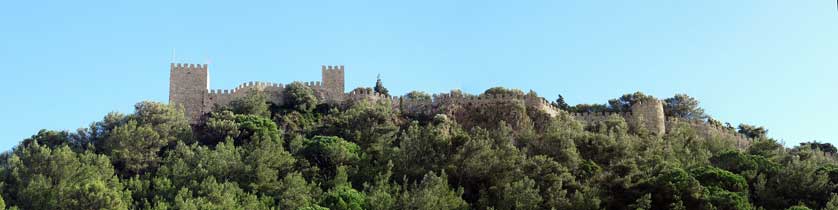

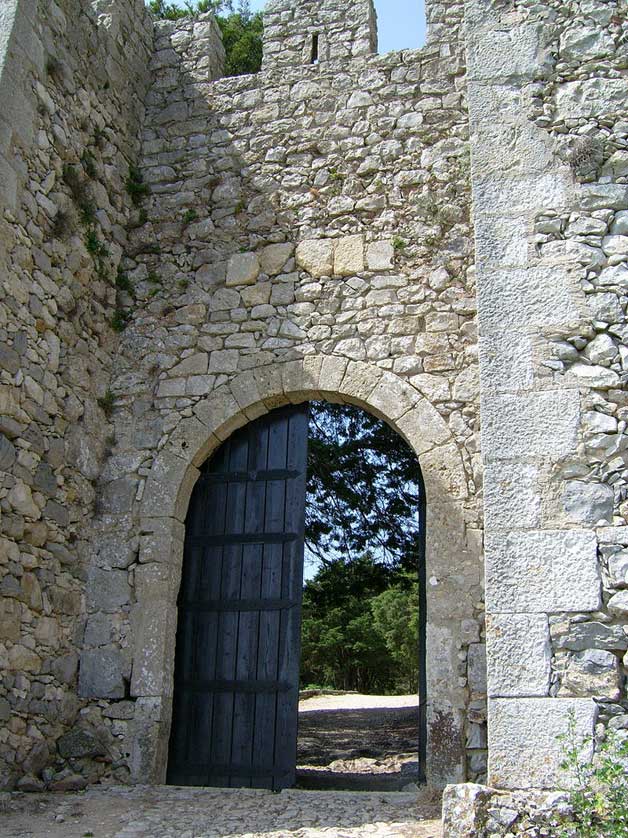
Further restorations took place in the late 17th and early 18th centuries including the repair of the small Church of Santa Maria do Castelo, built by D. Afonso Henriques.
Unfortunately the castle was severely damaged in the 1755 earthquake and largely abandoned. The grounds include two exhibition spaces, the church and disused cemetery and a cafe.
Access
Sesimbra Castle
Rua Nossa Sra. do Castelo 11
2970 Sesimbra
Hours: The castle is free to enter and is open daily. Summer: 10 am - 8 pm; Winter: 7 am - 7 pm.
A nearby hotel is the Four Points by Sheraton Sesimbra. See here for a full listing of accommodation in Sesimbra.

Nearby
Sesimbra is located in the district of Setúbal about 30 km west of the town of Setúbal itself. It is on the western edge of the beautiful Parque Natural da Arrábida and also an easy drive from the Troia Peninsula.
The southern edge of the Costa da Caparica is to the north and the wild and remote Cabo Espichel and the church of Nossa Senhora do Cabo Espichel (Nossa Senhora da Pedra Mua) is to the west.
Also nearby is the pleasant wine-producing town of Azeitão - known for its white wines and runny cheese, best enjoyed together.
Sesimbra itself was an important port during the Portuguese Age of Discovery and King Manuel I is thought to have lived here for a time. The Fortaleza de Santiago was built for coastal defence in the 16th century. It was used as a holiday home by Portuguese monarchs from the 18th century.
Nowadays it houses the Museu Marítimo de Sesimbra with exhibits on the history of the sea, fishing and the fishing community in the area. These include explanatory wall panels, short movies, actual boats, fishing gear and photographs.
Sesimbra Map