Baan Kudichin Museum
The Baan Kudichin Museum is an interesting, family-run, free museum in the Kudi Chin (aka Kudeejeen or Kudi Jeen) district of Bangkok, Thailand.
Kudeejeen, a neighborhood situated along the western banks of the Chao Phraya River in Bangkok, is a hidden gem that has preserved its historical and cultural heritage amidst Bangkok's increasing modernity. This area is characterized by its unique architectural landscape, influenced by Thai, Portuguese, and Chinese cultures, and serves as a living testament to the multicultural exchanges that have shaped the region over the centuries.
Background
During the historical period known as the Age of Discoveries (Era dos Descobrimentos), Duarte Fernandes, acting as an envoy dispatched by Afonso de Albuquerque, became the first European to visit Siam from the port city of Malacca in 1511. This visit led to a bilateral treaty between the Portuguese and Kingdom of Siam, effectively granting the Portuguese permission to settle within the kingdom's borders and engage in commercial activities.
Following this ground-breaking expedition, a considerable contingent of Portuguese traders and adventurers subsequently established settlements in Ayutthaya, the capital city of Thailand at the time. Among these individuals were mercenaries in the service of the Siamese monarchy as well as navigators, sailors and merchants.
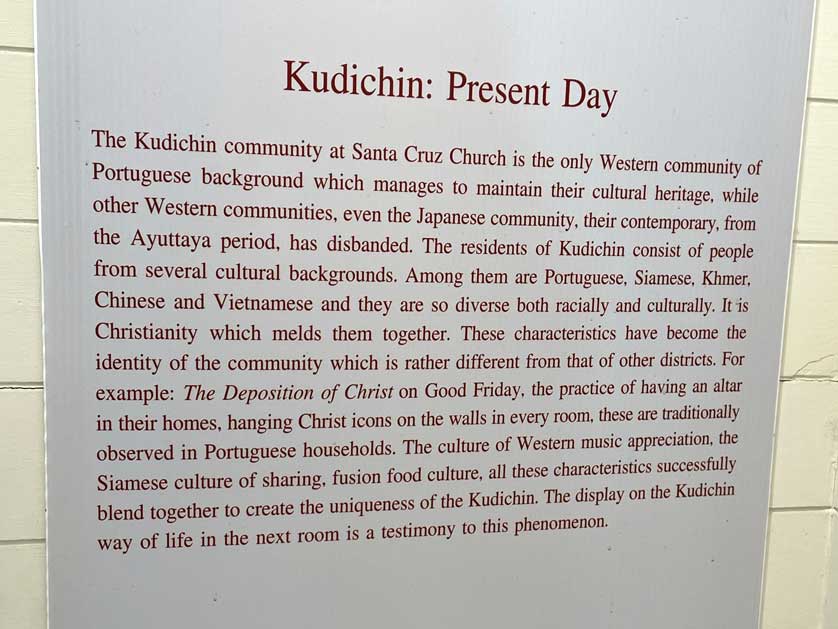
Typically these men (known as Lancados) would cohabit or marry local Siamese or Mon women. Under Thai law at the time any children of these formal or informal unions were considered Portuguese and Catholic. This changed during the reign of King Rama VI (ruled 1910-1925) when such offspring became Siamese.
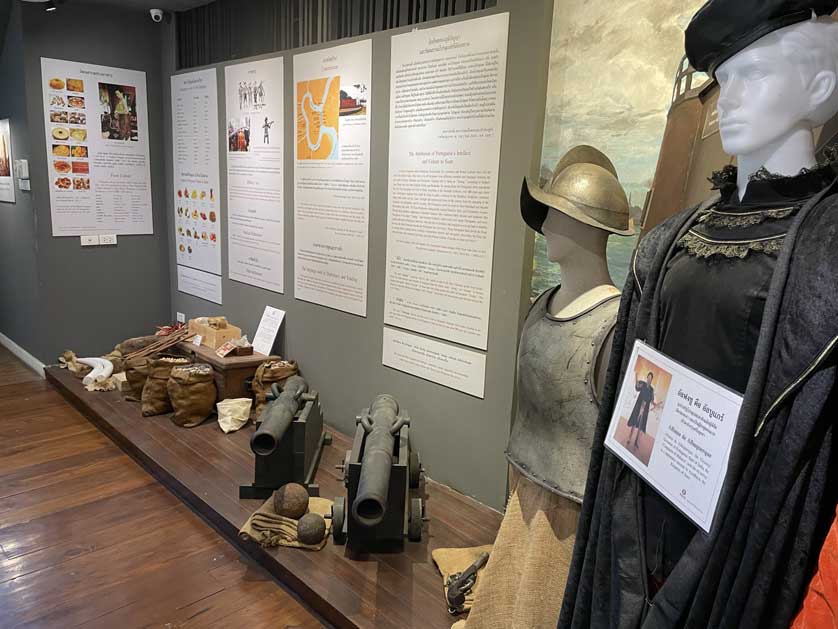
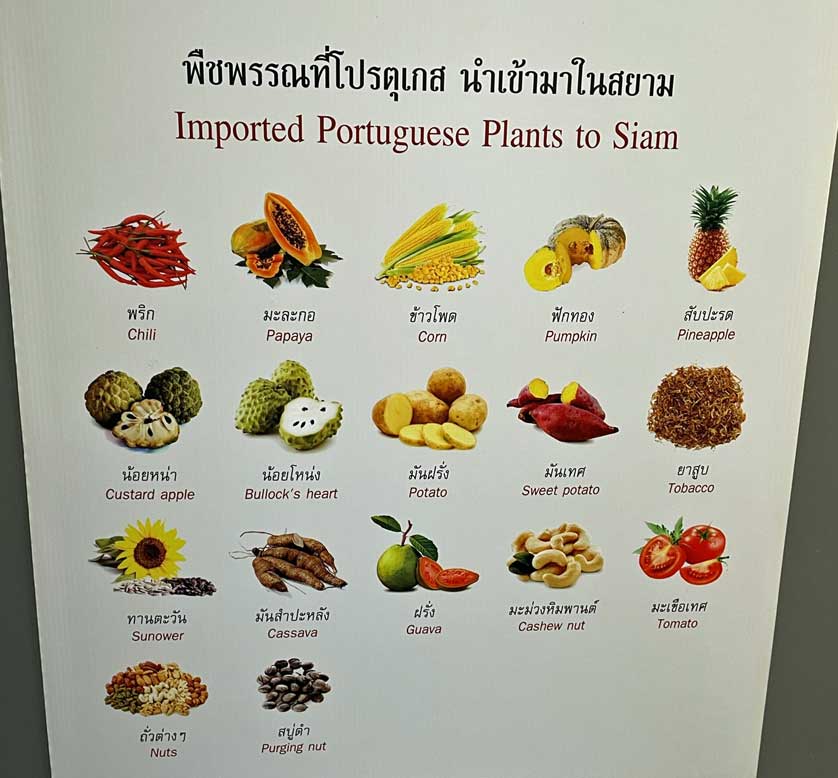
The Portuguese facilitated the introduction of firearms and produce from the New World, an exchange that paralleled their endeavors further east in regions such as Macau and Japan.
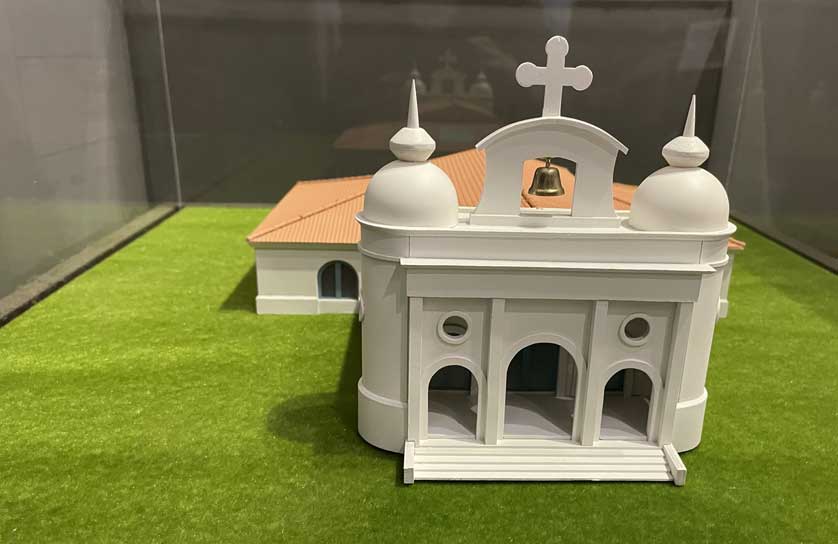
With the fall of Ayutthaya to the Burmese in 1767, the capital moved to Thonburi (on the west bank of the Chao Phraya River in present-day Bangkok) and the Portuguese were granted land to settle here along with other foreign communities by King Taksin. Here they built the Santa Cruz Church in the heart of their neighborhood and many of their nearly 2,000 Thai-Portuguese descendents still reside here to this day, giving the area a distinct, multicultural atmosphere.
The symbol of this unique, mixed heritage community is a rooster adapted from the Galo de Barcelos.


Exhibits
The museum explains Portugal's Age of Discoveries and voyages of exploration beginning with the colonization of the islands of Madeira and The Azores by 1430.
Gil Eanes (1395-?), Bartolomeu Dias (1457-1500) and Vasco da Gama (1460-1524) continued Portugal's exploration of the coast of Africa and into the Indian Ocean.
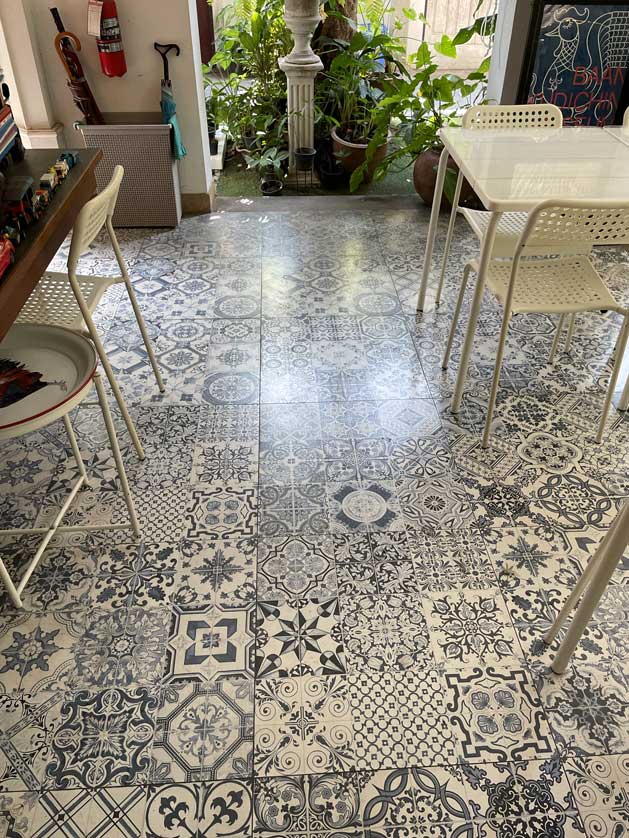
The ground floor of the free museum has a pleasant garden cafe where visitors can enjoy Sappayak Bun, a traditional Portuguese bun stuffed with minced pork, potatoes and chili peppers. There is also an azulejos tiled floor to admire before going upstairs to the museum itself on the second and third floors.

Thai-Portuguese relations are explained using wall panels, photographs and original objects collected from the local community. There are sections on the various new foodstuffs brought to Thailand by Portuguese traders. These include chili, now a staple of Thai cuisine, papaya, potatoes and tobacco. The Portuguese also introduced their delicious pastries and desserts in the 18th century.
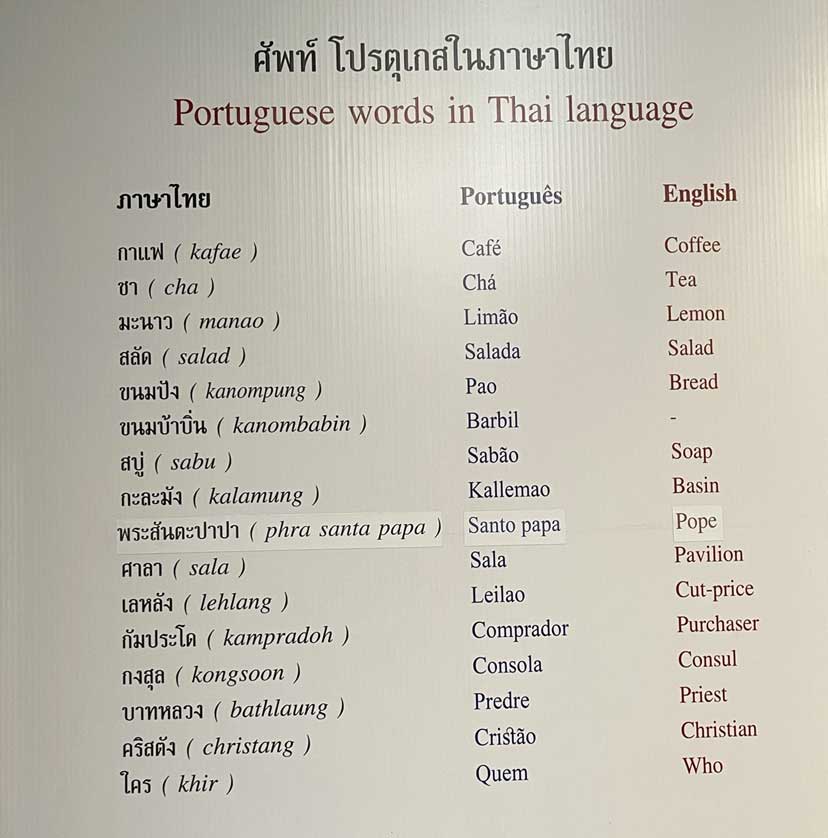
Several Portuguese words also entered the Thai language including the words for bread, coffee, consul, salad, soap, and tea.
There are also exhibits on how the Thai-Portuguese community lived their daily lives including a reconstruction of a typical bedroom and kitchen.
271 Tedsaban 1 Road
Watkalaya, Thonburi, Bangkok 10600
Tel: 08 9924 2503
www: baankudichinmuseum.com
Hours: Tuesday to Sunday 9.30 am to 5.30 pm; Monday closed.
Santa Cruz Church
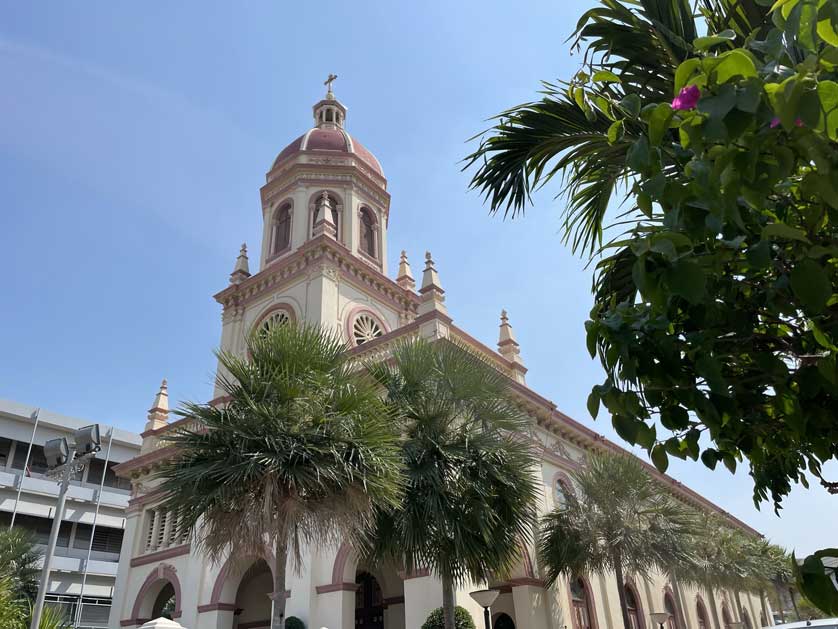
Close to the museum is the Santa Cruz Church (วัดซางตาครู้ส) which dates from around 1770. The present building dates from 1913-1916 and is designed in Renaissance Revival style. It remains at the very center of the community with the Santa Cruz School nearby.
The church was the main Catholic place of worship until the construction of the Assumption Cathedral in Bang Rak across the Chao Praya in 1821.
The church is closed to visitors except for daily mass.
There are two other Portuguese churches of note in Bangkok, the Holy Rosary Church in Talat Noi and the Immaculate Conception Church in Sam Sen.

Access & Accommodation
The historic district of Kudi Chin is situated on the western bank of the Chao Phraya River in Thonburi, not far from the Grand Palace and Wat Arun.
To get to Kudi Chin from BTS Taksin Station take the Chao Phraya Express Boat to Saphan Phut. Then cross the river from Atsadang Pier to the Wat Kanlayanamit Pier and walk south. Alternatively, take the MRT to Sanam Chai Station, then take the ferry at Atsadang Pier to Wat Kanlayanamit Pier.
Book hotels near Santa Cruz Church with Booking.com
Visitors to the area should try delicious khanom farang ("foreigner cakes") - a type of crunchy raisin biscuit made from a Portuguese-Chinese recipe. Try the Thanusingha Bakery House (ร้านธนูสิงห์ ขนมฝรั่งกุฎีจีน) just down the alley from the museum.
In addition, Baan Sakul Thong (advanced booking is required) is a well-known, family restaurant serving a fusion of Thai and Portuguese cuisine close to the museum.
Address: 219 Soi Kudee Jeen 3, Bangkok
Tel: 06 2605 5665
Gallery

Related
Visitors to Porto can experience the Age of Discovery at the excellent World of Discoveries museum.
The Portuguese Discoveries Wax Museum (Museu de Cera dos Descobrimentos) which opened in 2014 in Lagos on the Algarve brings the period to life through wax figures.