Museu Nacional de Arte Antiga, (National Museum of Ancient Art), Lisbon
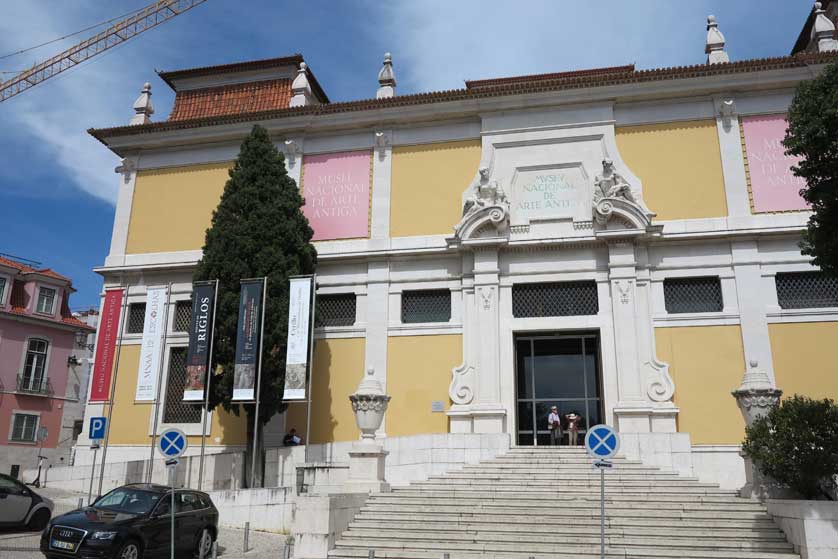
The Museu Nacional de Arte Antiga (National Museum of Ancient Art) in Lisbon is Portugal's national art museum. As such it is equivalent in status to such museums as the National Gallery in London, the Prado in Madrid or the Nationalgalerie in Berlin.
The museum is on four levels (0, 1, 2 and 4) and is divided into several sections. It occupies the former Palácio Alvor-Pombal (Janelas Verdes), once a residence belonging to the Marquis of Pombal.
The museum is one of the most visited in the country and contains more works of art classified as National Treasures than any other in Portugal.
Altogether the museum has over 40,000 pieces.
History
The Museu Nacional de Arte Antiga (MNAA) was established in 1884. Its initial function was to show works of art owned by the Portuguese Royal Family and the National Academy of Fine Arts.
The latter's collections stemmed from the dissolution of Portugal's monasteries in 1833 and the government's subsequent expropriation of their artistic treasures. The art collection of Carlota Joaquina (1755-1830), the disgraced Queen consort of Portugal, was also appropriated into the collection.
Following the 1910 Revolution the collection was split between the MNAA and the Chiado Museum (MNAC; Museu Nacional de Arte Contemporânea), which exhibits works of art from after 1850.
The MNAA's collection thus spans from the 12th century to roughly 1850.

Layout of the Museum
The museum is on four floors: 0, 1, 2 and 4.
On the 0 floor are two temporary exhibition galleries, the library and auditorium.
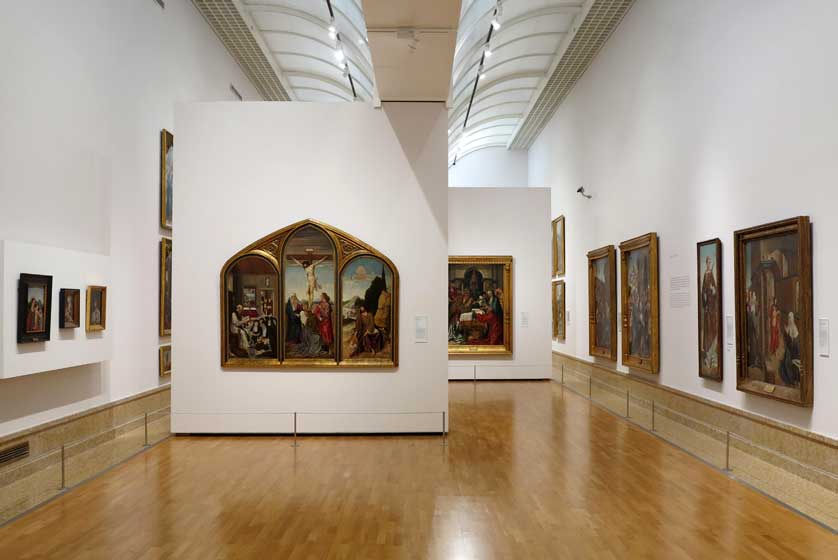
On level 1 are exhibits of Portuguese furniture, European decorative arts and European painting. The Tecto Pintado Room is used for temporary exhibitions.
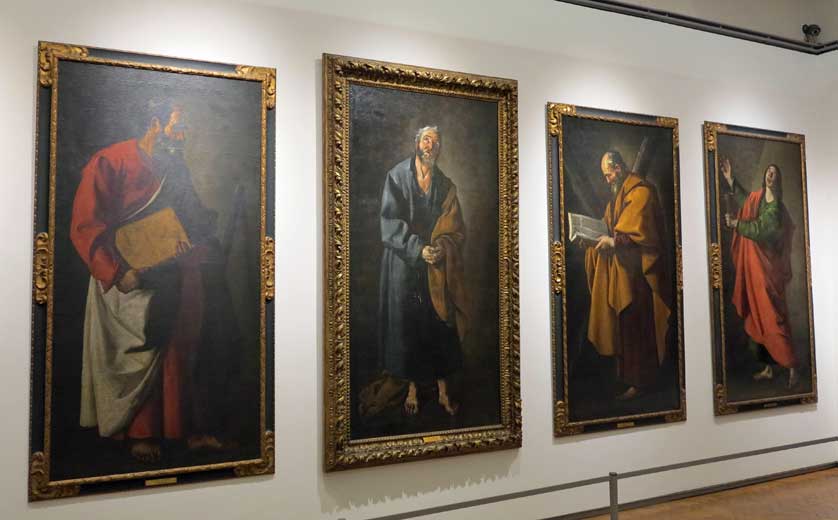
Here can be seen works by Hieronymus Bosch (The Temptations of Saint Anthony Abbot), Pieter de Hooch (Merry Company), Albrecht Dürer (Saint Jerome) and Francisco de Zurbarán (Saint Peter). There are also paintings on this floor by Giovanni Battista Tiepolo, Andrea della Robbia, Rafael Sanzio, Piero della Francesca plus furniture by Pierre Bernard.
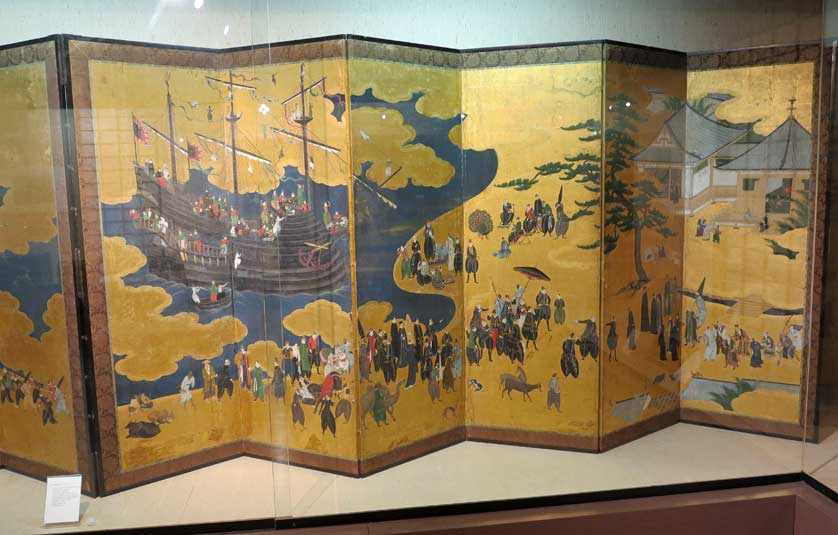
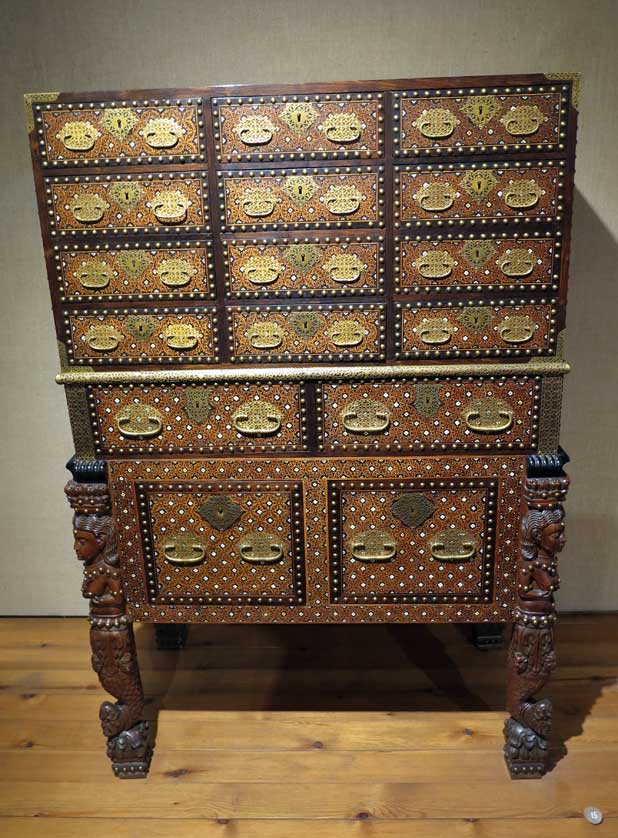
Level 2 has galleries focusing on Art from the Portuguese Discoveries including large Japanese folding screens (byobu) and furniture from Goa and Macau. Other galleries are titled Ceramics, Gold And Silverware and Jewellery.
The superb Japanese screens are known as Namban ("Southern Barbarian") screens and are the work of the famous Kano school of artists in Japan. There are also ceramics from China, and ivory pieces from Africa.
Also on this floor is the Belém Monstrance, commissioned by King Manuel I for the Jerónimos Monastery and made with gold brought back from Africa during the second voyage to India by Vasco da Gama.
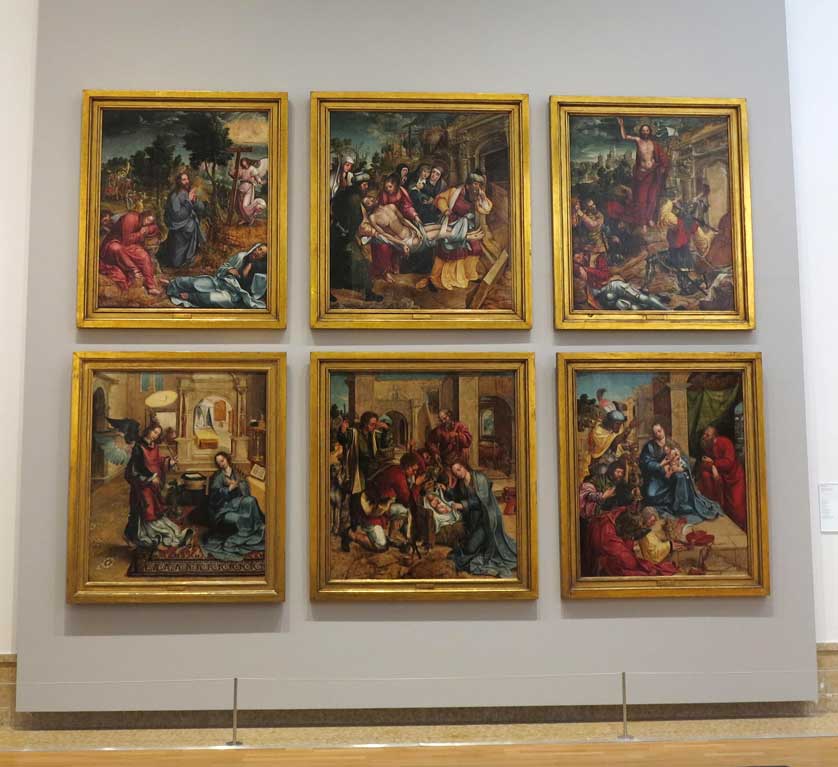
Level 3 is dedicated to Portuguese Painting And Sculpture. It contains the museum's most famous exhibit the Panels of Saint Vincent by Nuno Gonçalves, as well as works by Gregorio Lopes (The Martyrdom of Saint Sebastian), the court painter Cristóvão de Morais (Portrait of King D. Sebastião) and Domingos Antonio de Sequeiria (The Adoration of the Magi).
Collection
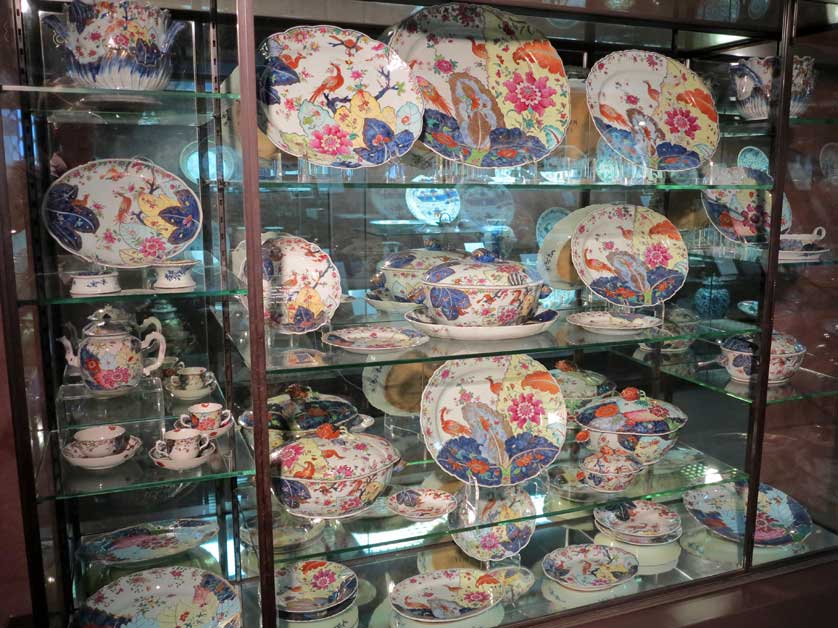
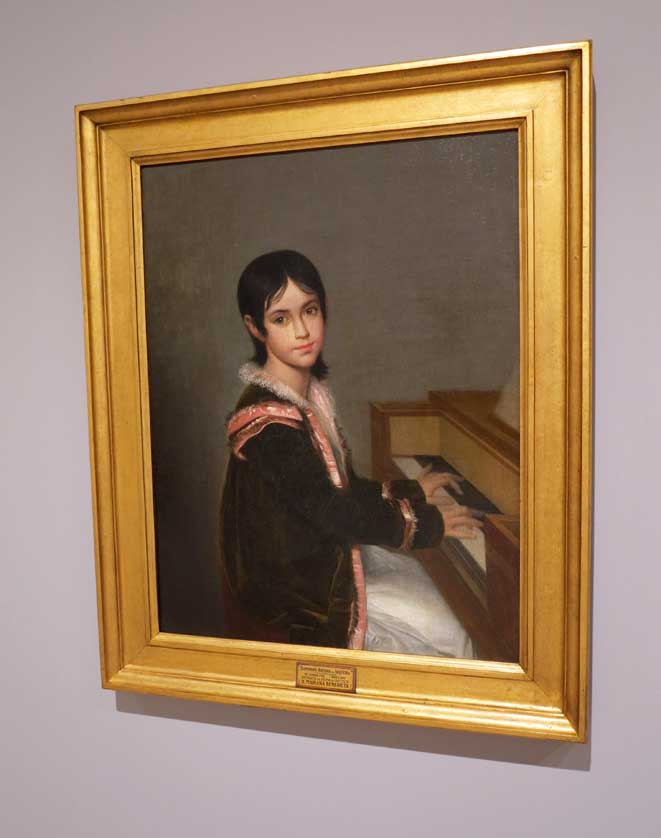
The collection exhibits mainly painting and sculpture but also on display are drawings, furniture, metalwork, and textiles. There are works by both Portuguese and foreign artists.
As well as those artists mentioned above there are works by Anthony van Dyck, Pieter Brueghel the Younger, Hans Memling, Tintoretto and Diego Velázquez.
Portuguese artists are represented by Jorge Afonso, Vasco Fernandes, Francisco de Holanda, Cristóvão Lopes, Gregório Lopes, Cristovão de Figueiredo, Francisco Henriques, Josefa de Óbidos, Vieira Portuense, and Domingos Sequeira.
Oriental Art
The section dedicated to Oriental art includes pieces from India, particularly Goa, Japan, China and Macau where the Portuguese and the Jesuits were active during the Age of Discoveries.
The collection rivals that of the Museu do Oriente, also in Lisbon.

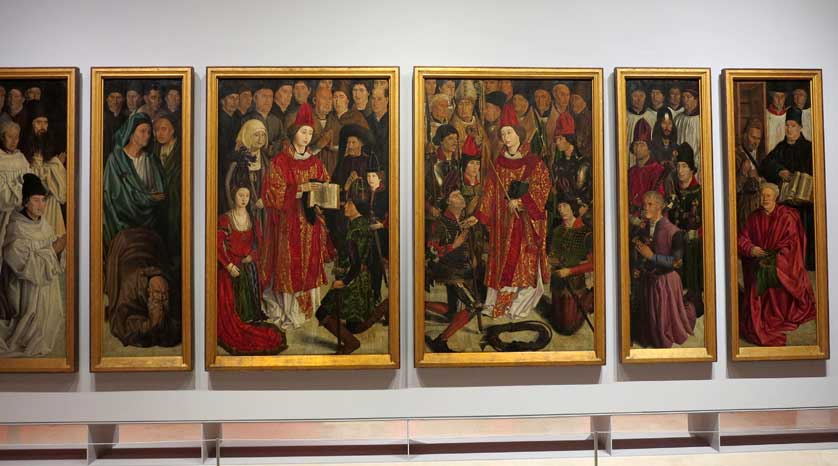
Panels of Saint Vincent by Nuno Gonçalves
The Panels of Saint Vincent by Nuno Gonçalves (the court painter of Dom Afonso V) consist of the Panel of the Friars, Panel of the Fishermen, Panel of the Prince, Panel of the Archbishop, Panel of the Knights, and Panel of the Relic.
The paintings were rediscovered in 1828 in the Palace of São Vicente de Fora in Lisbon. Altogether there are 58 figures gathered around the saint. The figures represent the Portuguese court, church and military.

Access
Rua das Janelas Verdes, 1249-017
Lisbon
Hours: 10 am - 6 pm; Tuesday to Sunday.
Closed January 1, Easter Sunday, May 1, December 25.
Admission fee.
The museum has a pleasant restaurant/cafe with free Wifi overlooking the River Tagus.
The museum is not really close to a Lisbon metro station with the nearest one at Cais do Sodre.
The Lisbon buses #713, #714 and #727 run to Rua das Janelas Verdes. The #728, #732 and #760 stop at Av. 24 de Julho. Trams #15E, #18E stop at Av. 24 de Julho; the #25E stops at nearby Largo de Santos.
MNNA is between the stations of Santos and Alcantara-Mar on the Cascais Line between Cais do Sodre and Cascais.
Nearby
The Scottish Church of St Andrew (Igreja de Santo André) is close by as is the Museu do Oriente, a short walk west.

Accommodation in Lisbon
Hotels in Portugal - Booking.com
Hotels in Lisbon - Booking.com
Lisbon Hop-On Hop-Off Bus, Tramcars, and Yellow Boat River Tour