Images of Portugal: Ruínas Romanas de Troia
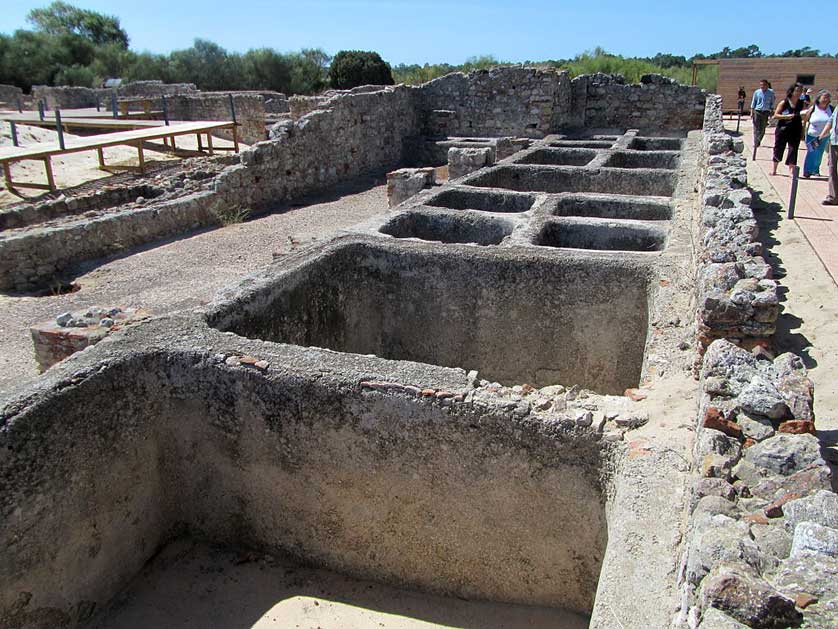
The Acala Island Roman ruins (aka Cetobriga Roman Ruins or Ruínas Romanas de Troia) on the Troia Peninsula south of Setúbal were once the largest fish salting center in the Roman Empire and were in use until the 6th century.
The local population was engaged in fishing and the manufacture and export of preserved fish (garum), from around the 1st to the 6th century.
The salting workshops were made up of a series of tanks (cetárias) organized around a central courtyard. The rich fish stocks and the ready availability of salt made this area the ideal location for the operation.
As well as the salting tanks, other Roman remains have been identified nearby. These include amphorae and other forms of pottery, parts of a Roman baths complex, mosaics, and evidence of a columbarium (where Romans kept their family funeral urns).
The ruins are open from October to March, Tuesday to Sunday from 10 am - 1 pm and from 2.30 pm to 6 pm. The rest of the year they are open for guided tours by an archaeologist only in June and September on Saturdays at 3 pm and July and August on Wednesdays and Fridays at 10.30 am.
The Cetobriga Roman Ruins have applied to become a UNESCO World Heritage Site and are on Portugal's tentative list of new places to be added.