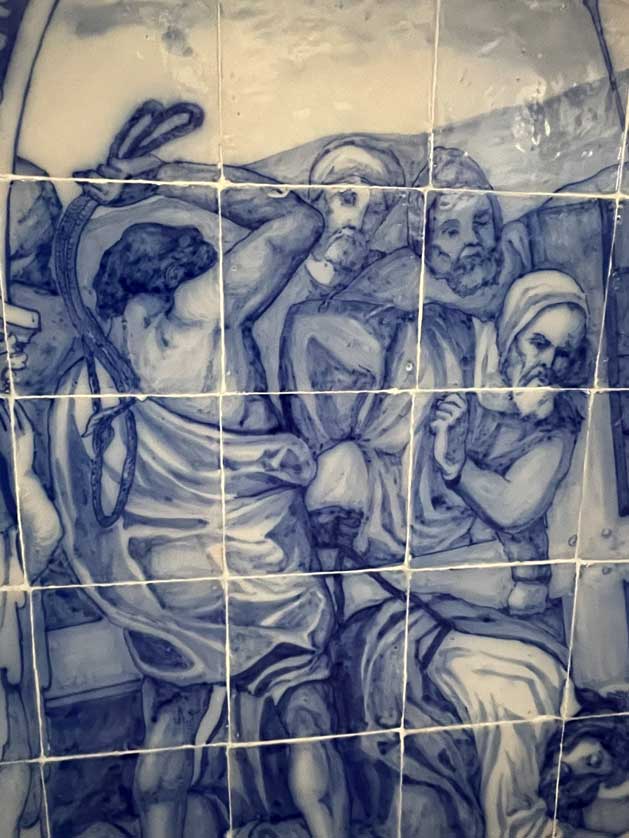
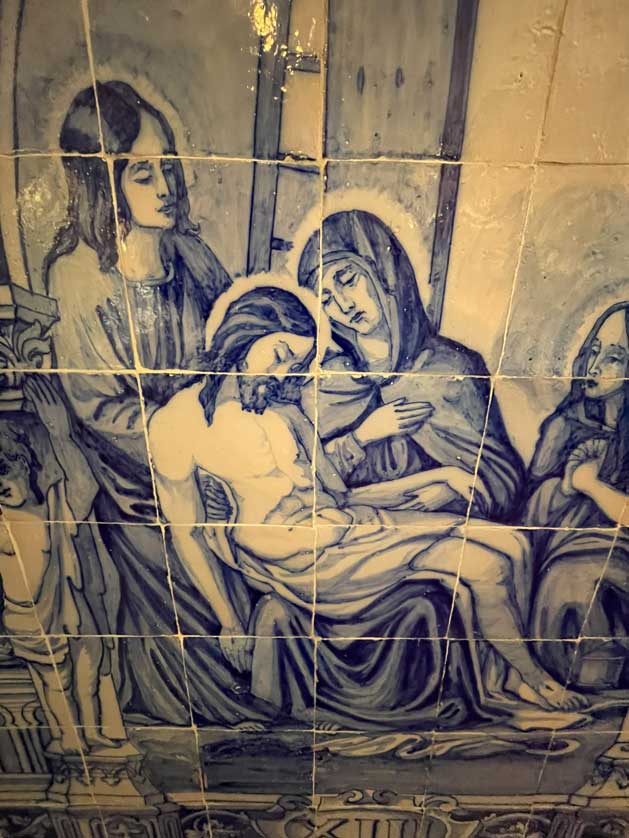
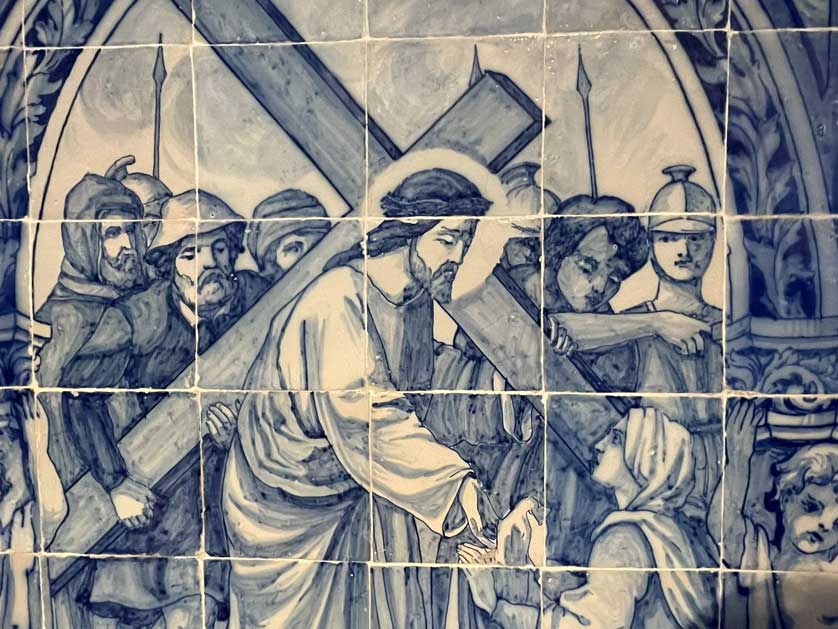
Portugal Images: Azulejos Tiles in Igreja de São Francisco, Evora
The Igreja de São Francisco in Evora in the Alentejo is more than just its famous Chapel of Bones (Capela dos Ossos). The complex, restored between 2014 and 2015 now contains an interesting collection of nativity scenes and a museum of sacred art.
The large 16th century church combines both late Gothic architecture with several notable Manueline elements.
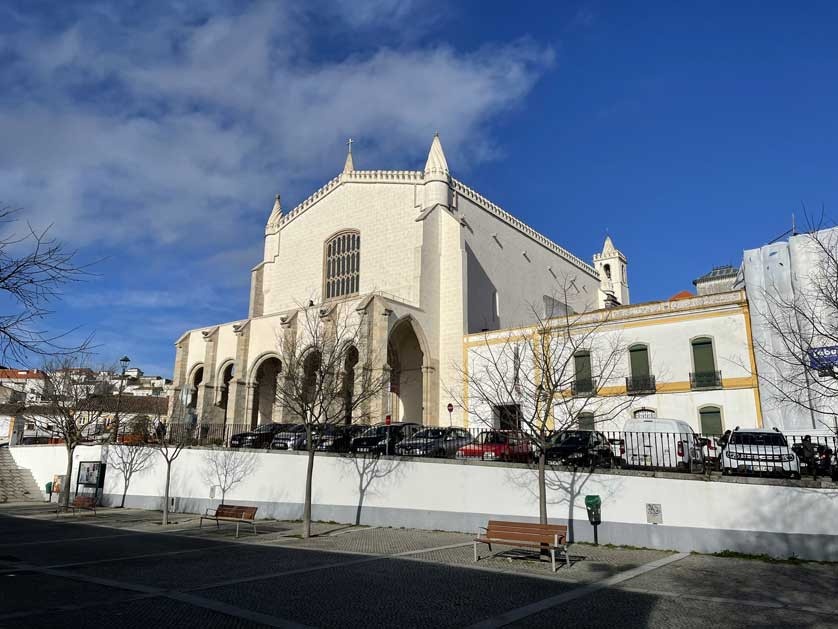

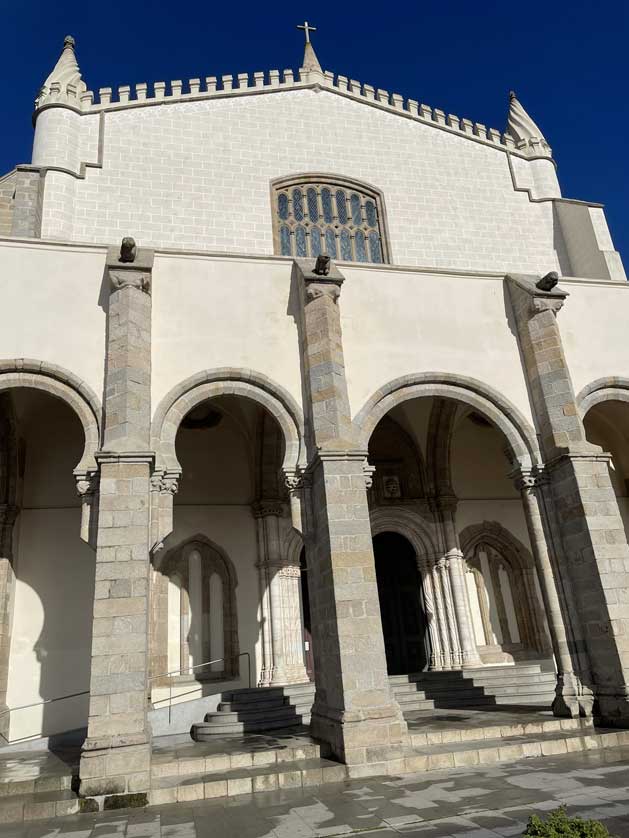
The church was constructed between 1480 and the early 16th century on the site of an earlier Gothic structure that belonged to the Franciscan Order, which had been present in Évora since the 13th century. The Franciscans arrived in Portugal from Galicia in Spain.
The construction was largely sponsored by Portuguese royalty, especially King John II and King Manuel I, who sought to create a grandiose ecclesiastical complex reflective of their era's wealth and power based on Portugal's maritime trade expansion during the Age of Discovery. The impressive façade is noted for its usual Manuline touches of armillary spheres, knots and spirals decorating its ribbed vaulting and pillars.
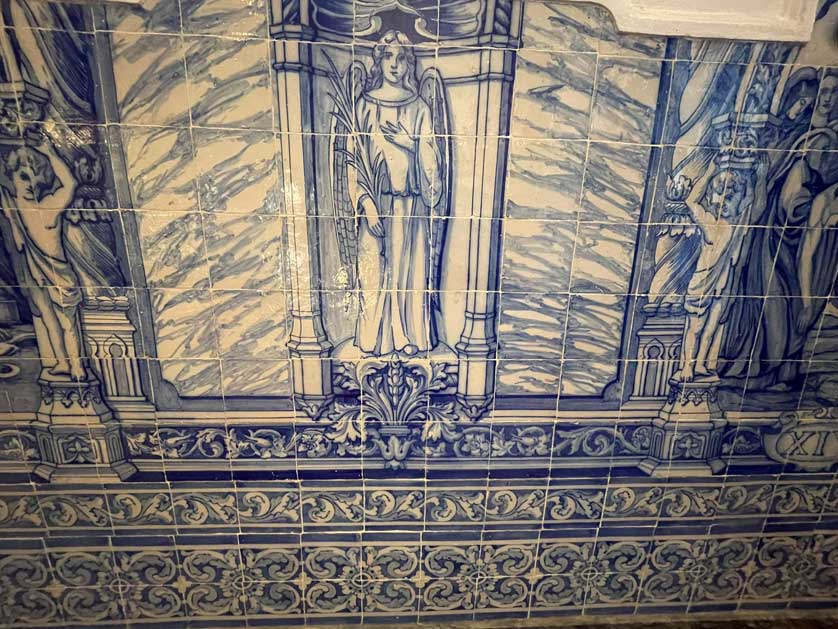
Inside, the church is notable for its spacious nave, with 10 ornate side chapels branching from it. The large and ornate cloister is lined with blue and white azulejos tile panels shown here.
With the dissolution of the monasteries in 1834, the larger convent building fell into disrepair with the exception of the Chapel of Bones and parts of the main church. The whole complex was restored in 2014-2015.
Address: Praca 1 de Maio, Evora