Statues on Avenida da Liberdade, Lisbon
Avenida da Liberdade is the elegant boulevard runs north-south from Praça do Marquês de Pombal (Marquis of Pombal Square) to Restauradores and Rossio. The pavements are decorated with impressive calçada and the central area has several statues of important figures from Portuguese history as well as famous people from overseas. The public art on display lines both sides of the street. Statues include those of the writers Almeida Garrett, António Feliciano de Castilho (1800-1875) and Alexandre Herculano (1810-1877) as well as a monument to those who fell in World War I (Monumento aos Heróis da Grande Guerra).
The street is Lisbon's version of the Avenue des Champs-Élysées in Paris or Regent's Street in London.
In addition to the public art on display along Avenida da Liberdade, banks, company headquarters, embassies, luxury stores, public buildings and several grand hotels are here, too.
Statues on the West Side
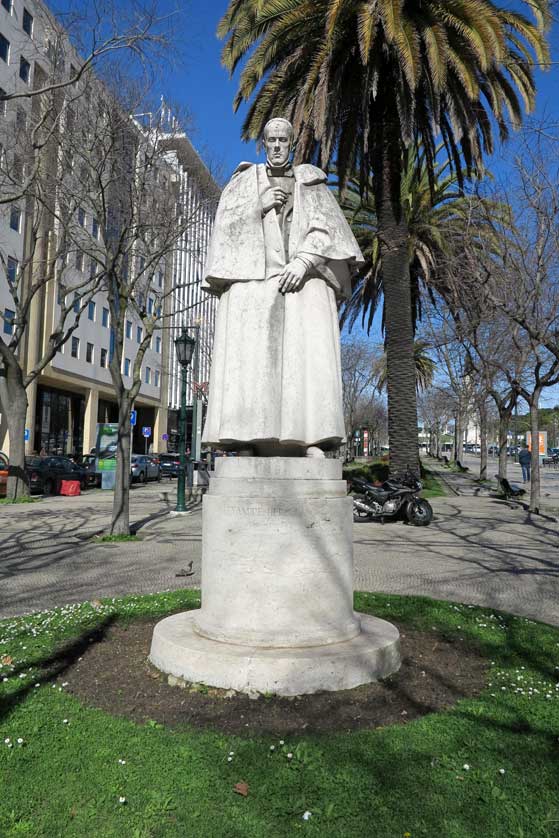
Heading south on the boulevard from the monument to the Marquis of Pombal in Praça do Marquês de Pombal is a figure of Alexandre Herculano (1810-1877), a prominent Portuguese novelist and historian. He started his career as a poet, and his early works were influenced by Romanticism. However, he is more renowned for his prose, particularly his historical novels and writings. His Eurico, o Presbítero (Eurico, the Priest) and O Bobo (The Fool), were instrumental in shaping Portuguese historical fiction. These novels often depicted medieval settings and characters. The 2.88 meter statue was unveiled in 1946 and is the work of sculptor Salvador Barata Feyo (1899-1990).
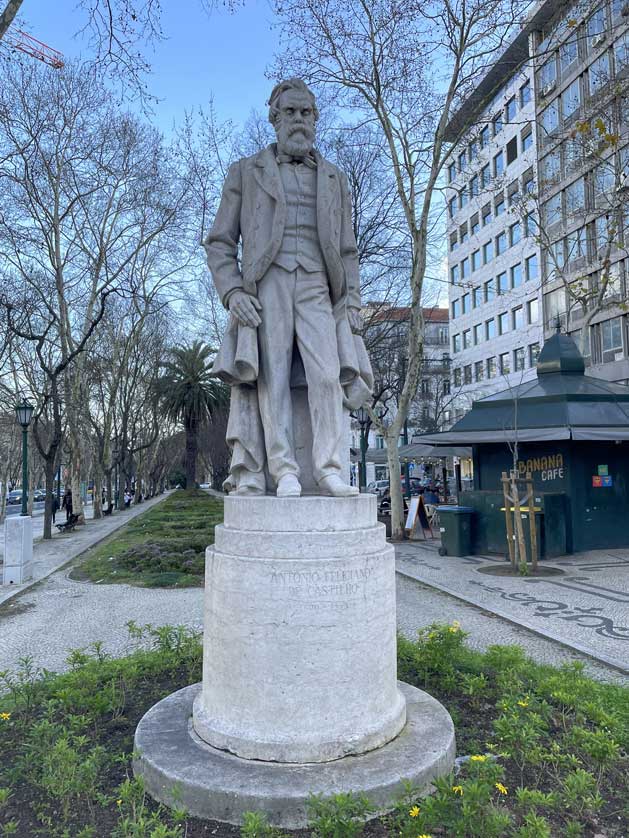


Next is a statue of the writer António Feliciano de Castilho (1800-1875). A notable Portuguese poet, translator, and literary critic, Feliciano de Castilho played a significant role in the cultural and intellectual landscape of 19th-century Portugal. Castilho's early work was marked by the Romantic movement, evident in his lyric poetry that celebrated nature, emotion, and individualism. A prolific translator, he introduced Portuguese readers to many classical and contemporary works from European literature, including those of Goethe and Dante. Castilho also contributed to the development of Portuguese prose through his essays and criticism, which often emphasized clarity and elegance of style. His later career was characterized by involvement in literary controversies, most notably the "Questão Coimbrã" (Coimbra Question), a polemic with younger writers like Antero de Quental and Eça de Queirós, who were part of the emerging Realist movement. Despite his conservative stance in these debates, Castilho's influence on Portuguese literature remains significant, particularly in his advocacy for the refinement and standardization of the Portuguese language. The figure of the blind writer is by sculptor Leopoldo de Almeida and dates from 1948.

Next is a figure depicting José Gregório da Rosa Araújo (1840-1893), a former mayor of Lisbon. It was during his time as mayor that Avenida da Liberdade was laid out. The work is by the artist Costa Motta and dates from 1936.

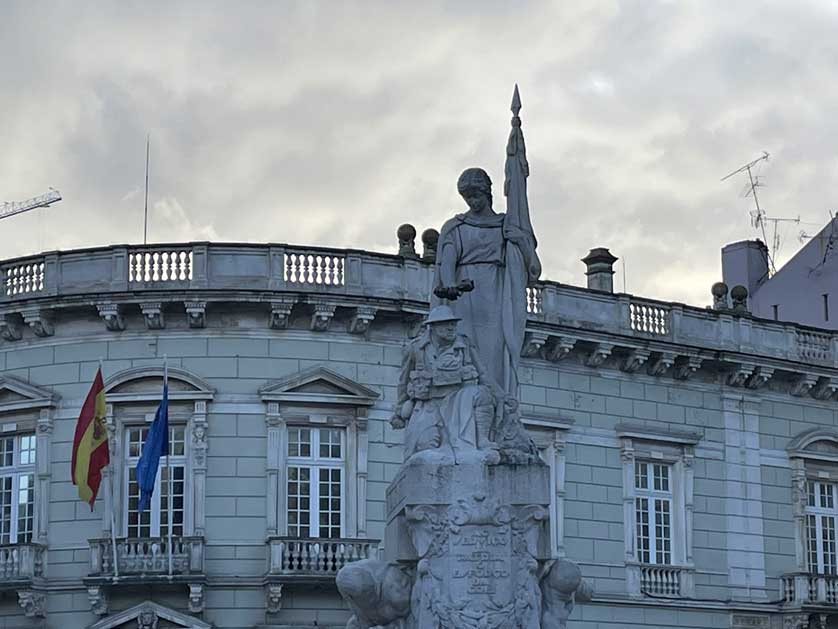
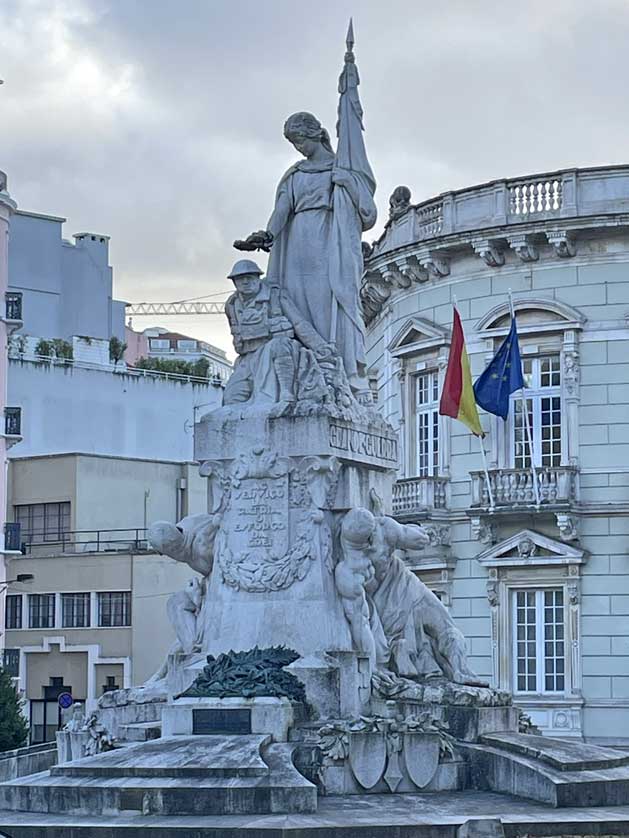
Next is the Monument to the Great War Dead (Monumento aos Mortos da Grande Guerra) completed in 1931 in stone by architects Carlos Rebello de Andrade and Sousa Caldas and sculptor Maximiano Alves (1888-1954). It is a tribute to the Portuguese soldiers who died during World War I.

Statues on the East Side
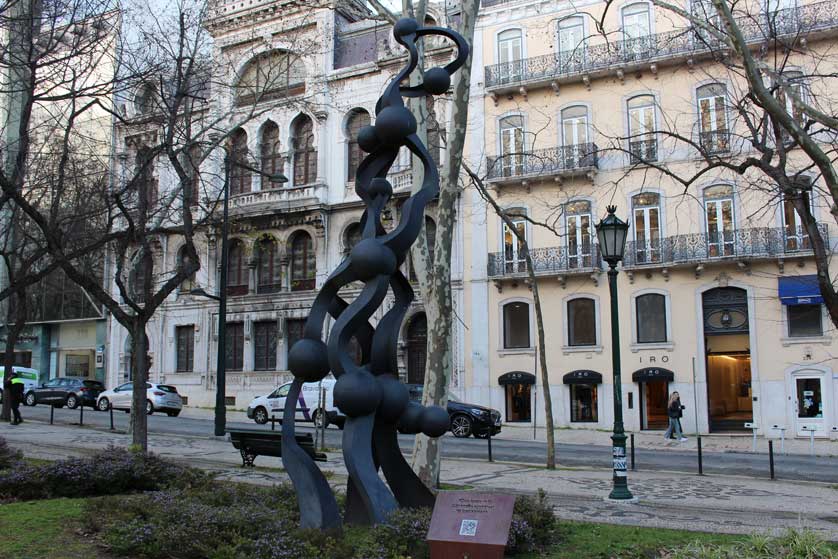
The first two statues on the East side of the street are Almeida Garrett (1799-1854) by Salvador Barata Feyo (1899-1990) and Oliveira Martins (1845-1894) the work of Leopoldo de Almeida (1898-1975). Next is the 6 meter tall "Sou Como Tu by the Lisbon-born, contemporary artist Rui Chafes.
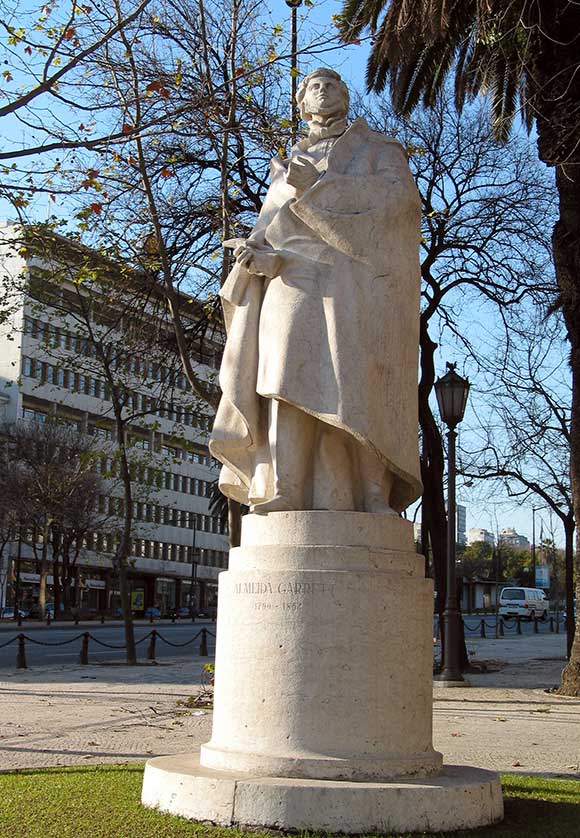
Almeida Garrett (1799-1854) was a pivotal figure in Portuguese literature and a leading proponent of the Romantic movement in Portugal. His contributions spanned various genres, including poetry, drama, and prose, but he is most celebrated for revitalizing Portuguese theater. Garrett's works, such as the play Frei Luís de Sousa (1843), are emblematic of Romanticism, characterized by a strong emphasis on national identity, historical themes, and emotional expression. Beyond his literary achievements, Garrett played an active role in the political life of Portugal, advocating for liberal reforms and participating in the 1820 Liberal Revolution. His influence extended to the cultural domain as well, where he worked to preserve and promote Portuguese folklore and traditions. Garrett's legacy is that of a cultural reformer who profoundly shaped the literary and intellectual landscape of 19th-century Portugal.
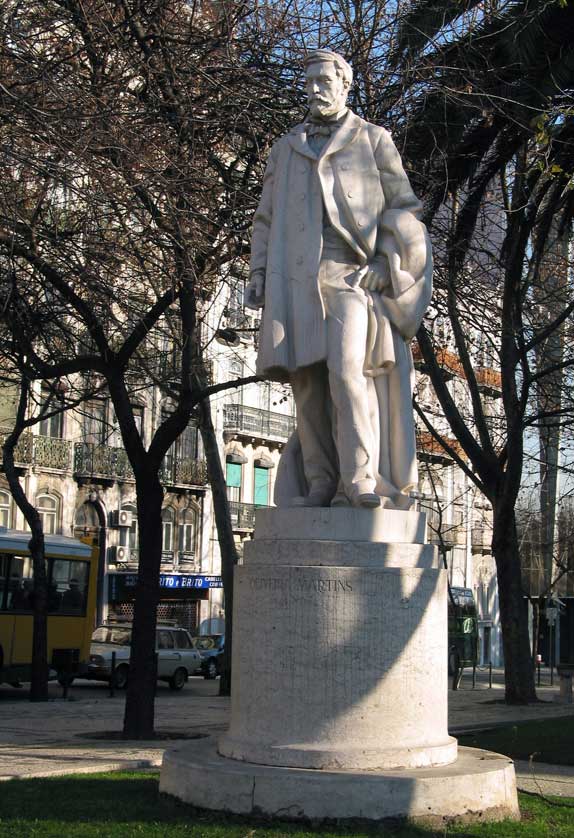
Oliveira Martins (1845-1894) was a prominent Portuguese historian, sociologist, and politician, known for his critical and comprehensive studies on the history and social structure of Portugal. His most significant works, such as História de Portugal (1879) and Portugal Contemporâneo (1881), offered a reinterpretation of Portuguese history through a lens that combined historical materialism with cultural and political analysis.
Martins was deeply influenced by European intellectual currents, particularly Positivism and Social Darwinism, which he integrated into his critique of Portuguese society. His writings emphasized the decline of Portugal's imperial power and the need for national regeneration, critiquing both the aristocracy and the bourgeoisie for the country's perceived stagnation. Politically, Martins was involved in the Regenerator Party and later aligned with progressive movements that advocated for social and economic reforms.
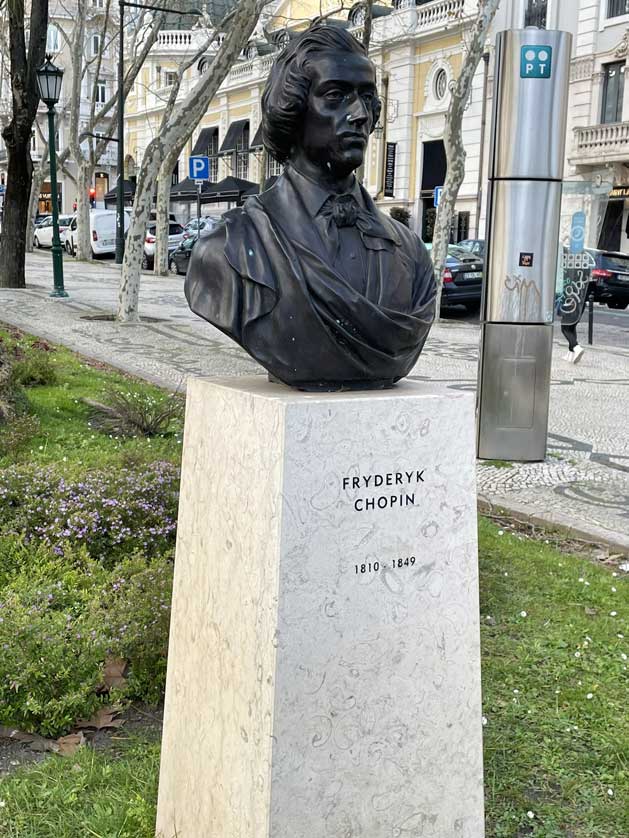
The bust of Frédéric Chopin (1810-1849) is a cast of the original work (1872) in marble by the Polish sculptor Bolesław Syrewicz. The bust was inaugurated in 2012.

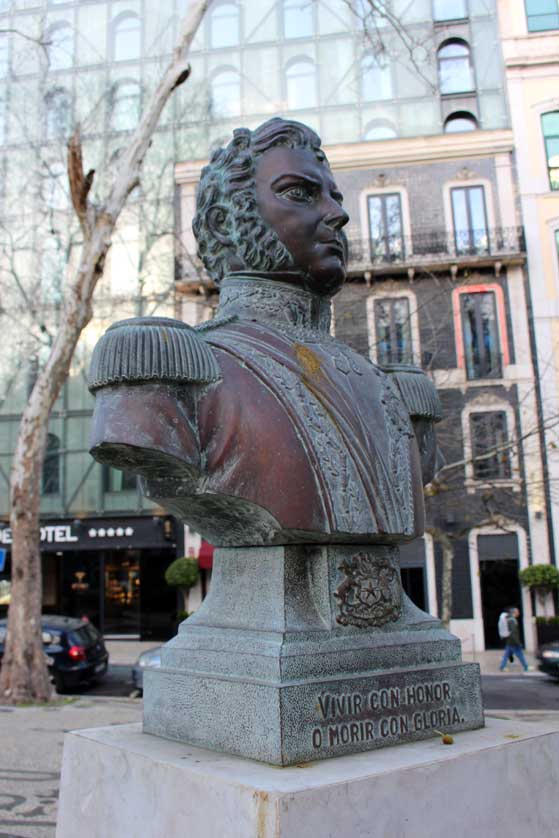
General Bernardo O'Higgins (1778-1842) was a pivotal figure in the Chilean War of Independence, serving as a military leader and later as the country's Supreme Director. He played a crucial role in the Battle of Chacabuco in 1817, which was a decisive victory that significantly contributed to Chile's independence from Spanish rule. O'Higgins is remembered for his efforts in establishing the foundational structures of the Chilean state, promoting education, and initiating reforms that aimed at modernizing the newly independent nation. The statue was inaugurated in 2020 by the Chilean ambassador to Portugal.
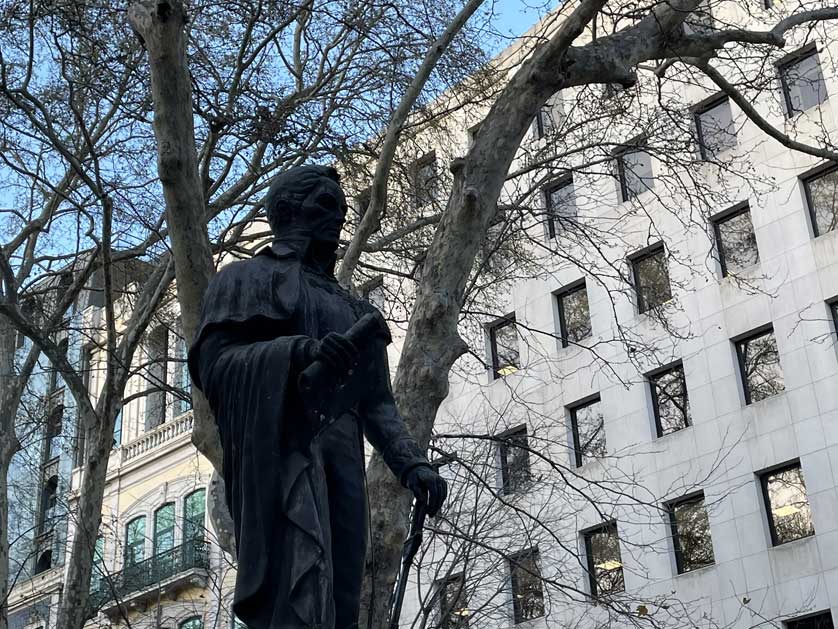
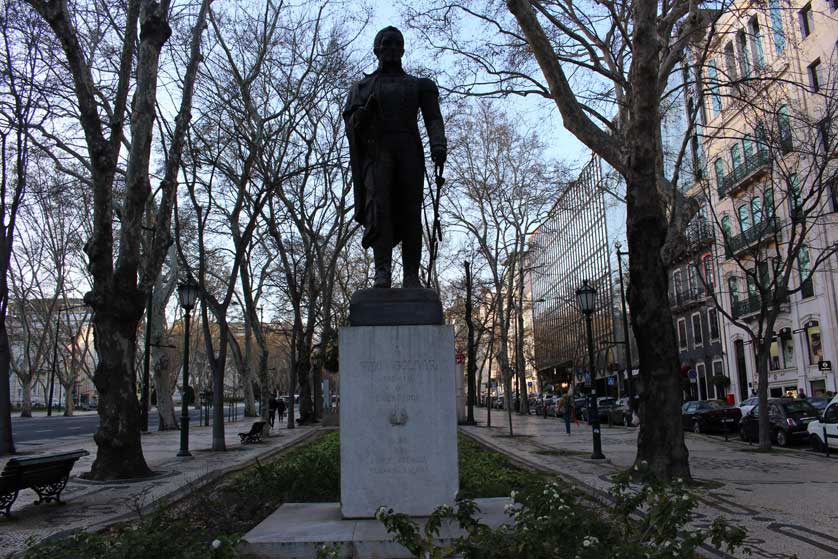
Next is the 5.5 meter tall bronze statue of Simon Bolivar (1783-1830) in military attire and holding a scroll is by the Venezuelan sculptor Arturo Rus Aguilero.
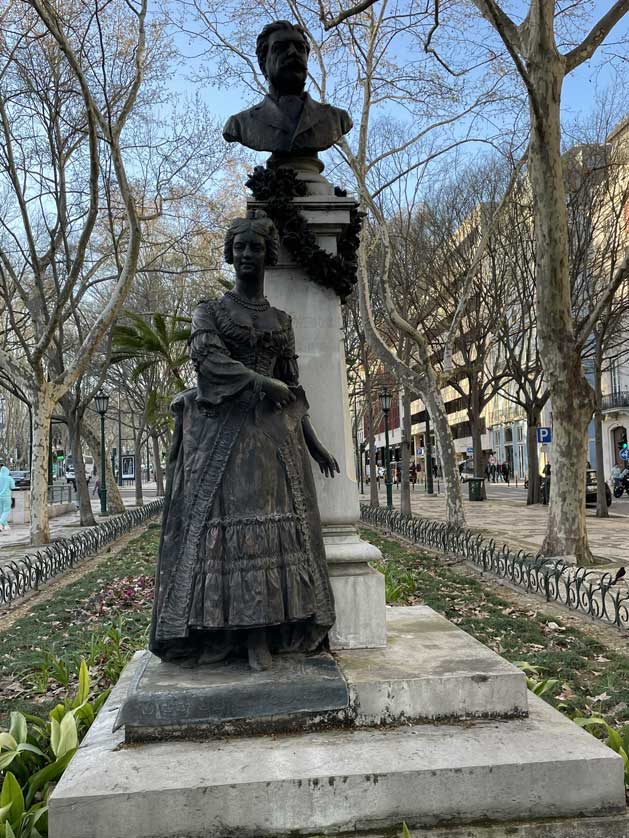
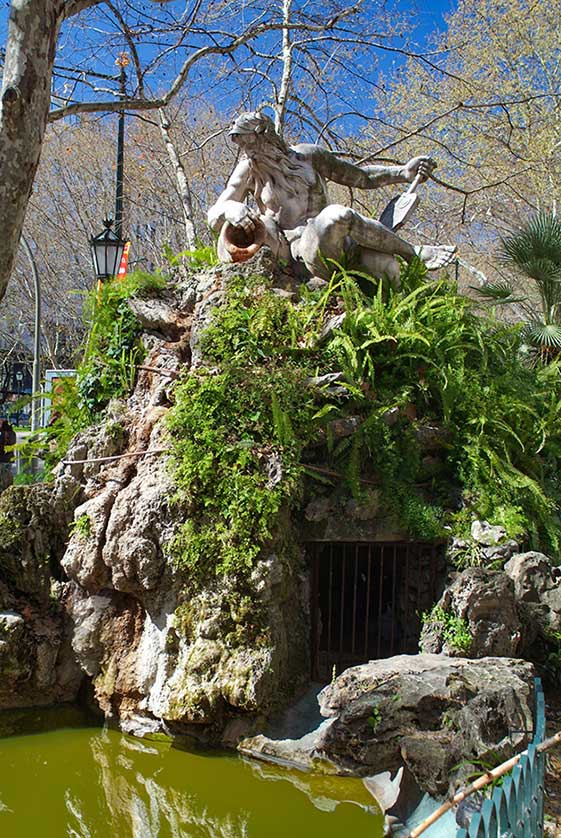
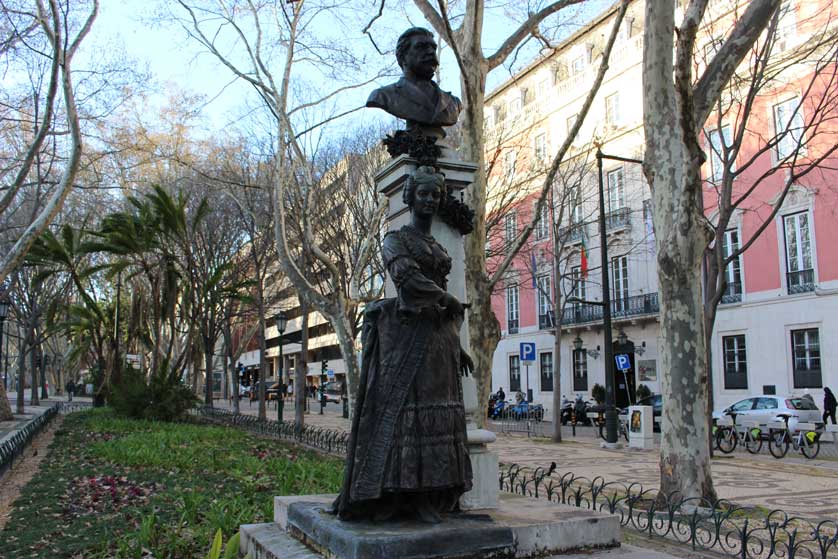
Walking south past a statue of a figure representing the River Tagus by Alexandre Gomes (1772-1775) is a bust of Manuel Pinheiro Chagas (1842-1895) and a statue of Morgadinha de Valflor a main character of the writer's play of the same name. A prominent writer, historian, journalist, and politician, Pinheiro Chagas significantly influenced 19th-century Portuguese literature and cultural discourse. A prolific novelist and playwright, Chagas is known for his contributions to Romantic literature, producing works that often explored historical themes and national identity, reflecting his deep engagement with Portugal's past.
His historical novels, such as A Corte de D. João V, are notable for their meticulous research and vivid portrayal of historical figures and events. Beyond literature, Chagas was an active public intellectual and a dedicated politician, serving as a member of parliament and holding various governmental positions. He was also an influential journalist, founding and editing several newspapers, where he expressed his views on political and social issues of his time. Chagas' work in historiography, particularly his multi-volume História de Portugal, sought to provide a comprehensive narrative of Portuguese history, emphasizing the nation's cultural and political evolution. His legacy is marked by his efforts to foster a sense of national pride and historical awareness among his contemporaries.
Nearby Attractions
North of Pombal is the large green area of Parque Eduardo VII (Eduardo VII Park) which contains the Estufa Fria and the refurbished Carlos Lopes Pavilion (Pavilhão Carlos Lopes).
There are great views of the city here looking down along the Avenida da Liberdade as far as Praça do Comércio, the Arco da Rua Augusta and the River Tagus.
Also nearby is Casa-Museu Medeiros e Almeida on Rua Rosa Araújo, just west of the boulevard.
Eat & Drink
Some recommended places to eat and drink in the area are Cervejaria Ribadouro, Cantinho de São José and Marisqueira Santa Marta. Cervejaria Ribadouro at Av. da Liberdade 155 has excellent beer and seafood. Cantinho de São José is a good value tasca while Marisqueira Santa Marta also offers high-quality seafood.
Galeto and Pastelaria Versailles are two well-established and attractive cafes on the street. Pastelaria Versailles opened in 1922 and has an impressive Art Nouveau interior full of mirrors, chandeliers and wood paneling. The cafe serves excellent pastel de nata and other delicious Portuguese pastries. Galeto is more American diner in style with 1960s decor. It opens late into the night.
Access
The nearest Lisbon metro station to Avenida da Liberdade is Avenida on the Linha Azul (Blue Line).
Several Lisbon buses ply up and down this busy street including the 711 bus running between Terreiro do Paço and Alto Damaia, and the 736 bus between Odivelas and Cais do Sodre Station via Senhor Roubado, Lumiar, Entrecampos, Picoas Station, Restauradores and Rossio metro stations. The AeroBus#1 to Lisbon Airport also used to stop here. (*Note: AeroBus services are presently, probably permanently, suspended)
Accommodation
Hotels at the northern end near Praça do Marquês de Pombal include the HF Fénix Lisboa, the HF Fénix Garden, the HF Fénix Music, the four star Hotel Florida, the three star Hotel Dom Carlos Park, the four star Turim Av Liberdade Hotel and the three star SANA Capitol Hotel.
On the boulevard itself are some of Lisbon's finest luxury hotels: the five-star Altis Avenida Hotel, the Sofitel Lisbon Liberdade, the four star NH Collection Lisboa Liberdade, the five star Valverde Hotel and the Hotel Tivoli Avenida Liberdade Lisboa, also with five stars.
Map
Other Squares in Lisbon
Book Air Tickets to Spain & Portugal
Cheap flights from Europe with low cost carriers
Hotels in Lisbon
Hotels in Portugal - Booking.com
Hotels in Lisbon - Booking.com
Lisbon Hop-On Hop-Off Bus, Tramcars, and Yellow Boat River Tour