Portuguese Culture: Traditional Costumes & Regional Dress in Portugal
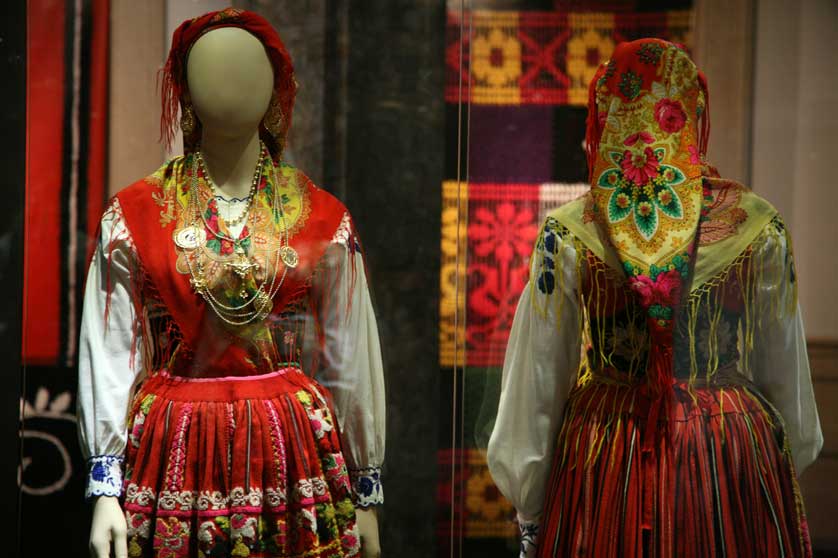
Portugal retains a strong tradition of regional costumes, especially in the more remote north of the country, in particular the Minho and Trás-os-Montes regions.
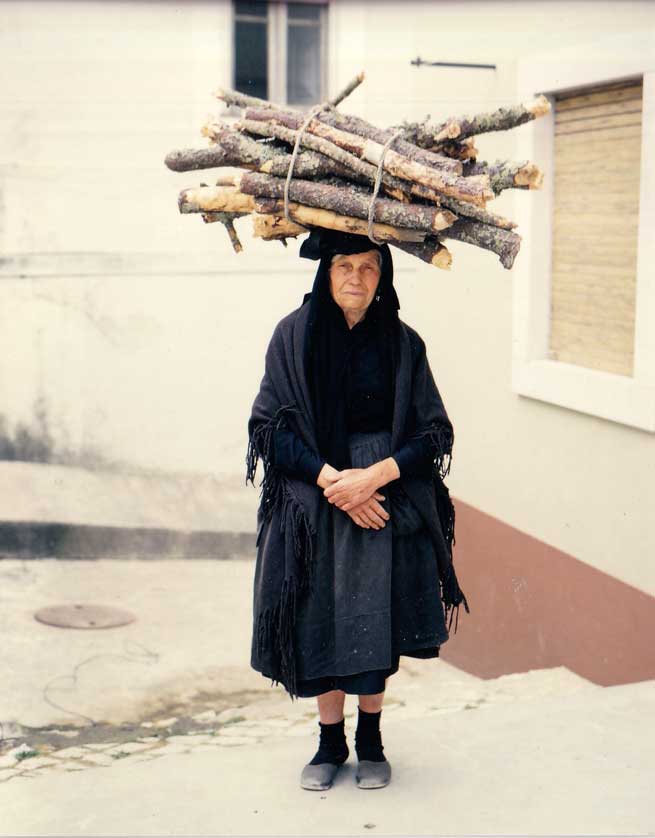
Nowadays, people only wear traditional dress at Portugal's many festivals and during carnival. However, in the remoter areas of northern Portugal traditional dress was more common up until the early 20th century.
The huge Gigantones - human dolls measuring up to 3.5 to 4 meters in height, seen at Portuguese festivals, pilgrimages and carnival processions, also often sport regional costumes.

Minho
The Minho region of northwestern Portugal has some of Portugal's most distinctive and recognizable regional dress.
People wear the costumes on saints days and other festivals. The women's attire is characterized by the quantity of gold collars they wear, thus demonstrating their wealth and or eligibility for marriage.
The costumes were traditionally made in the evenings by young women to be worn on special occasions and local festivals, in particular the annual Romaria de Nossa Senhora d'Agonía.
Women who might labour in the fields with flax and tend sheep to produce wool during the day would then work on the same materials in the evening using traditional, wooden looms.
These rural villages around Viana do Castelo were virtually self-sufficient and the colorful costumes became a symbol of both local identity and pride.
The brighter colored costumes (Traje de Lavradeira) were usually worn by the younger women hoping to attract a future husband at a festival by showing off their dexterity and thus suitability as home-makers. The elaborate stitching could also include coded messages as to the wearer's age, family and locality.
The beautifully embroidered dresses come in either red for joyous occasions (lavradeira) or darker colors, known as mordoma. Mordoma were chosen in a village to organize festivals and collect funds for pilgrimages. They held a special status in their communities. The darker dresses were also worn for periods of mourning, funerals or when a loved-one was away at sea.
The costume is worn over a linen chemise, camisa, and consists of a wool or linen skirt and a bodice.
For men it is much simpler - a black, wide-brimmed hat, black trousers with a red sash, and a short black jacket.
A small, embroidered heart-shaped handbag, known as an algibeira, is carried with this costume.
A good place to see these costumes is at the Costume Museum (Museu do Traje) in Viana do Castelo.


Trás-os-Montes
Like the Minho, the neighboring region of Trás-os-Montes has some colorful costumes.
The Iberian Museum of the Mask and the Costume (Museu Ibérico da Máscara e do Traje) close to Bragança Castle in Bragança has displays of the various local dresses.
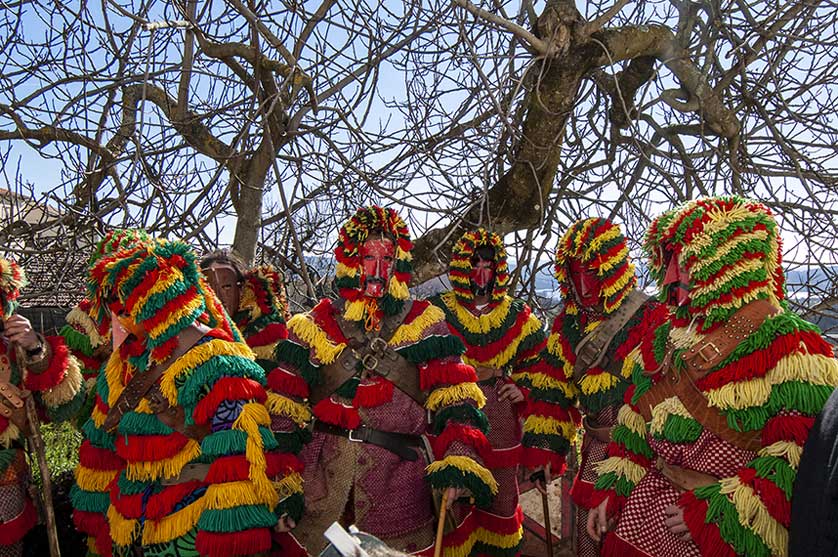
One of Portugal's most traditional and bizarre carnival celebrations takes place in the village of Podence in the region.
Men of the area dress in colorful, home-made, woolen, hooded costumes predominately red, green, and yellow with red masks made from wood or leather. Around their waists on leather belts, they wear an assortment of metal rattles and bells. A tail protrudes from the hood and also carries a sexual connotation. The caretos usually carry a wooden staff as well.
The caretos circulate around the village in search of women to shake their rattles and bells at. The act symbolizes spring, fertilization, and regrowth after the barren months of winter.
The festival in the villages of Podence and nearby Macedo de Cavaleiros has been designated an Intangible Cultural Heritage of Humanity by UNESCO.
Ribatejo
The Ribatejo region north east of Lisbon is known for its rich agricultural land.
The town of Vila Franca de Xira is associated with Portuguese bull-fighting. The breeding of the bulls and Lusitano horses in large farms (herdades) for the corridas de touros (bullfights) is the major activity in the surrounding countryside.
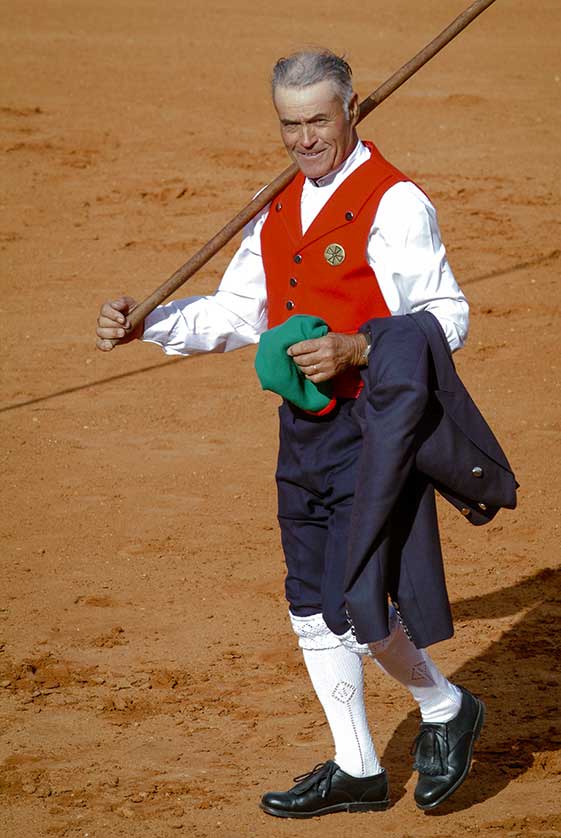
The Festa do Colete Encarnado held in July celebrates the area's bullfighting heritage. Its name references the "Red Waistcoats" worn by the horsemen (campinos) who breed the bulls and horses for the bullrings on the plains.
The men often wear this costume while they work, even today. Besides the red waistcoat, Portugal's cowboys wear black breeches, embroidered white socks and a soft green and red hat, somewhat similar to a Phrygian cap of the French Revolution.

Nazaré
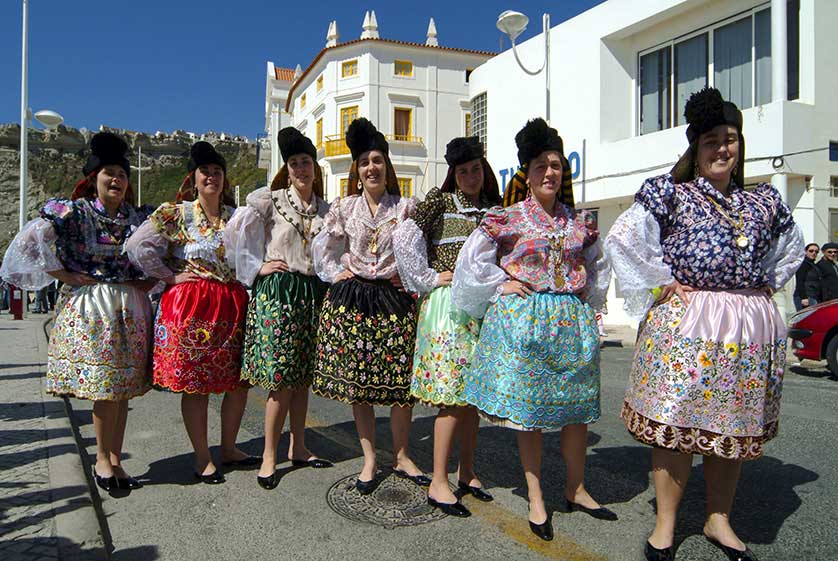
Nazaré on the coast of Estremadura 120 km north of Lisbon in central Portugal is another area known for its traditional costumes.
The women's Sunday dresses are colorful and composed of seven skirts (sete saias). They are decorated with velvet and ribbon. Often the skirts are worn under an apron, usually embroidered.
Both men and women wear a black felt hat with a pompom, which for the men can double as a pocket.

Alentejo & Algarve
Portugal's southern regions of Alentejo and Algarve also have their own distinctive local dress.
They are simpler and less decorative than those in the north and more adapted to working in the higher temperatures of these two southern areas.
Women traditionally wore a kerchief, socks, and shoes to shield themselves from the sun. Men wore a black wide-brimmed hat and long trousers. Traditional clothing is also often worn during dances such as the corridinho in the Algarve.
To find out more about traditional attire in Portugal visit the Museu Nacional do Traje (National Costume Museum) housed in the former Monteiro-Mor Palace in Lisbon. You can find it along with the Museum of Theater and Dance in the Monteiro-mor Botanical Park in the Lumiar district of the capital.

Madeira
Madeira has some of Portugal's most distinctive local costumes. Flower sellers at the Farmer's Market (Mercado dos Lavradores) in Funchal wear the predominately red striped dress. It consists of the striped, woolen skirt (saia) and a red vest with green trimmings (colete).
The carapuça is the local, tight-fitting Madeiran cap made from wool with a vertical strip protruding from the top.

Gallery