Museums & Attractions in Bragança
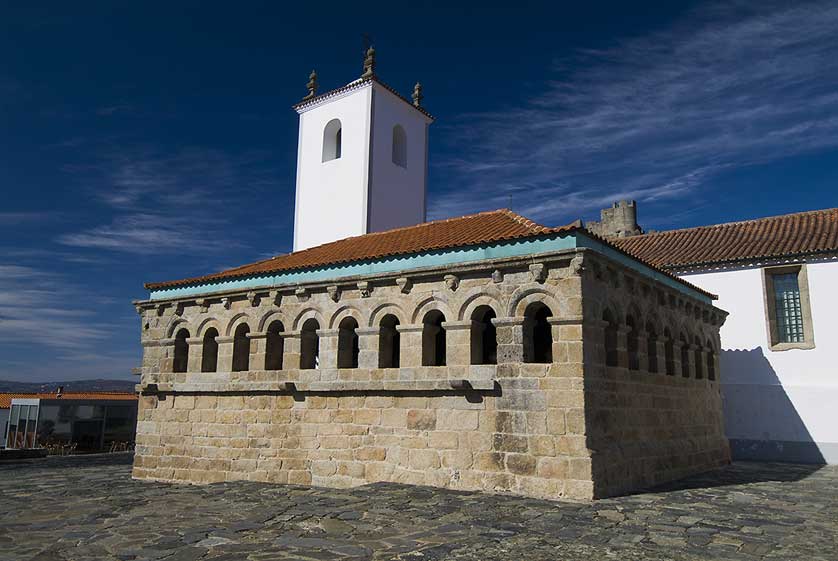
Bragança, the capital of the Trás-os-Montes region of northeast Portugal is often overlooked as a tourist destination even by Portuguese people.
This is an oversight as the pleasant town has several fine museums, churches and other places of interest.
The town's cultural institutions reflect the traditional industries and crafts of this area of Portugal, especially silk production and also its long history and artistic heritage.
See a listing of museums in Bragança in northeast Portugal.
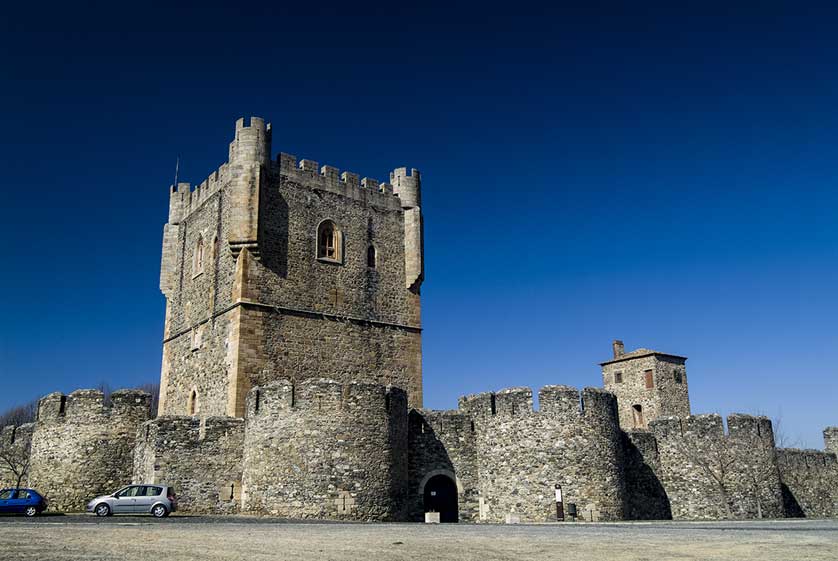
Bragança Castle
Bragança Castle is quite simply one of the best castles in Portugal. It is part of the historic walled citadel (Cidadela) that sits atop a 680-metre-high hill in the town.
It is believed that a fort may have stood here in Bragança during Roman and Moorish times though the castle we see today dates back to the 12th century with early 15th century additions by King João I.
The Torre de Menagem (keep) is 33 meters tall and was occupied by the Portuguese military in to the 20th century.
Military Museum

Bragança Castle now houses a Museu Militar (Military Museum) of which there are many throughout Portugal.
On display is an interesting assortment of suits of armour, cannons and swords as well as information on Portugal's colonial wars in Angola and Mozambique. There are wonderful views out over the surrounding countryside from the top floor of the museum.
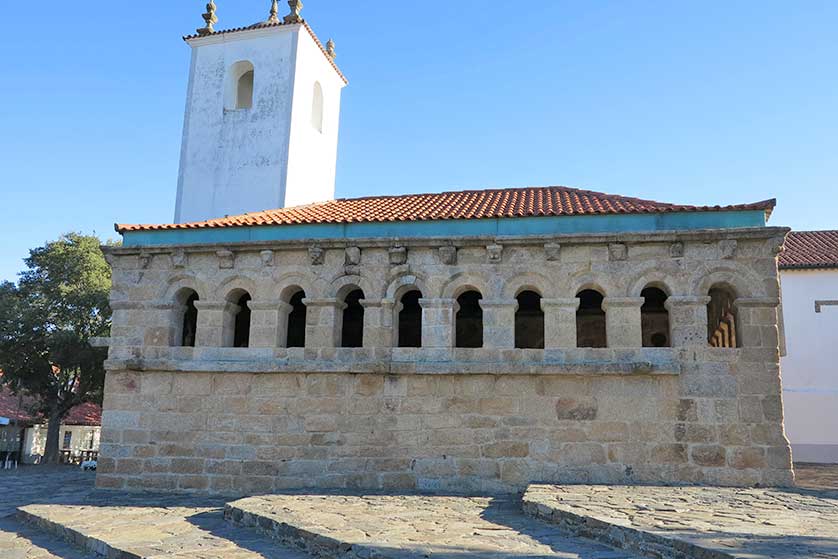
Domus Municipalis
The Domus Municipalis is thought to be Portugal's oldest town hall, though it may have been built first as a water cistern.
The Romanesque, pentagonal Domus Municipalis is thought to date from the 15th century, though that is debated by historians.
The city council met in the impressive arcaded upper room with the cistern on the ground floor. The upper room has stone flags as seating running around the walls under the arched windows. On the walls are simple stone reliefs of the faces of men, plants and animals.
The whole building is constructed of granite with a tiled roof and can be entered through a small side door if it is open.
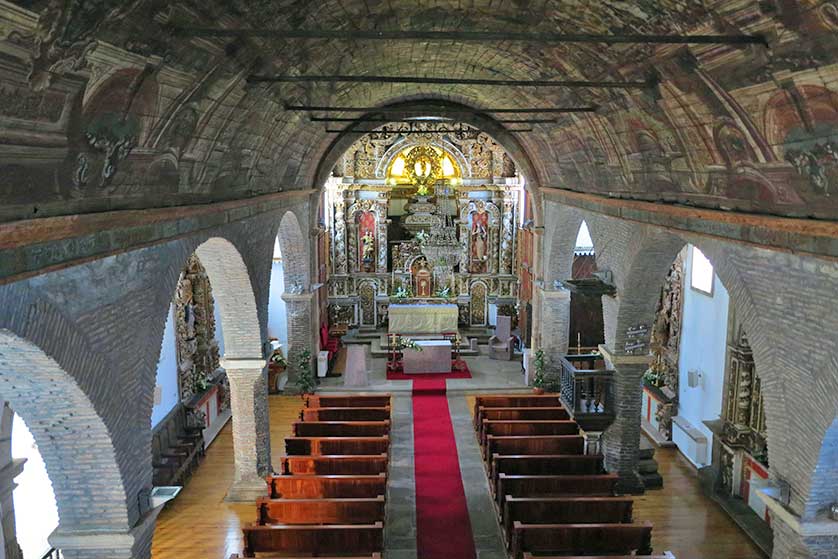
Igreja de Santa Maria da Assunção
The Igreja de Santa Maria da Assunção (Church of Saint Mary of the Assumption) is thought to date from the late 16th century, though an earlier church probably stood on the same site and was built at the same time as Bragança Castle in the 12th century. The church is also known locally as Nossa Senhora do Sardão.
The white washed exterior is entered through a fine baroque, stone door with corkscrew-like Solomonic columns to reveal the darkened interior of the church. This consists of three naves supported by mudejar brick columns.
The extremely ornate altar is from the 17th century and is of the Spanish Renaissance school. The main image is of Santa Maria de Magdalena (Mary Magdalene) by the Spanish sculptor Gregorio Hernandez (1576-1636).
Though somewhat faded over time, the arched, barrel-shaped ceiling has fine paintings of the Assumption dating from the 18th century. A bell tower completes the pleasing structure.

Iberian Museum of the Mask and the Costume
The Iberian Museum of the Mask and the Costume (Museu Ibérico da Máscara e do Traje) exhibits a striking collection of traditional folk masks and costumes from the Trás-os-Montes region of north eastern Portugal including Lazarim (Lamego) as well as Zamora province across the border in nearby Spain.
The masks and costumes on display on the three floors of the museum are centered on the Festas dos Rapazes (Festival of the Boys) and the local area's colourful carnival and boisterous celebrations.
The pieces exhibited are intricately worked from a variety of local materials including cloth, cork, straw, tin, wood and wool.
The ground floor of the museum is dedicated to the winter festivals of the Trás-os-Montes region, the first floor has pieces from the winter masquerades of Zamora province in Spain and the second floor exhibits carnival costumes from both Spain and Portugal along with profiles and photographs of the artists who produce the hand made masks and costumes.
These Iberian festivals date back to the Roman celebrations of Saturnalia and the Dionysia (Bacchanals) and the figures of horned devils invoke a time of excess, chaos and magic around the winter solstice before the onset of spring, renewed fertility and the promise of a bountiful harvest.
The Festas dos Rapazes (Festival of the Boys) is now a rite of passage for adolescent boys who wear rattles and pigs' bladders as symbols of a prescient fertility.
These pagan festivals were incorporated into Christianity becoming the Carnival celebrations of much of southern Europe.


Graça Morais Contemporary Art Centre
The Graça Morais Contemporary Art Centre (Centro de Arte Contemporânea Graça Morais) showcases the art of local artist Graça Morais (b.1948) as well as providing a space for temporary exhibitions, local community and educational events, meetings and workshops.
The Centro de Arte Contemporânea Graça Morais is set within an 18th century building that was once a branch of the Bank of Portugal until 1993. Beyond the traditional building is the modernist museum, done as a white cube, by the Pritzker Prize-winning Portuguese architect Souto Moura. Interestingly, the design means the concrete walls are not at 90º degree angles to one another.
The modern annex contains a garden and cafe terrace and houses the galleries for temporary exhibitions as well as the museum's workshops and regular cultural and community events.
Altogether the Graça Morais Contemporary Art Centre features seven galleries dedicated to paintings, many of local people of the Trás-os-Montes region of north eastern Portugal, by Graça Morais along with rooms set aside for temporary exhibitions by both local and international artists.

Abade de Baçal Museum
The Abade de Baçal Museum (Museu do Abade de Baçal) in the lower town of Bragança is housed in the 18th century, former Bishop's palace.
The museum is named after local priest, archaeologist and historian Abade de Baçal (aka Francisco Manuel Alves 1865-1947), who was appointed the director of the Regional Museum of Bragança (the forerunner of the present museum) in 1925.

Centro de Fotographia Georges Dussaud
The Georges Dussaud Photography Centre (Centro de Fotographia Georges Dussaud) is a collection of 148 black and white photographs of the Trás-os-Montes region and its people by the French photographer Georges Dussaud. The museum was inaugurated in 2013 and is located in the center of Bragança.
Georges Dussaud has been visiting the Trás-os-Montes region for four decades and his photographs capture the life cycle, rituals and culture of both agricultural workers and townsfolk in Trás-os-Montes.
The photographs are housed in an 18th century building named after Paulo Quintela (1905-1987), a writer, translator and professor at the Faculty of Arts of the University of Coimbra and son of a bricklayer and a baker from Bragança.
There are four rooms altogether with three of them dedicated to the work of Georges Dussaud and the other used for temporary exhibitions.
The photographs depict men, women and children going about their everyday lives, eating together, participating in festivals, as well as the architecture and landscape of Bragança and its surroundings.

Teatro Municipal de Bragança
The Teatro Municipal de Bragança is housed in a striking new building on the outskirts of Bragança close to the bus station.
The theater was inaugurated in 2004 and stages a variety of performances including drama, dance, concerts, and cinema. The cuboid, glass, and concrete building was designed by Portuguese architect Filipe Oliveira Dias to fit into a square of 1950's Estado Novo architecture.

Centro Ciência Viva de Bragança
The Centro Ciência Viva de Bragança is split between two buildings - the Edifício Sede and Casa da Seda. The Edificio Sede is a modern building that was built on the site of the old hydroelectric power station, which utilized the waters of the River Fervença to produce energy for the city from the beginning of the 20th century until the 1960s. The Casa da Seda is located in a restored building that was once a grain mill powered by the river and was also used for silk dyeing.
Related Articles
Map
