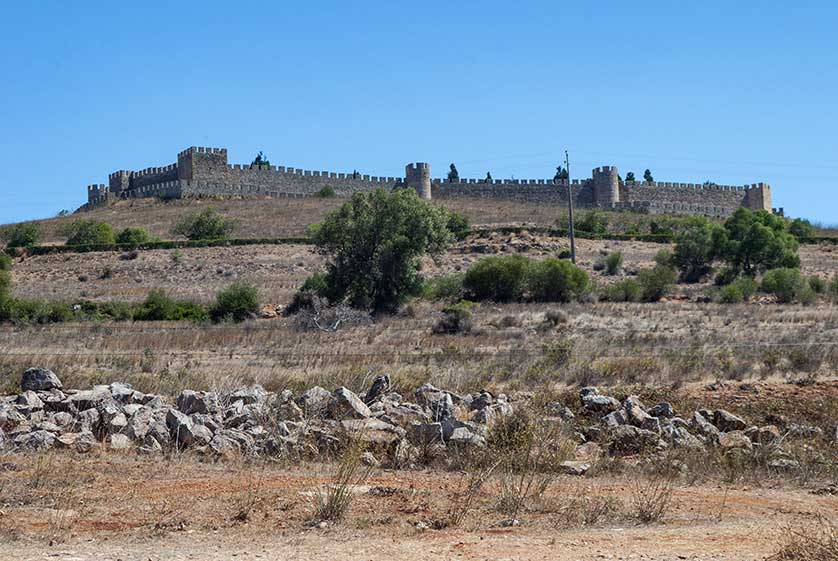
Afonso II - Third King of Portugal
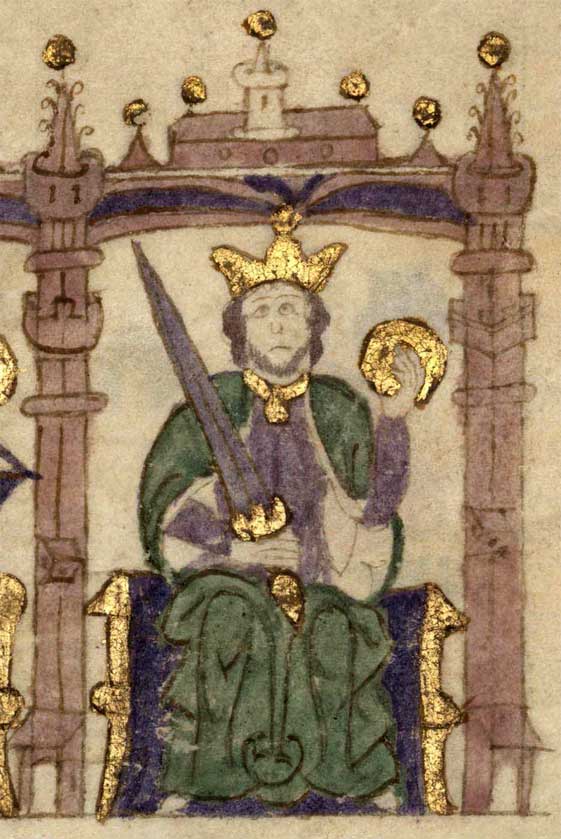
Afonso II (1185-1223) was the second and eldest surviving son son of Sancho I and the third king of Portugal.
Unlike his father and grandfather Afonso Henriques, Afonso II was not a warrior king but had a more distinct focus on administrative reform and legal structuring, in contrast with his father's military-centered rule.
He ruled the kingdom of Portugal from 1211 to 1223. He was nicknamed o Gordo (the Fat) or o Gafo (the Leper) - it is possible he suffered from leprosy, hence the nickname.
Early Life
Like his father, Afonso was born in Coimbra in 1185, the son of King Sancho I and Queen Dulce of Aragon.
Policies
Afonso II ascended to the throne following the death of his father and inherited a realm still in the process of consolidating its independence from Castile and developing internal political stability. He faced a revolt early in his reign led by the Mendes de Sousa family, which was successfully defeated.
Due to chronic obesity and illness, Afonso II could not lead military campaigns personally, so he largely avoided expanding Portuguese territory and concentrated on internal governance instead. However, further gains were made in the Islamic south including the town of Santiago do Cacém.
He implemented legal reforms to standardize judicial processes, which was an early attempt at reducing arbitrary rule by nobles and ensuring greater justice across the kingdom. This focus on law and administration laid the groundwork for a more centralized and efficient government, which would influence his successors.
Afonso II's reign also saw ongoing disputes with the Catholic Church, largely because he attempted to curtail clerical privileges and lands, seeking to bring more church properties under royal control and to impose taxes. His actions led to tension with some formidable opponents including the bishop of Coimbra, the archbishop of Braga and the Papacy, resulting in Afonso being excommunicated by Pope Honorius III. Despite these challenges, Afonso's reforms were largely successful in strengthening royal authority, laying a foundation for a more unified Portugal. However, on his death bed, Afonso was forced to seek humiliating terms with the church and his young son and heir Sancho II was placed under the tutelage of Dom Estevão, archbishop of Braga.

Death & Legacy
Afonso II died in 1223, aged 37, and he was succeeded by his 14-year-old son Sancho II. His legacy in Portuguese history is often viewed as pivotal in the transformation of Portugal from a loosely governed feudal realm into a more cohesive and centralized kingdom. His administrative reforms, although controversial in his time, contributed significantly to the structure of Portuguese governance in subsequent generations.
Like his father he was first buried in the Santa Cruz Monastery in Coimbra but his remains were moved to Alcobaça Monastery, as stipulated in his will where he and his wife, Queen Urraca, daughter of Alfonso VIII of Castile and Eleanor of England, lie in its Royal Pantheon.
His union with Urraca produced 4 children, 2 of whom became kings of Portugal, Sancho II (who succeeded his father as a child) and Afonso III. Afonso II was also the father of two illegitimate children.

Will
King Afonso II's will is one of the oldest surviving documents in the Galician-Portuguese language. Written in Coimbra, it dates back to June 27, 1214. It is kept at the the Torre do Tombo National Archives in Lisbon.
Afonso II's will is the document most frequently cited and celebrated as the earliest text written in Portuguese.
Here is an excerpt:
In the name of God. I, King Dom Afonso by the Grace of God King of Portugal, being safe and sound, fearing the day of my death, the health of my soul and the offspring of my wife Queen Dona Urraca and my children and my vassals and all my kingdom I made my will so that after my death my wife and my children and my kingdom and my vassals and all those things that God gave me in power may be at peace and at ease. First, I order that my son Dom Sancho that I had from Queen Dona Urraca have my kingdom fully and in peace. And so if he is killed without descendants, the eldest son of Queen Dona Urraca that lives will receive the kingdom in full and in peace.