Museu do Trabalho Michel Giacometti, Setúbal
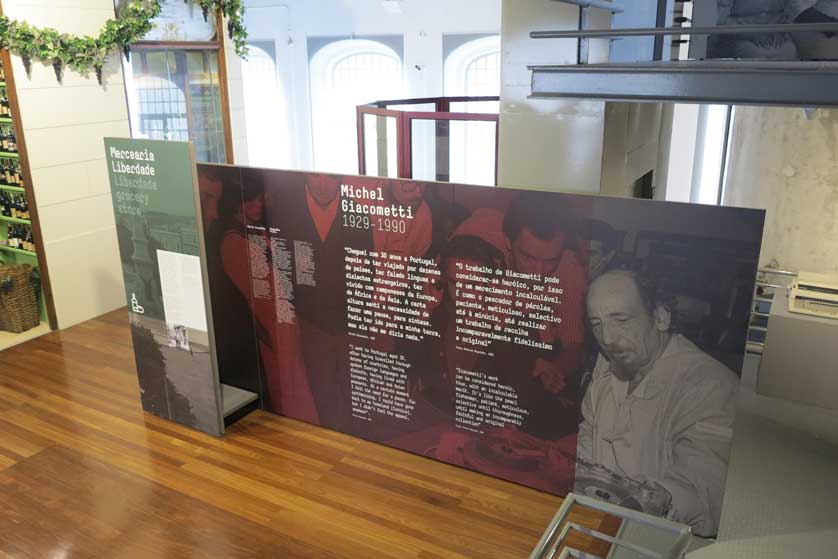
The Museu do Trabalho Michel Giacometti in Setúbal is named after the French ethnologist Michel Giacometti (1929-1990), who spent over 30 years of his life in Portugal.
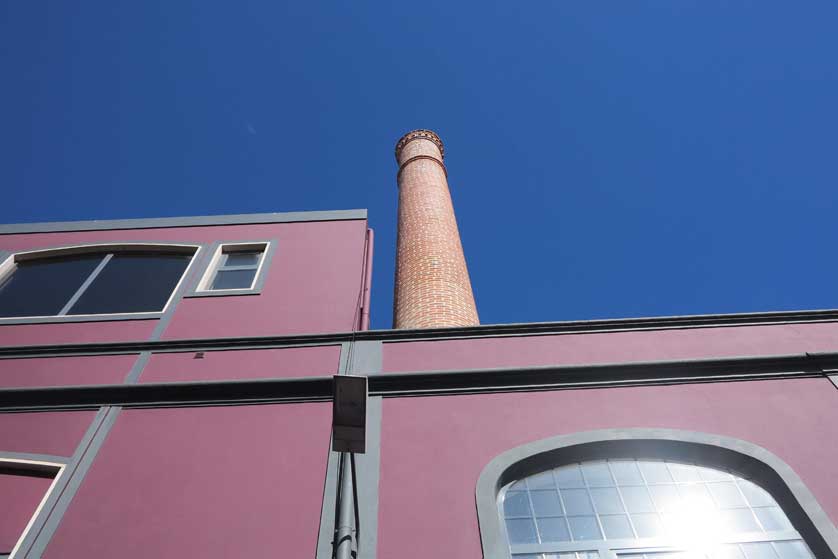
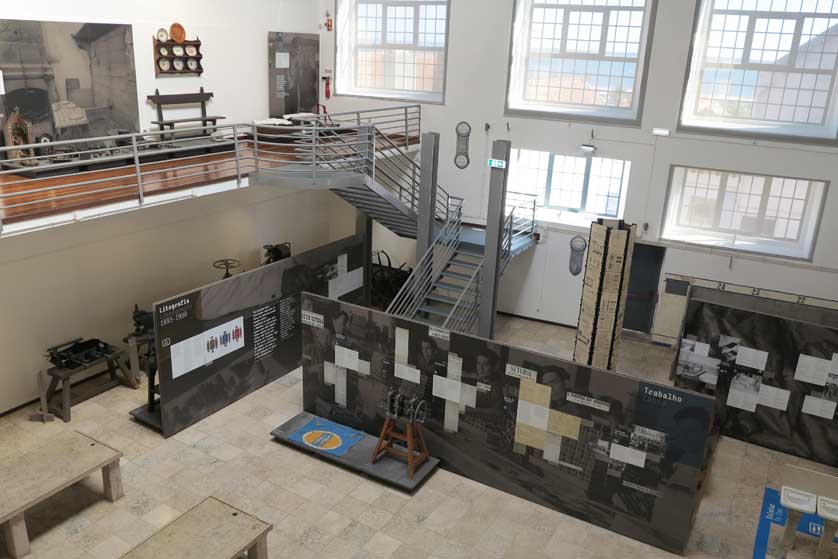
The museum is housed in the former five-story Perienes fish canning factory in the town's historic fishermen, salt workers and cannery district. The factory ceased operations in 1971.
The museum opened in 1995.
Exhibits
The core of the collection was gathered in the 1970's by students of the Serviço Cívico Estudantil (Student Civic Service) working under the direction and guidance of Michel Giacometti.
The museum is dedicated to Portugal's industrial heritage and urban crafts. On display are exhibits related to the commerce, services and the old canning factories and lithographers based in Setúbal. In addition there is also a collection of local agricultural implements and traditional crafts.
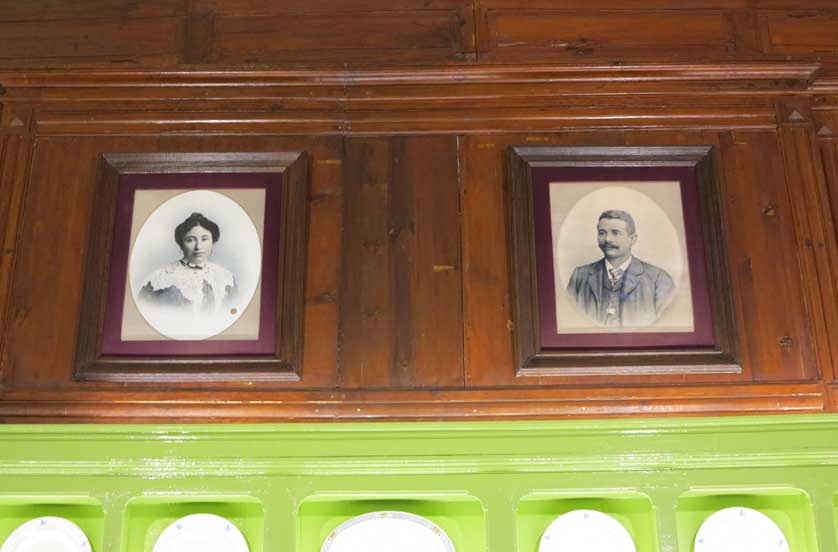
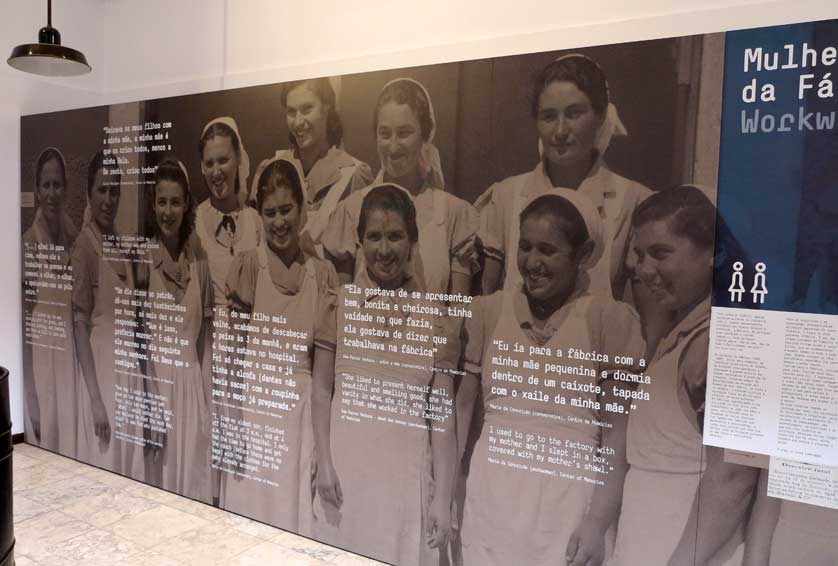
The museum displays wall panels (in Portuguese and English), original photographs, paintings, machinery and local crafts.
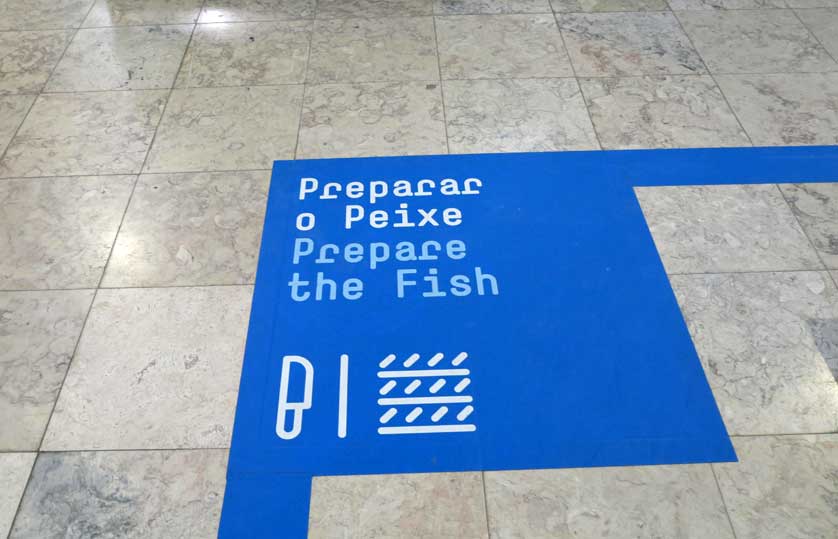
Floor panels in a distinctive blue color guide visitors around the various parts of the old canning factory.
Highlights
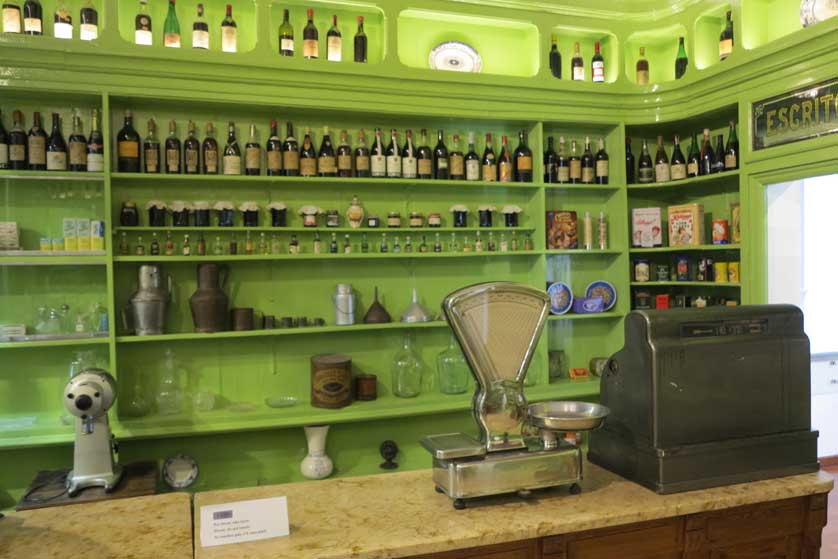
One of the many highlights of this excellent museum, which won the Council of Europe prize for best museum in 1998, is a complete 1920's Lisbon grocery.
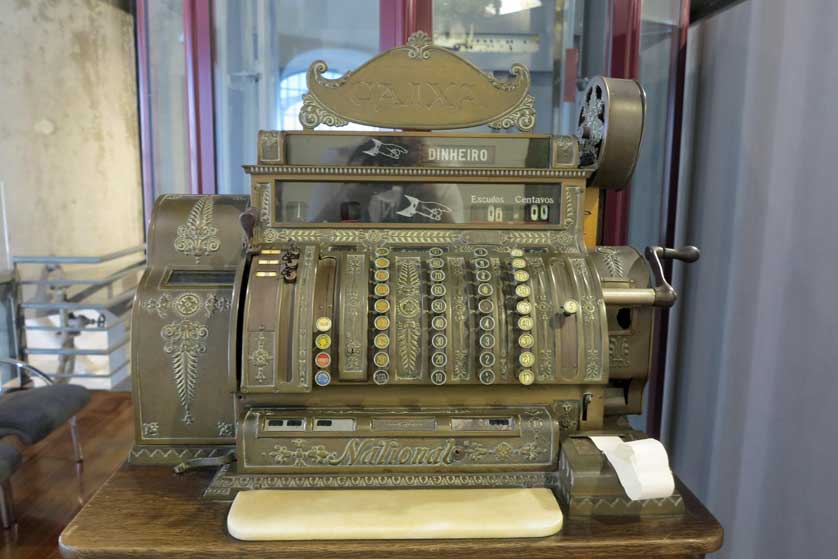
Bottles of Port and Madeira wine, groceries, scales and a superb cash register bring to life this historic, culturally significant interior. The Liberdade grocery was a shop for the well-off in Lisbon and was donated to the museum in 2002.
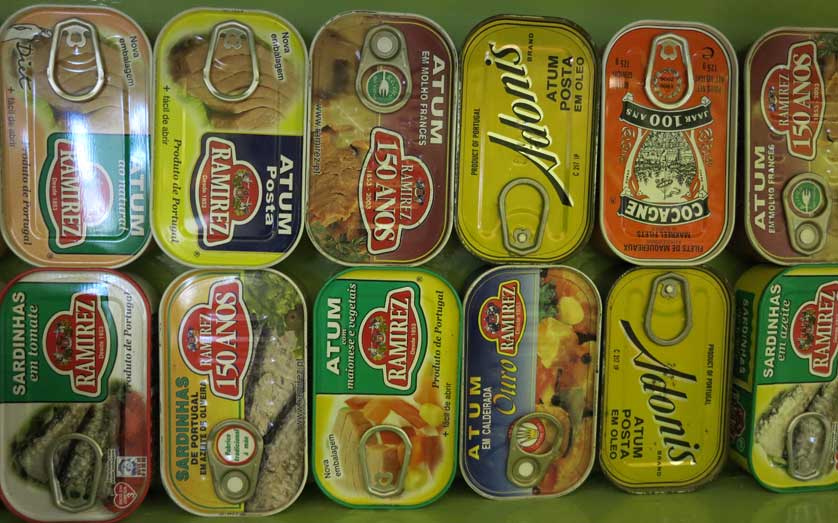
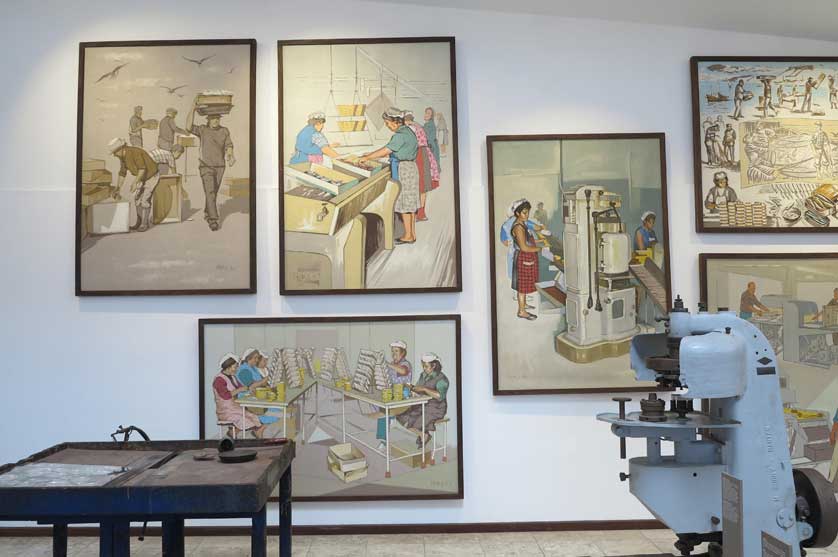
Other standouts include the colorful designs for the sardine cans once produced for the factory and a series of contemporary paintings depicting the processes involved in the industry.
Festivals
The museum also has information on the festivals (Festas do Mar) held in the area and connected with the sea.
The three main festivals in Setúbal are the Festa de Nossa Senhora do Rosário de Tróia, Nova Círio da Arrábida de Setúbal and the Senhor Jesus de Bonfim.
Access & Hours
Largo Defensores da Repúbica
2910-470 Setúbal
Tel: 265 537 880
Admission: Free
Hours; 9.30 am - 6 pm; Closed: Sundays and Mondays.
To get to Setúbal take a Fertagus Line from any of Roma-Areeiro, Entrecampos, Sete Rios or Campolide.
The museum is a 20 minute walk from Setúbal Station or closer from Praça do Quebedo. The museum is close to the Casa de Bocage, the Igreja de São Sebastião, the Arco de São Sebastião and Porta do Sol in the eastern part of the town close to the Doca das Fountainhas where car ferries depart for Tróia.
Hotels in Setúbal
There is a cluster of hotels located near Setúbal Station including the recommended four star Meliá Setúbal Hotel, the Hotel Arangues, three stars and the four star Luna Esperanca Centro Hotel.
Book Discount Air Tickets to Portugal
Flights from Europe with Air France & TAP