Chaves Museums & Attractions
Chaves is a pleasant town in the Trás-os-Montes region of northern Portugal. It is one of the three biggest towns in the area along with Vila Real and Bragança.
Most famous for its spa, there are several other worthwhile museums and attractions in this former Roman settlement of Aquae Flaviae on the River Tâmega.
See a listing of things to see in Chaves.


Torre de Menagem
The Torre de Menagem is all that remains of the original 14th century castle completed during the reign of King Dinis I (1261-1325). Inside the keep is a small Military Museum (Museu Militar).
The square Gothic keep, made from local granite, has four floors which now house the Military Museum with exhibits of cannon, muskets and other military equipment and uniforms from various conflicts, including Portugal's wars in its overseas colonies in the 1960's and 1970's.
The keep and city walls were remodelled during the Portuguese Restoration War (Guerra da Restauração) between Portugal and Spain that continued off and on from 1640-1688.
At the top there are fine views from the flat roof over the River Tâmega, the historic center of Chaves and the pretty gardens that surround the keep.
The castle in Chaves has been classified as a National Monument since 1938.

Trajan Bridge
The 140 meter-long Ponte Trajano (Trajan Bridge) dates from the reign of the Emperor Trajan in the early second century AD.
The bridge is now pedestrianized and is one of the finest Roman bridges in Portugal, which was part of the Roman road from Braga to Astorga in Spain. The Emperor Trajan was known as a great promoter of public works including the Trajan Forum and Trajan Column in Rome.
The bridge now has 12 arches (it previously had an estimated 18). There are milestones on the bridge with distances to the Roman settlements at Braga and Leon (Legio) in Spain.
Museu da Região Flaviense
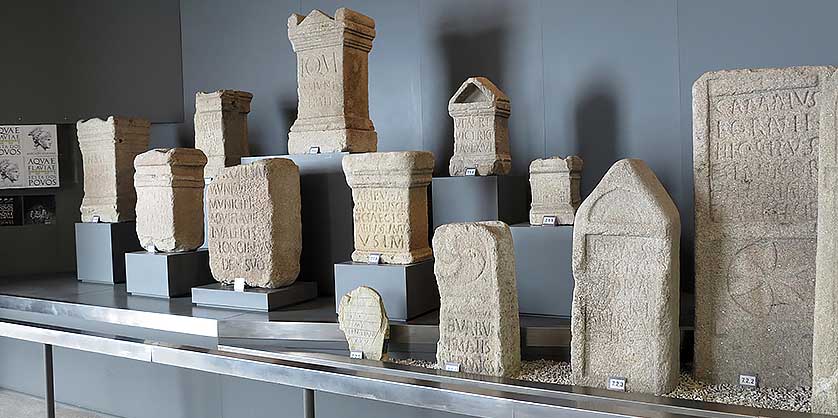
The Museu da Região Flaviense has displays of archaeological finds from Roman and pre-Roman periods including coins, jewelry, tools and menhirs (standing stones).
The building housing the museum itself dates from the 17th century and was once part of the palace of the Dukes of Bragança serving variously over time as a barracks, military prison and library.
A branch of the Museu da Região Flaviense, the Museu de Arte Sacra da Região Flaviense, in an annex of the Igreja Matriz on Rua da Ordem Terceira close by, has exhibits of religious art including silver candlesticks, icons and clerical vestments.
The former railway station hosts another branch of the Museu da Região Flaviense with exhibits relating to the railway that once served the town.
The museum can be entered on a combined ticket with the nearby castle and both are close to the two churches of the Igreja e Provedoria da Misericórdia de Chaves and the Church of Santa Maria Maior.

Termas de Chaves (Chaves Spa)
The Termas de Chaves, set in the Parque Termal, is the town's spa (the hottest in Iberia at 73° C). Elderly visitors come to take the healing waters for a number of ailments including rheumatism. The waters can be drunk or taken via steam baths.
During the Roman period, Chaves was known for its healing waters and was called Aquae Flaviae. Like Bath (Aquae Sulis) in south west England, Baden-Baden in Germany and Plombières-les-Bains in France, the early Roman town developed around its public baths.
The spa is now located in a large park (Parque Termal) with spacious lawns that also includes tennis courts, a cycle path and the public swimming pool. Various treatments are available at Chaves spa including stream baths and massages. The waters are supposedly good for a number of ailments including rheumatism, digestive and cardiovascular problems as well as obesity. In the sunken rotunda visitors can enjoy a free glass of the warm water.
The park is towered over by the large Hotel Aquae Flaviae.
Forte de São Francisco
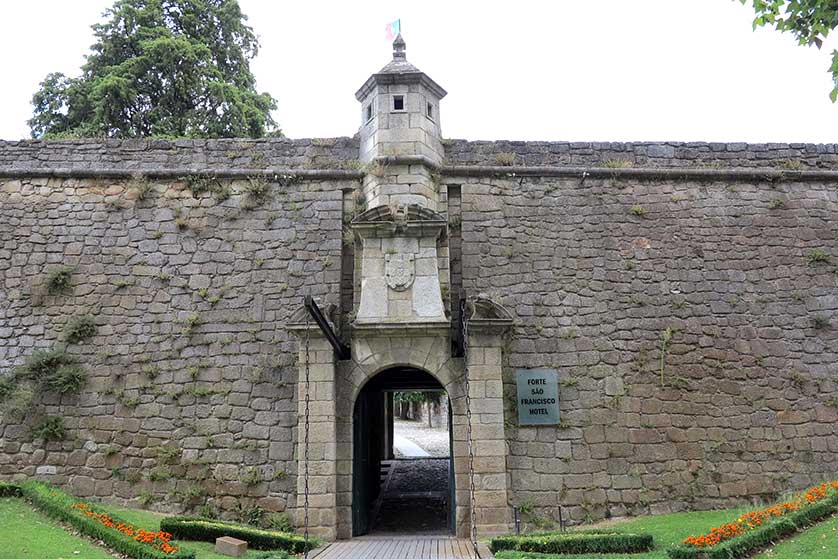
The Forte de São Francisco consists of a 16th century Franciscan convent (hence the name) within the walls of the 17th century fortress.
Forte de São Francisco was walled during the Peninsular War (1807-1814) when British and Portuguese forces managed to drive out Napoleon's invading army of French and Spanish.
The star-shaped fort has four bastions at the corners with one meter thick granite walls, that are 20 meters tall at their highest point. The fort was once surrounded by a moat which has now been filled in. The main entrance is through the drawbridge at the southern gate.
The upmarket, four-star Forte de São Francisco Hotel now occupies the convent, complete with swimming pool, tennis court, sauna and spacious rooms.

Nadir Afonso Museum of Contemporary Art
The recent Nadir Afonso Museum of Contemporary Art is dedicated to the art of local son Nadir Afonso, the painter-architect, whose paintings in the style of geometric abstractionism, place him among the most important post-war Portuguese artists.
Nadir Afsono, who was born in Chaves, was both architect and artist. He studied architecture at university in Porto and began a career in architecture in the city after graduation while at the same time continuing his painting.
After World War II, Afonso moved to Paris to study and paint and later worked under the famous French architect Le Corbusier. It was while in Paris that his art moved towards his own particular style of geometric abstractionism. In the early 1950's Afonso accepted an invitation to relocate to Brazil to work under the Brazilian architect, Oscar Niemeyer, before he returned to Paris to follow up an interest in Kinetic Art.
In 1965, Afonso returned to Chaves and became more secluded, dedicating himself to his geometric paintings.
Afonso's work can be seen at the Chiado Museum in Lisbon and some of his tile panels adorn Restauradores Station on the Lisbon metro. However, the largest collection of his art, including drawings, letters, models, paintings and sketches, is now on display at this purposely built museum, which opened in 2015.
Termas Romanas Aquae Flaviae
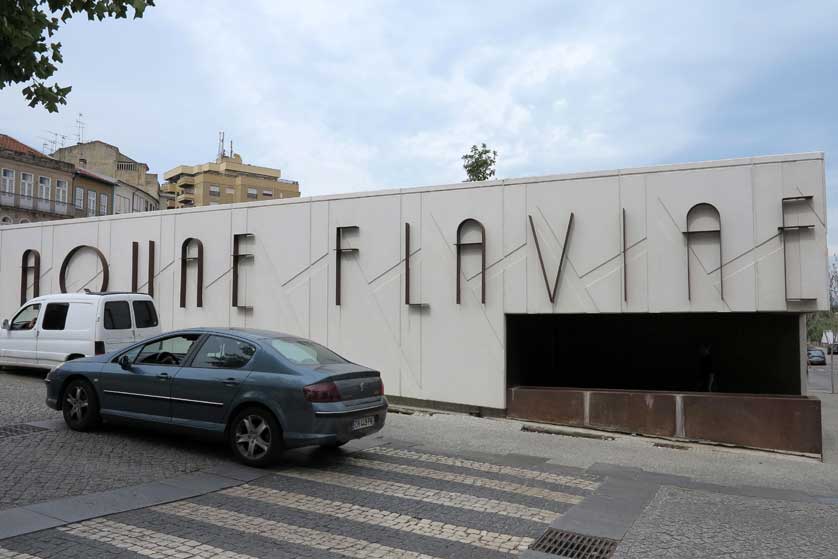
The Museu das Termas Romanas de Chaves is a yet to open museum dedicated to what is thought to be the remains of the largest Roman baths on the Iberian Peninsula. The medicinal Roman spa can be compared in importance and size with the Roman Bath in England and Vichy in France. The nearly 2,000-year-old complex was discovered in 2006 during the construction work for an underground car park.
Excavations have revealed a large main pool, a secondary pool, and a complex system of pipes for transporting the waters and for drainage.
The baths are thought to have been destroyed during an earthquake and lost to history until the 21st century.
Accommodation in Chaves
Chaves has a variety of places to stay including the excellent Forte de São Francisco Hotel, the 3-star Hotel Aquae Flaviae, the 3-star Petrus Hotel, the 2-star Hotel Katia and the Florinda on Rua dos Açougues.
See here for a full listing of hotel accommodation in Chaves.