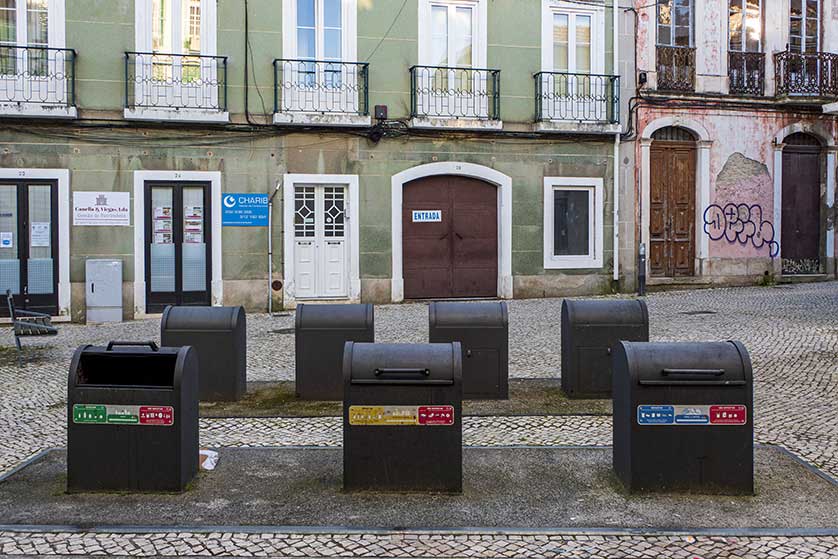
Portuguese Culture: Recycling in Portugal

Portugal recycles about 28% of its urban waste which is below the European average of 46%, according to a report by Reuters.
In 2018, mainland Portugal produced approximately 4.94 million tons of municipal waste. This was an increase of 4.2% compared to the previous year.
This amounts to 505 kg per person per year or 1.38 kg per person per day. The annual figures show household waste increases with economic growth.


Household Waste Recycling
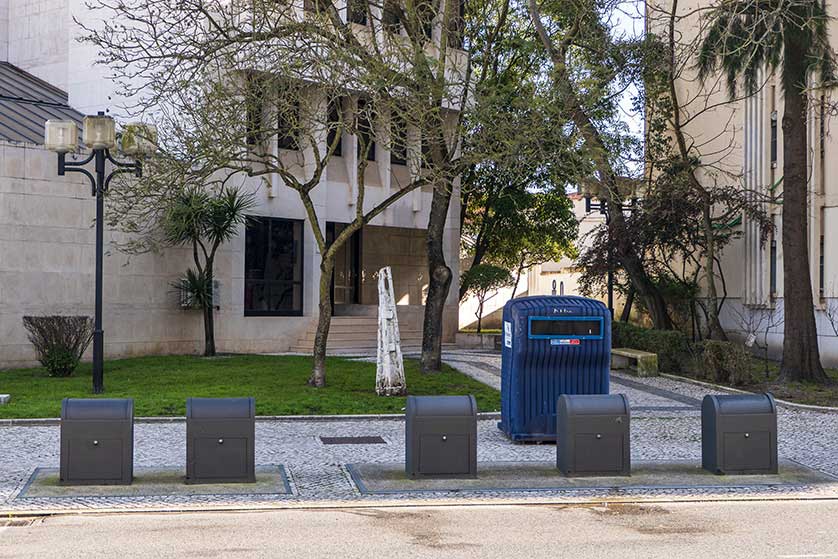
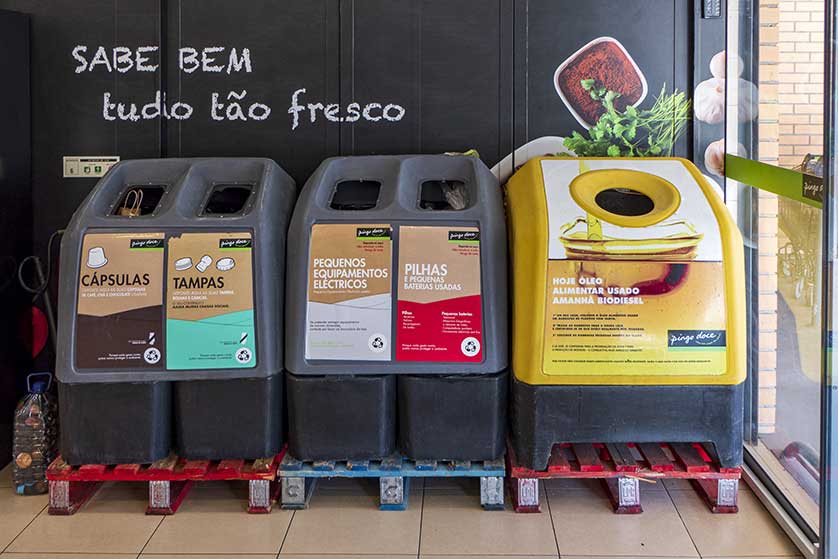
Household waste is recycled in Portugal from color-coded bins (ecoponto) in many municipalities.
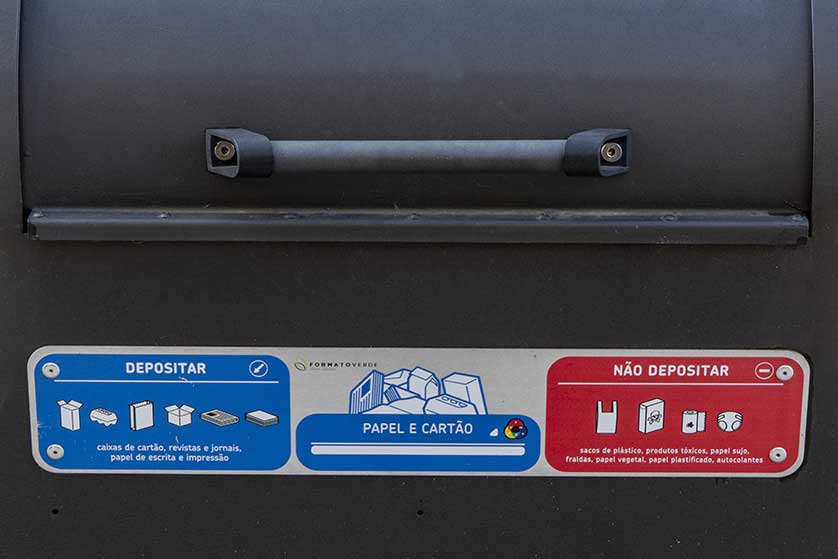
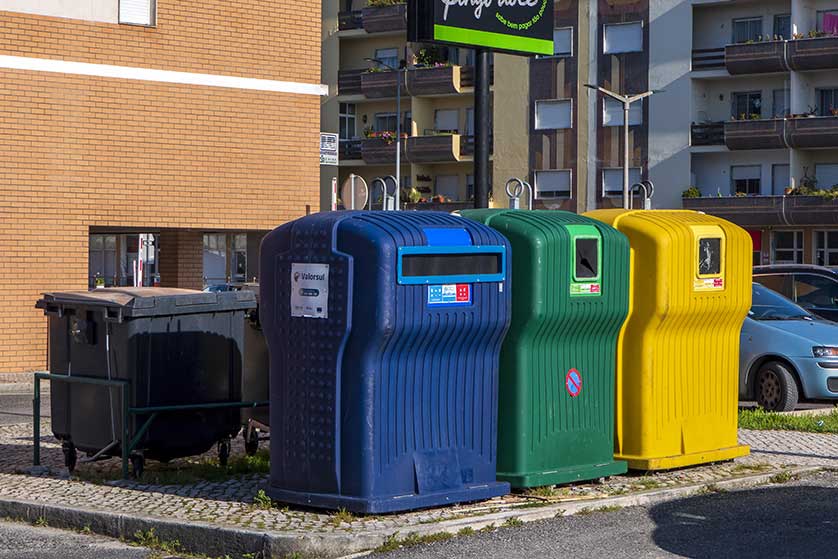
Yellow is for plastic (plastic bottles etc) and metal including aluminium foil, green is for glass (bottles should be uncapped) and blue for paper and card (newspapers, magazines, cardboard boxes etc). The grey bin is for non-recyclable, non-hazardous, household waste. Organic waste goes in the brown bin if available.
Batteries can be left in the red bin if there is one. It is usually found attached to the front of the yellow bin.
Electrical appliances can be taken to a larger recycling center. Waste that cannot be recycled is disposed of in landfills and in incinerators.
Old clothes can also be recycled in some places.

Recycling Trends
The average Portuguese citizen recycles less than many of their counterparts in other EU countries. In Germany 67% of household waste is recycled with the figure around 51% in Italy. In Spain, across the border, the recycling average is similar to Portugal's at just 30%.
Waste also increases in the tourism season in the summer especially in the Algarve and Alentejo regions in the south. Visitors to Portugal have a part to play in keeping the country clean. Ecoponto can also be found on many beaches, for example.
According to the Portuguese Environment Agency the country has seen a decrease in reycling in some categories.
Recycling rates for glass, paper and cardboard, plastic and metal have all declined and this has been heightened by the pandemic.

Further Information & Resources
Information on recycling household waste is available at www.ecoponto.pt in Portuguese and several other languages (English, French, German and Spanish).
Another useful resource is the Sociedade Ponte Verde website (pontoverde.pt/en) in both Portuguese and English.
quercus.pt - NGO for the conservation of nature and natural resources. It has information on recycling corks.
www.apambiente.pt - Portuguese Environment Agency.
cpada.pt/en - Portuguese Confederation of Environmental Defense Associations.
Related Articles on Portuguese Culture