Frigate Dom Fernando II e Glória Cacilhas
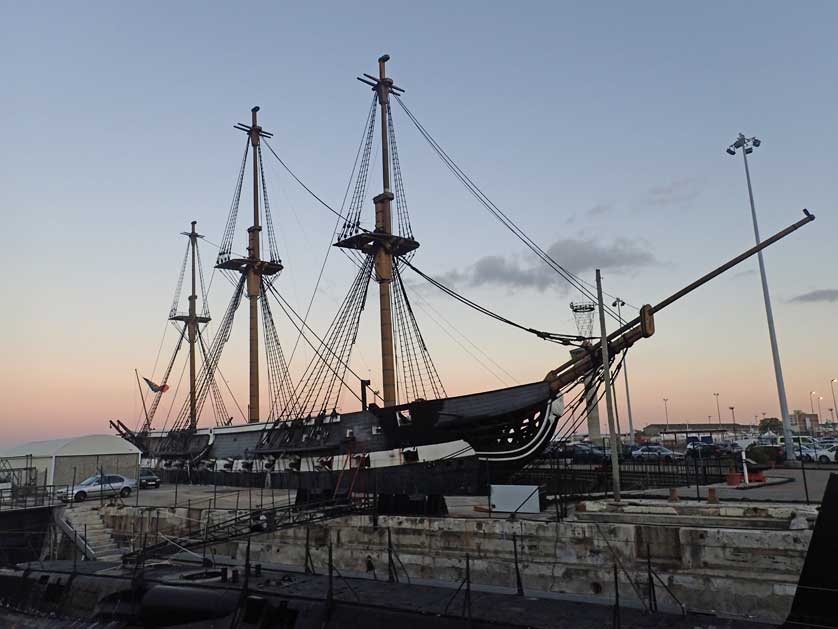
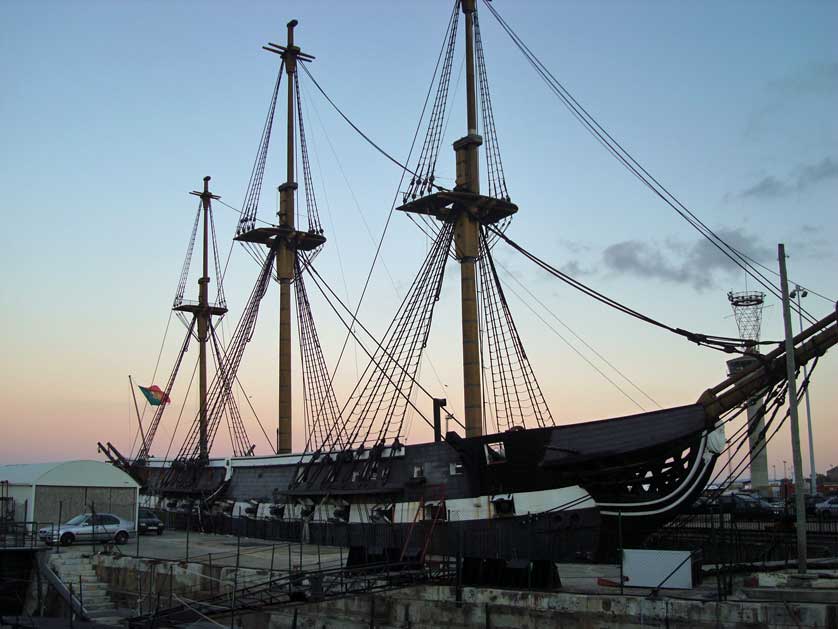
The Frigate Dom Fernando II e Glória lies in Cacilhas, on the south bank of the River Tagus across from Lisbon.
The wooden-hulled, 50-gun vessel was Portugal's last sailing warship to be constructed and also the last ship that undertook the Carreira da Índia (India Run), a route that began in the Age of Discoveries.
History
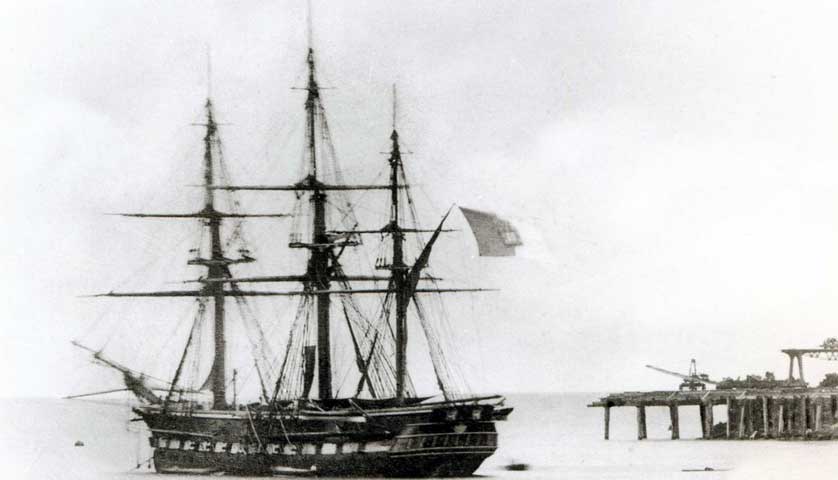
The ship was built in the Portuguese colony of Daman in India, which possessed an abundance of teak. Launched in 1843, the ship was fitted out in Goa and named after the king consort of Portugal Ferdinand II, husband of the Portuguese monarch Maria II, and to Our Lady of Glory.
Her maiden voyage took the ship from Goa to Lisbon in 1845 and she was to serve until 1878. Altogether the frigate made voyages to Africa, Madeira and the Azores finally serving as a training vessel before returning to Lisbon. Here on the River Tagus the Dom Fernando II e Glória became the Naval Artillery School of the Portuguese navy.
Badly damaged by fire in 1963, the now wrecked hull was towed to mud flats on the Tagus and there she remained for nearly 30 years. Restoration began in the 1990s and was completed in 1998 in Aveiro in time to star at Expo '98 at the Parque Das Nações back in the capital.
The ship is classed as the fourth oldest armed frigate, and the eighth oldest sailing warship in the world. She is now preserved as a floating museum in Almada.
Maritime Museums in Portugal
Another museum dedicated to Portuguese seafaring is the Maritime Museum (Museu de Marinha) or Navy Museum located in the west wing of the Mosteiro dos Jeronimos close to Belem Tower in the Belem district of Lisbon.
The Museu de Marinha, one of the largest of its kind in Europe, is dedicated to the history of Portuguese ships, shipbuilding, seafarers and nautical navigation particularly during the Age of Discoveries.
This was when Portuguese boats traversed the oceans of the globe on sea routes to India, Africa, Asia and South America reaching such far flung places as Macau and even Japan.
Also in Almada is the Museu Naval which opened in 1991 in a former building of the Companhia Portuguesa de Pesca (CPP). The museum is dedicated to all aspects of the local fishing industry.

Submarino Barracuda
The NRP Submarino Barracuda lies close to the Dom Fernando II e Glória. It was the last diesel-powered Albacora-class submarine to leave service in the Portuguese navy in 2010. It moved to Cacilhas in 2013.
Access - Getting There
The easiest way to access Cacilhas is on the ferry from Cais do Sodre, which takes around 10 minutes and makes the crossing roughly every 15-20 minutes.
Cacilhas is a terminus for the Metro Transportes do Sul (MTS), a light rail/tram network that connects south to Pragal and Corroios stations where there are links with the Fertagus commuter line north to Sete Rios in Lisbon and south to Setubal Station in Setubal.
Cacilhas is also a good starting point to head to the beach resort at Caparica.
Heritage Ships in Portugal
Another famous sailing ship on display in Portugal is the Caique Bom Sucesso in Olhão in the Algarve. It sailed across the Atlantic to Rio de Janeiro in 1808 to inform the exiled Portuguese King João VI that Napoleon's invading army had left.
The Gil Eannes Hospital Ship (Navio Hospital Gil Eannes) in Viana do Castelo was built there in 1955. The vessel served the cod fleet off the coast of Newfoundland and Greenland not just as a floating infirmary but also as a flagship, support and supply ship, mail ship, tug and even icebreaker.