Oldest University in Portugal: Top 5 Historic Institutions
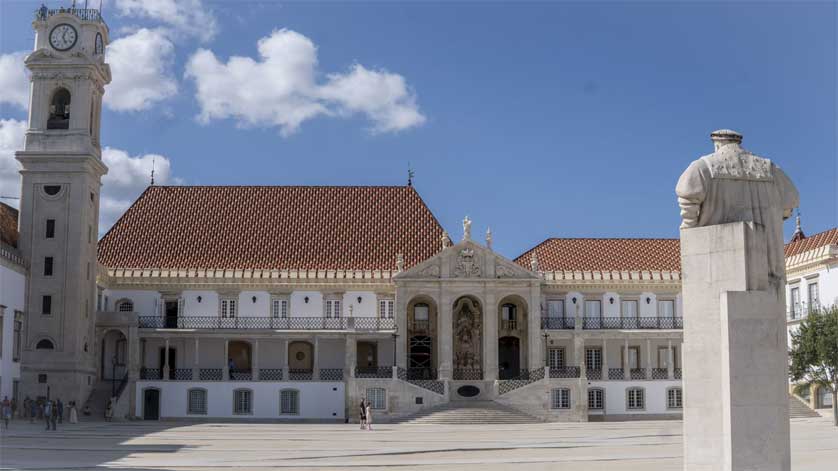
Portugal built its first university before most European nations had a functioning postal system. King Dinis signed the founding charter in 1290, and the institution that would become the University of Coimbra has been running ever since. That makes it one of the oldest continuously operating universities in the world and a starting point for anyone interested in European academic heritage.
The country's university system has grown considerably since the 13th century, but several of its oldest institutions remain active and highly regarded. For students considering a semester abroad, a research project on European education, or simply a deeper understanding of how higher learning evolved on the Iberian Peninsula, these five institutions tell a story that stretches across seven centuries.
What Is the Oldest University in Portugal?
The University of Coimbra, founded in 1290 by royal decree. Pope Nicholas IV recognized it the same year. The institution started in Lisbon, moved to Coimbra in 1308, bounced between the two cities for over two centuries, and finally settled in Coimbra permanently in 1537.
Today, the campus occupies a hilltop overlooking the Mondego River. The Coimbra University library - the Biblioteca Joanina, built in the early 18th century - is one of the most photographed academic buildings in Europe. Its gilded Baroque interior houses roughly 250,000 volumes, some of them centuries old. UNESCO added the university to its World Heritage List in 2013.
Coimbra is also a living campus. Students still wear the traditional black capes (capa e batina), and the academic calendar is marked by festivals that date back hundreds of years. The Queima das Fitas ribbon-burning ceremony at the end of the academic year draws thousands of visitors to the city every May.
Why Coimbra Is a Popular Case Study
Students who study European heritage or comparative education at their home universities often use the University of Coimbra as a paper topic. The institution's 700-year archive provides rich material - royal charters, faculty records, correspondence with the Vatican, and administrative documents that trace the evolution of Portuguese higher education decade by decade.
The volume of available sources is exactly what makes these papers difficult. A student working with centuries of archival material needs to narrow the scope fast, and that process itself takes time. If you find yourself thinking “I just need someone to do my essay on schedule", the practical response is to combine outside assistance with your own focus on source selection and argument structure. The combination keeps the paper on track without sacrificing depth. The broader lesson applies to any research-heavy assignment about Portuguese institutions. A clear thesis and a tight timeframe - one reform, one century, one faculty, prevent the project from expanding beyond what a single student can handle.
The Other Four Institutions Worth Knowing
|
University |
Founded |
City |
Notable Feature |
|
University of Évora |
1559 |
Évora |
Jesuit origins, Counter-Reformation curriculum |
|
University of Lisbon |
1911 (modern form) |
Lisbon |
Largest university in Portugal by enrollment |
|
University of Porto |
1911 |
Porto |
Strong reputation in engineering and medicine |
|
NOVA University Lisbon |
1973 |
Lisbon |
Youngest on this list, top-ranked in business |
Each institution carries a distinct identity. Évora's Jesuit past, Porto's technical focus, Lisbon's sheer scale, and NOVA's modern approach to interdisciplinary research all reflect different chapters in Portugal's academic development.
University of Évora: The Jesuit Chapter
Cardinal D. Henrique founded the College of the Holy Spirit in Évora and handed it to the Society of Jesus. The Bull "Cum nobis" of April 1559 formally established the university, and its inaugural ceremony took place that November. For two centuries, it served as the intellectual engine of Counter-Reformation Portugal.
The Marquis of Pombal's expulsion of the Jesuits in 1759 shut the institution down overnight. Cavalry surrounded the campus. Masters were arrested and sent to Lisbon, where many ended up imprisoned at the Fort of Junqueira. The university did not reopen in its modern form until 1979, more than two centuries later.
Why Évora Matters for History Students
The university's archive covers a period when religious orders controlled much of European education. Students working on the Jesuits, the Inquisition, or early modern Iberian politics find primary material in Évora that does not exist elsewhere. The sources are abundant, and the difficulty lies in selecting the right ones and building a coherent argument from them.
That archival depth is precisely why many students feel overwhelmed once the deadline approaches. The instinct to search "write my history essay for me before it is too late" usually reflects a scope problem rather than a knowledge gap. An expert who already knows the period can help organize the argument while the student focuses on the primary documents that matter most.
Évora itself is a UNESCO World Heritage city. The Roman temple, the medieval walls, and the Renaissance architecture make it a destination for cultural tourists as much as for scholars.
University of Porto and University of Lisbon
Both institutions received their modern charters in 1911, shortly after the Portuguese Republic replaced the monarchy. The University of Lisbon merged several older faculties and is now the largest in Portugal by student enrollment. The University of Porto built its reputation on engineering, medicine, and natural sciences, and consistently ranks among the top three Portuguese universities in international league tables.
Porto's medical school traces its origins to the Royal Academy of Surgery and Navigation, founded in 1825. Lisbon's law faculty descends from institutions that served the royal court for centuries. In both cases, the modern university absorbed older schools with deep histories of their own.
NOVA University Lisbon and the University of Minho
NOVA, founded in 1973, is the youngest institution on this list. Its Nova School of Business and Economics ranks among the top business schools in Europe, and its interdisciplinary model attracts a large share of international exchange students. The University of Minho, founded the same year in Braga, built a strong profile in engineering and information technology.
Both universities represent the wave of expansion that followed Portugal's transition to democracy in the 1970s. They were designed to be different from the older, more traditional faculties - smaller classes, applied research, and close ties to industry.
Conclusion
Portugal's five most historic universities span nearly 700 years and three distinct eras of education: medieval royal patronage, Jesuit scholarship, and modern republican reform. Each institution offers a window into a different part of the country's intellectual life. For travellers, they are architectural landmarks. For students, they are case studies in how European education evolved. For anyone planning a semester in Portugal, they are potential home bases with centuries of tradition behind them.