You grab a coffee and a pastel de nata at a Lisbon café for under €2 and walk away convinced Portugal is absurdly cheap. Three days later, you sit down at a seafood restaurant on the Algarve waterfront, order grilled fish, a bottle of wine, a couple of drinks, and the bill for two is €90. Neither experience is unusual. Neither tells you what eating in Portugal actually costs over a trip.
The honest answer is that it depends on a dozen things at once: which city you are in, the type of restaurant, the neighbourhood, the season, and whether you make lunch or dinner your main meal. Getting your food budget right means thinking about the whole week, not any single meal.
Location Changes Everything
Lisbon and Porto are the most expensive cities for eating out, and prices in both have risen noticeably in recent years as tourism has grown. The Algarve in summer can be similarly priced in resort towns, particularly anywhere with a sea view and a terrace. Move a couple of streets inland from the waterfront, or head to a smaller city like Évora or Braga, and things become considerably more affordable.
Even within Lisbon or Porto, the neighbourhood matters. A tasca - a no-frills, local restaurant that serves traditional Portuguese food - operates on a completely different price level from a tourist-facing restaurant on a famous square. The same dish genuinely can cost two or three times more, depending on which postcode you are sitting in.
What a Typical Day of Eating Looks Like
Breakfast is almost always the cheapest part of the day. At a neighbourhood café, a strong espresso (bica) and a pastry are a very small spend. Prices climb at hotel breakfast rooms and tourist-facing cafés on central squares, so it pays to walk a short distance from wherever you are staying before you sit down.
Lunch is where Portugal really rewards the traveller. Many tascas and neighbourhood restaurants offer a menu do dia or prato do dia at lunchtime only: typically soup, a main course, a drink, and sometimes dessert and coffee, all for a fixed price. These are genuinely good meals, cooked fresh that day, and they represent some of the best food value in Europe. Making lunch your main meal and eating more lightly in the evening is a strategy that many experienced Portugal visitors swear by, both for the savings and because Portuguese lunch portions tend to be generous.
Dinner at a sit-down restaurant is where daily spending starts to add up. A relaxed evening meal with a starter, main course, wine, and dessert can range from a modest amount at a local tasca to something significantly higher at a smarter place. One proper dinner out is entirely reasonable to budget for; the issue is when every evening follows the same pattern and the week's total quietly doubles.
Coffee and snacks throughout the day are part of the rhythm of travelling in Portugal and tend to be inexpensive at local cafés. Pastry shops (pastelarias) are everywhere, and picking up something there rather than sitting down at a café saves money without sacrificing anything.
The Extras That Catch Visitors Off Guard
Portuguese restaurants have a few customs that are perfectly normal locally but often come as a surprise to first-time visitors.
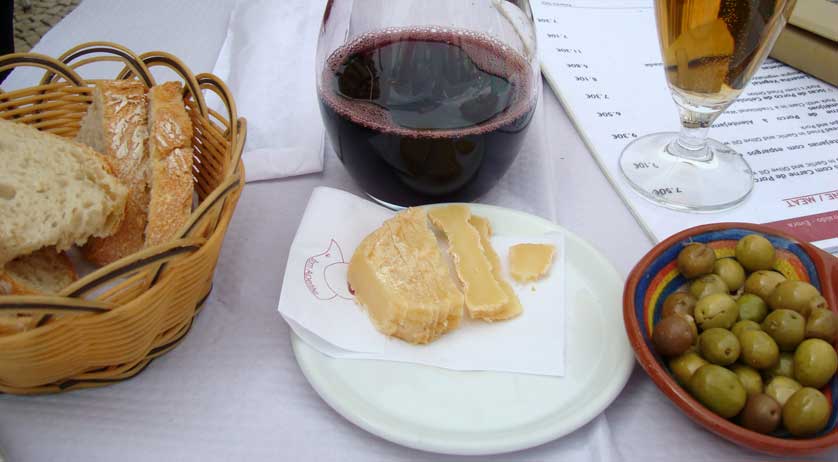
Couvert is the bread, olives, butter, or pâté that appears on your table within minutes of sitting down. It is not complimentary. If you eat it, you pay for it; if you do not touch it, you will not be charged. You can ask the waiter to remove it when you order, and a polite não, obrigado (no thank you) is all it takes. It is not a scam aimed at tourists - locals are charged the same - but for a group of four people who eat the whole basket without thinking, it adds a few euros to every bill.
At smarter restaurants, the couvert can include more elaborate items: goat's cheese, chouriço, smoked ham, or seafood appetisers. These carry correspondingly higher prices, so it is worth glancing at the menu to understand what you are accepting before you start eating.
Water is another quiet surprise. Restaurants routinely bring bottled water to the table by default, which goes on the bill. What many visitors do not know is that Portuguese law requires restaurants to provide tap water free of charge to customers eating on site. If you ask for tap water (água da torneira), a restaurant is legally required to provide it without charge.
Terraces and prime locations carry an unofficial price premium as well. A coffee at a table overlooking a famous viewpoint or a famous square can cost more than the same coffee two streets away.
Tipping in Portugal
Portugal is not a tipping culture in the way that visitors from the United States or some other countries might expect. Tips are not expected or built into wages, and many Portuguese customers do not leave one at all, or simply round up the bill to the nearest euro.
That said, tipping has become more common in tourist areas, and if a meal or a service has been genuinely good, leaving something is a reasonable gesture. At casual restaurants, rounding up or leaving a couple of euros is fine. At smarter places, if locals do tip, it tends to be a modest percentage - around five to ten per cent for good service. Some restaurants add a service charge to the bill, in which case there is no expectation of anything further.
If you are eating as a group and want to split the bill and work out a small tip between you, a tip calculator is useful for doing this quickly at the table, particularly if you are splitting in multiple directions.
One practical note: adding a tip by card is not always possible at Portuguese restaurant terminals. If you want to leave something for your server, having a few coins or a small note is the most reliable way to do it.
Planning for the Whole Trip
The most common budgeting mistake is extrapolating from one or two meals. A more realistic approach is to sketch out a rough shape for the week: several days built around menus do dia, café breakfasts, and relatively simple dinners; a couple of evenings at mid-range restaurants; and perhaps one or two proper meals where you order properly and do not watch the bill too closely. If you are uncertain where that all lands per day, adding up your estimates and working backwards with an average calculator gives you a number that reflects the actual pattern of your trip rather than a wishful best-case figure.
Factor in couvert on most sit-down dinners, the odd bottle of water you forget to decline, a few coffees throughout the day, and the pastel de nata you will almost certainly buy at 11 am because the smell coming out of the pastelaria is impossible to resist. That is what eating in Portugal actually costs. It is still an excellent value. You just want to go in knowing what to expect.