Emoji are the lingua franca of modern chat - tiny pictograms that carry tone, context, and personality in a single tap. Imagine a brand that leans into that shorthand, swapping a letter for a symbol, or letting an icon carry whole words: suddenly, your name becomes a tiny performance in every message thread. If you want to experiment quickly, spark a moodboard by asking Dreamina's AI photo generator for playful context shots - think product scenes where an apple is represented by a bite-mark emoji or storefront windows peppered with smiley decals. Those images help you imagine how emoji-as-letters land in real life, not just on-screen.
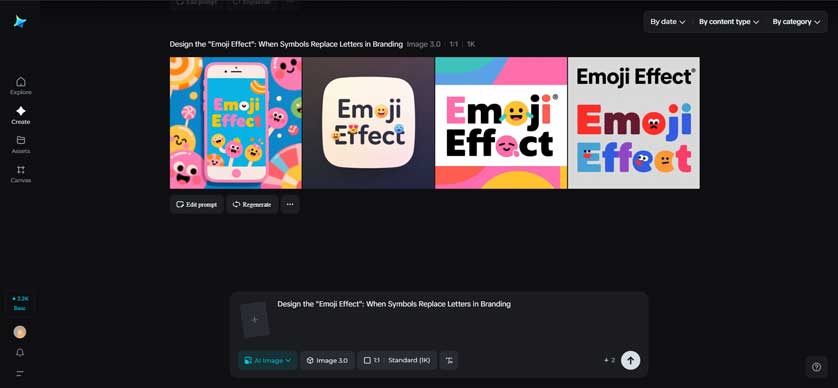
This blog explores the creative logic of substituting emoji for typographic characters: when it amplifies voice, when it muddies meaning, and how to build an identity system that respects legibility while celebrating play. Expect short paragraphs, a few tidy bullets for quick rules, and a light three-step Dreamina workflow to prototype your first emoji-wordmark.
Why the tiny picture works
Emoji compress context. A heart means affection faster than the word "love." For brands that trade in emotion, ritual, or immediacy - cafés, DTC snack makers, indie music labels - emoji can act as emotional punctuation. More than novelty, they're tiny behavioral cues that change how customers type about you: a product becomes hashtag-plus-emoji in seconds, and those social snippets spread faster than long-form copyever will.
But emoji also bring instability: platform rendering varies, cultural readings diverge, and some symbols are simply ambiguous. The design job is to make the substitution feel intentional and legible, not like an accidental autocorrect.
Three shorthand rules for emoji-first identities
- Clarity first: ensure a symbol substitution preserves immediate reading at small sizes.
- Consistency next: choose a single emoji family or custom icon style so the mark doesn't splinter.
- Fallback ready: always provide a typographic fallback for platforms that don't render the emoji as you expect.
These rules keep the playfulness from becoming a usability problem.
Types of emoji substitutions that actually work
Not every letter is replaceable; some moves are charming, others are confusing. Here are common successful patterns:
- Phonetic swaps: replace a syllable's dominant sound with a fitting emoji (like a wave emoji for "wave" in a surf-related name).
- Semantic seals: use an emoji at the start or end of a name as a badge rather than inside the word (a leaf emoji beside an eco brand).
- Icon-as-letter: swap a single letter that visually resembles the emoji (an eye emoji for the letter "o" in short, bold names).
Keep substitutions minimal - one per word is usually the sweet spot.
Designing emojis that behave like typography
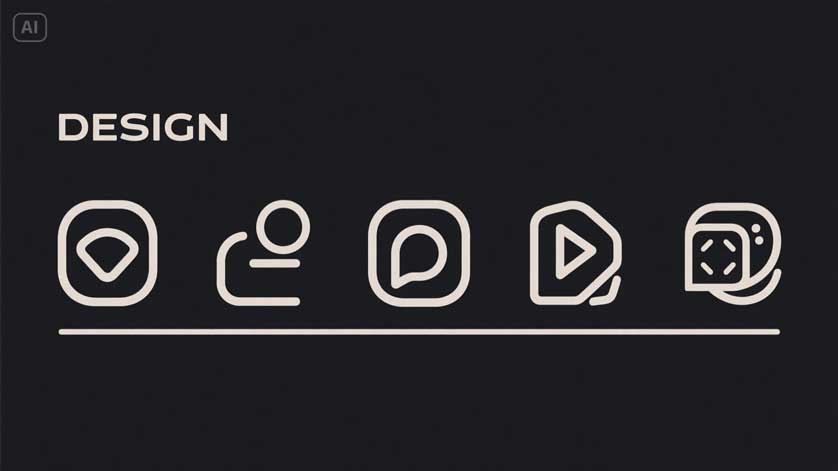
If you're serious about emoji-as-identity, custom icons are the way to go. Design a family of glyphs that sit on the same baseline and share stroke, corner radius, and scale. This avoids the chaotic look of mixing system emoji from different platforms. If you need inspiration or starting glyphs, try Dreamina's AI logo generator to produce emblem ideas that you can then handcraft into a cohesive emoji set.
Motion, micro-interaction, and chat-native behavior
Emoji thrive in motion. Consider micro-animations when the emoji appears in app headers or in reaction to actions (a tiny bounce on purchase complete, a soft shake when a discount expires). These micro-interactions make the symbol feel alive without needing sound and help bridge the gap between playful and purposeful.
Cultural guardrails
Emoji live in culture, not in air. Never rely on a symbol that might be offensive in key markets; test for local readings. Also document usage rights: system emoji are platform-owned and behave differently across OSes, so consider vector icons as your standard to control consistency and avoid legal questions about proprietary glyphs.
Stickers, merch, and off-screen storytelling
Emoji identities translate beautifully to tactile merch: enamel pins, labels, and - but crucially - stickers. A die-cut emoji sticker is a portable brand ambassador; it sits on laptops and bottles and becomes shorthand for belonging. Use a sticker maker to prototype sticker shapes and finishes that echo your emoji's personality - matte for subtle brands, holographic for high-energy drops.
Quick-play prompts for team ideation
- Pick one product name and sketch three emoji substitutions; test in a sentence and as a small avatar.
- Design a tiny animated loop that plays when someone completes a purchase using only the emoji and one color.
- Create a social challenge where fans suggest new emoji pairings and reward the best with a sticker pack.
These exercises generate ideas fast and reveal which substitutions actually feel native to conversation.
Dreamina's trendy emoji-lab
Dreamina makes rapid prototyping easy: mood visuals, emblem experiments, and printable mockups all come together so you can see how an emoji substitution behaves across contexts. Here's how:
Step 1: Compose a text prompt
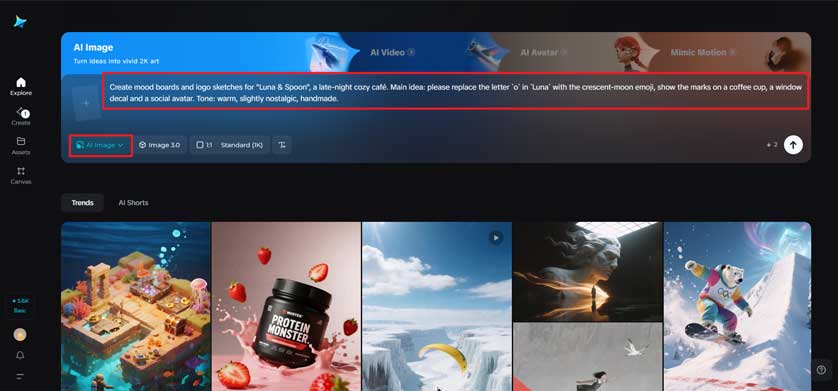
Go to Dreamina and write a descriptive text prompt with your branded voice, the emojis you want to replace, and the contexts you have in mind.
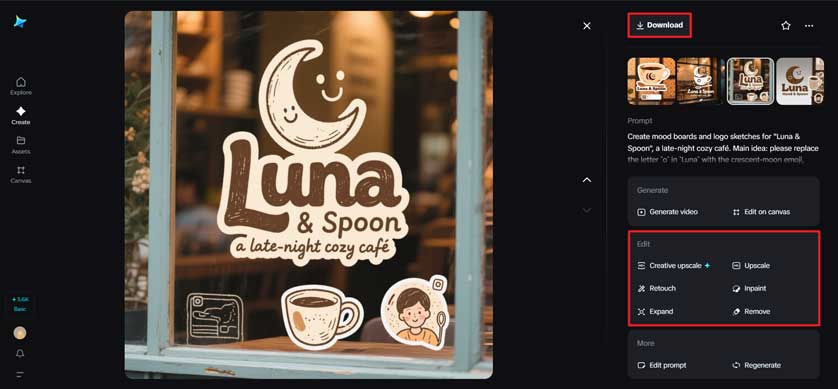
Here is an example: Create mood boards and logo sketches for "Luna & Spoon", a late-night cozy café. Main idea: please replace the letter 'o' in 'Luna' with the crescent-moon emoji, show the marks on a coffee cup, a window decal, and a social avatar. Tone: warm, slightly nostalgic, handmade.
Step 2: Set parameters and generate
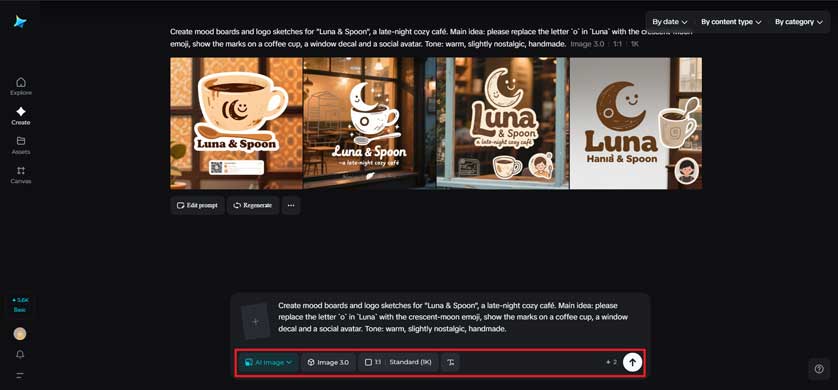
Select a model that favors iconography and texture, set your aspect ratio for your outputs (square for avatars, tall for posters), set the resolution (1k is fast for ideation, 2k is presentation-quality images), and click Dreamina's icon to generate variations. You are searching for silhouettes with legibility at small sizes and scenes that depict realistic usages.
Step 3: Edit and download
Using your keeper, begin to use Dreamina's creative upscale, inpaint, expand, remove, and retouch tools to edit: position the emoji to the baseline, expand composition for packaging mockups, remove distracting elements, and retouch color/contrast. When the visuals feel resolved, click the Download icon and download the image files to use for vector tracing and
Rollout ideas that make emoji feel like culture, not gimmick
Launch emoji identity in small, social-first ways: a limited sticker pack giveaway, a short animated intro video showing the emoji morphing into the product, or a series of community prompts encouraging fans to type the brand-name-plus-emoji in captions. These moves let people appropriate the symbol into their language, which is the real goal.
Conclusion: small symbols, big voice
Emojis are compact protocols for emotion and action. When used with intention, they can become typographic allies - memorable marks that accelerate brand speech.
Dreamina helps you test those ideas quickly across physical and digital contexts; seed a moodboard, iterate emblem options, and download refined visuals to prototype in chat and in the wild.
Start with one thoughtful substitution, keep fallbacks ready, and watch the tiny picture do heavy conversational lifting.